-
Use Cases
-
Resources
-
Pricing
The Song Dynasty was a period of Chinese history marked by remarkable advances in technology, commerce, art, and governance. It saw the invention of movable-type printing, the widespread use of paper money, major developments in gunpowder weaponry, and flourishing Neo-Confucian philosophy, making it one of China's most culturally and economically vibrant eras. More Less
Feb 4, 960
% complete
General Zhao Kuangyin, commander of the Later Zhou army, staged a coup at Chenqiao and proclaimed himself emperor, taking the temple name Taizu. He established the Song Dynasty with its capital at Kaifeng (Bianjing), ending the Five Dynasties and Ten Kingdoms period of fragmentation.
Image source: Song dynasty
974 - 975
% complete
Song forces under Emperor Taizu besieged Jinling (modern Nanjing), the capital of the Southern Tang kingdom. The last ruler Li Yu surrendered in 975, completing the Song consolidation of most of southern China.
Image source: Southern Tang
979 - 986
% complete
Emperor Taizong launched two major northern campaigns against the Khitan Liao Dynasty to recover the Sixteen Prefectures. Both failed decisively, notably at the Battle of Gaoliang River in 979, establishing a long military stalemate between Song and Liao.
Jan 1005
% complete
After Khitan forces invaded deep into Song territory, the two empires concluded the Treaty of Shanyuan, establishing peace for over a century. The Song agreed to pay an annual indemnity of silver and silk, but the treaty stabilized the border and fostered flourishing trade.
Image source: Chanyuan Treaty
1043 - 1045
% complete
Chancellor Fan Zhongyan introduced sweeping reforms aimed at curbing corruption, improving the examination system, and strengthening the bureaucracy. Opposition from conservative officials forced his dismissal, but his ideas inspired the later Wang Anshi reforms.
1069 - 1076
% complete
Under Emperor Shenzong, Chancellor Wang Anshi implemented ambitious reforms including the Green Sprouts loans program, Baojia militia system, land surveys, and state monopolies. The reforms aimed to increase state revenue and strengthen the military but provoked fierce political factionalism.
Image source: Wang Anshi
1126 - 1127
% complete
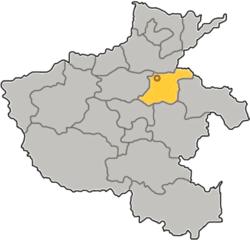
The Jurchen Jin Dynasty breached the Song capital Kaifeng, capturing Emperors Huizong and Qinzong along with thousands of court members. This catastrophic event ended the Northern Song period and forced the dynasty to flee south.
Image source: Jingkang incident
1127 - 1138
% complete
Prince Zhao Gou escaped the Jin capture of the imperial family and was enthroned as Emperor Gaozong, founding the Southern Song. After years of flight he settled the capital at Lin'an (Hangzhou), beginning a new era of southern prosperity.
Image source: Emperor Gaozong of Song
1134 - 1140
% complete
General Yue Fei led brilliant northern expeditions against the Jin, recovering substantial territory before being recalled by the court. Falsely accused through chancellor Qin Hui's machinations, he was executed in 1142 and later became China's foremost symbol of loyalty and patriotism.
Image source: Yue Fei
1141 - 1142
% complete
The Song and Jin signed the Treaty of Shaoxing, fixing the border along the Huai River and obligating the Song to pay annual tribute. The settlement secured peace but confirmed the loss of northern China, which became a lasting national grievance.
Image source: Treaty of Shaoxing
1206 - 1234
% complete
The Mongol Empire under Genghis Khan devastated the Jin Dynasty. The Song allied with the Mongols against their old enemy, contributing to the fall of the Jin capital Caizhou in 1234, only to face the Mongols directly afterward.
Image source: Mongol conquest of the Jin dynasty
1235 - 1241
% complete
Following the Jin collapse, Mongol armies launched large-scale invasions of the Song, attacking Sichuan and the middle Yangtze. The Song mounted determined defenses, beginning a conflict that would last more than four decades.
Image source: Mongol conquest of the Song dynasty
1259
% complete
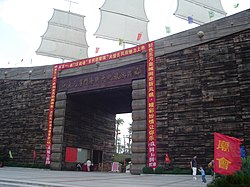
Song defenders at the mountain fortress of Diaoyucheng (Fishing Town) withstood a fierce Mongol siege, during which Great Khan Möngke died, possibly from wounds or disease. His death halted the Mongol advance and triggered a succession struggle, briefly saving the Song.
Image source: Diaoyucheng
1267 - 1273
% complete
The twin fortress cities of Xiangyang and Fancheng fell to Yuan forces after a grueling six-year siege featuring counterweight trebuchets. The loss opened the Yangtze corridor to Mongol armies and doomed the Southern Song defense.
Image source: Battle of Xiangyang
1271
% complete
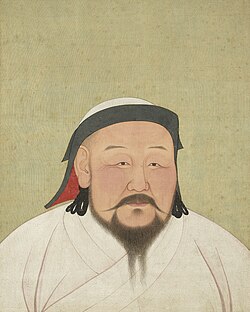
Kublai Khan formally declared the Yuan Dynasty, claiming the Mandate of Heaven and intensifying his campaign to conquer the Southern Song. The new dynasty mobilized massive resources, including siege engineers from the Islamic world, against the Song.
Image source: Kublai Khan
Mar 19, 1279
% complete
The last Song fleet was annihilated by Yuan naval forces at Yamen near modern Jiangmen. Loyal minister Lu Xiufu leapt into the sea carrying the child emperor Bing, ending the Song Dynasty after 319 years.
Image source: Battle of Yamen
1013 - 1127
% complete
The Northern Song capital Kaifeng grew to over a million residents, becoming the largest city in the world. Its vibrant night markets, entertainment quarters, and commercial districts, depicted in the painting Along the River During the Qingming Festival, exemplified urban prosperity.
Image source: Kaifeng
1023
% complete
The Song government began officially issuing jiaozi paper currency in Sichuan, the first government-backed paper money in world history. Paper currency facilitated booming commerce across the empire's expanding market economy.
Image source: Jiaozi (currency)
1130 - 1270
% complete
The Southern Song heavily promoted seaborne commerce, making Quanzhou one of the world's busiest ports. Chinese junks traded porcelain, silk, and copper coins across Southeast Asia, India, and the Islamic world, generating vital customs revenue for the state.
Image source: Quanzhou
1040 - 1048
% complete
The commoner artisan Bi Sheng developed the world's first movable type printing system using individual ceramic characters. Though woodblock printing remained dominant, his invention revolutionized the potential for mass production of texts.
Image source: Movable type
1088
% complete
Polymath Shen Kuo completed his Dream Pool Essays, a landmark scientific work covering astronomy, magnetism, geology, optics, and movable type printing. His observations on magnetic declination and fossil formation were centuries ahead of Europe.
Image source: Dream Pool Essays
1088 - 1092
% complete
Statesman and engineer Su Song constructed a monumental astronomical clock tower in Kaifeng, featuring an escapement mechanism, armillary sphere, and celestial globe driven by a waterwheel. It was among the most sophisticated mechanical devices of its era.
Image source: Su Song
1117
% complete
Zhu Yu's Pingzhou Table Talks recorded the first documented use of the magnetic compass for maritime navigation. This technology enabled the great expansion of Song oceanic trade and would eventually transform global navigation.
Image source: History of the compass
1132 - 1250
% complete
Song military engineers developed fire lances, gunpowder bombs, and early rockets for use against Jin and later Mongol forces. The Battle of De'an in 1132 saw the first recorded use of fire lances, marking the dawn of gunpowder warfare.
Image source: Gunpowder
1061 - 1101
% complete
Su Shi (Su Dongpo), one of China's greatest poets, essayists, calligraphers, and gastronomes, served in various official posts despite repeated political exile. His ci poetry, naturalistic essays, and expressive calligraphy defined Song literati culture.
Image source: Su Shi
1100
% complete
Zhang Zeduan created his famous panoramic handscroll depicting daily life along the Bian River in Kaifeng. The masterpiece offers an invaluable visual record of Song urban commerce, architecture, transportation, and social life.
Image source: Along the River During the Qingming Festival
1101 - 1125
% complete
Emperor Huizong, himself an accomplished painter and calligrapher, elevated the court academy of painting and compiled the imperial art catalog. His reign marked the pinnacle of Song fine arts, though his artistic devotion came at the expense of governance.
Image source: Emperor Huizong of Song
1150 - 1200
% complete
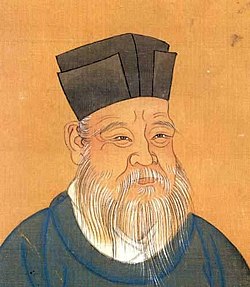
Philosopher Zhu Xi systematized Neo-Confucian thought, writing commentaries on the Four Books that became the orthodox curriculum for civil examinations for the next seven centuries. His synthesis profoundly shaped East Asian intellectual life.
Image source: Zhu Xi
1160 - 1207
% complete
Poets Lu You and Xin Qiji produced passionate patriotic verse lamenting the lost north and calling for reconquest. Their ci poetry infused Song literature with martial vigor and enduring expressions of national longing.
Image source: Xin Qiji
1283
% complete
Loyalist general and poet Wen Tianxiang, captured in 1278, refused repeated offers to serve the Yuan and was executed at Dadu. His poem 'Song of Righteousness' made him an eternal emblem of Confucian integrity and dynastic loyalty.
Image source: Wen Tianxiang
Or browse the full history timeline directory, with more than 2,000 topics.
This Song Dynasty timeline was generated with the help of AI, using information found on the internet.
We work hard to keep these timelines accurate, but mistakes do get through. If you spot one, email us at [email protected] and we'll fix it for future visitors.
Generate yours with AI or build it from scratch, for free.
Export your timeline, add your own events, edit or remove AI-generated events, and much more
No credit card required.
Cancel anytime.
Cancel anytime.
You can create an unlimited number of timelines with up to 10 events on each one, customize how they look, export them to PDF, PNG, PowerPoint, CSV, and Excel, and share them with a link. Paid plans raise the event limit and add features like spreadsheet imports and collaborators.
Yes. You can cancel your subscription from your account page at any time, and you will not be charged again. Your subscription stays active for the rest of the period you already paid for.
Yes. We will email you a reminder before the annual renewal, and we will also email you a receipt.
Yes. You can email us within 15 days of any payment, and we will issue you a full refund.
Check out our pricing docs or send us an email anytime: [email protected].