-
Use Cases
-
Resources
-
Pricing
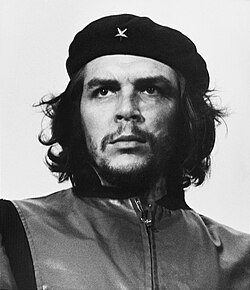
Fidel Castro was a Cuban revolutionary and politician who led the 1959 Cuban Revolution that overthrew dictator Fulgencio Batista. He governed Cuba as Prime Minister and later President for nearly five decades, establishing a one-party socialist state aligned with the Soviet Union during the Cold War. More Less
Aug 13, 1926
% complete
Fidel Alejandro Castro was born at his father's farm in Birán, eastern Cuba, the son of a wealthy Spanish immigrant sugarcane farmer. He grew up in rural poverty among the estate workers, an experience that shaped his later political views.
Image source: Fidel Castro
Sep 1945
% complete
Castro entered the University of Havana to study law, where he became immersed in the politically charged atmosphere of student activism, nationalism, and anti-imperialist ideas that would define his career.
Apr 1948
% complete
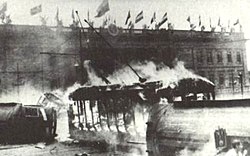
While studying law, Castro traveled to Bogotá, Colombia, and took part in the violent riots following the assassination of Jorge Eliécer Gaitán. The experience deepened his involvement in radical leftist politics across Latin America.
Image source: Bogotazo
1950
% complete
Castro received his Doctor of Laws degree in 1950 and began practicing law in Havana, often representing poor clients who could not afford legal services.
1952
% complete
Castro planned to run for a seat in Cuba's Congress as a candidate for the reformist Orthodox Party, but his candidacy was cut short when Fulgencio Batista seized power in a military coup before the elections could be held.
Image source: Partido Ortodoxo
Jul 26, 1953
% complete
Castro led around 120 rebels in an assault on the Moncada Barracks in Santiago de Cuba, aiming to spark an uprising against dictator Fulgencio Batista. The attack failed, and many rebels were killed or captured; Castro was imprisoned but became a national figure.
Image source: Attack on the Moncada Barracks
Oct 16, 1953
% complete
At his trial for the Moncada attack, Castro delivered a defiant speech condemning the Batista regime and outlining his reform program. It was published clandestinely and became the manifesto of the 26th of July Movement.
Image source: History Will Absolve Me
1955
% complete
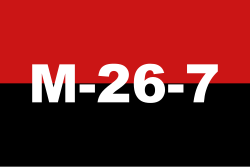
In exile in Mexico City, Castro formally organized the 26th of July Movement, named after the failed Moncada attack, recruiting fighters including his brother Raúl and Argentine revolutionary Ernesto 'Che' Guevara.
Image source: 26th of July Movement
May 15, 1955
% complete
Under mounting public pressure, Batista granted amnesty to political prisoners, releasing Castro after less than two years. He soon went into exile in Mexico to continue organizing revolution.
Dec 1956 - Dec 1958
% complete
From their mountain stronghold, Castro's guerrillas built popular support and gradually defeated government forces through raids and ambushes, broadcasting their struggle and winning growing sympathy inside Cuba and abroad.
Image source: Sierra Maestra
Dec 2, 1956
% complete
Castro and 81 fellow revolutionaries sailed from Mexico aboard the yacht Granma and landed in eastern Cuba. The group was nearly wiped out by Batista's army, but a dozen survivors, including Castro and Guevara, escaped to the Sierra Maestra mountains.
Image source: Landing of the Granma
Dec 28, 1958 - Jan 1, 1959
% complete
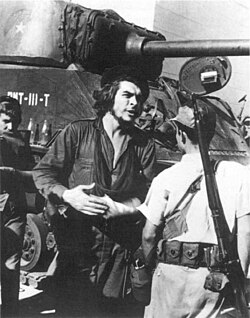
Che Guevara's forces captured the key city of Santa Clara, derailing an armored train and shattering government morale. Within hours, Fulgencio Batista fled Cuba, opening the way for rebel victory.
Image source: Battle of Santa Clara
Jan 8, 1959
% complete
After Batista's flight, Castro's column of rebels made a victorious week-long march across Cuba, entering Havana on January 8 to enormous crowds celebrating the end of the dictatorship.
Image source: Cuban Revolution
Feb 16, 1959 - Dec 2, 1976
% complete
Following the resignation of José Miró Cardona, Castro was appointed Prime Minister by President Manuel Urrutia. He quickly consolidated control over the revolutionary government and dominated Cuban politics.
Image source: Prime Minister of Cuba
May 17, 1959
% complete
Castro's government enacted sweeping land reform, expropriating large estates, including American-owned properties, and redistributing land to small farmers. The measure alienated wealthy elites and Washington and pushed Cuba leftward.
Image source: Land reform in the Philippines
Dec 2, 1961
% complete
In a nationally broadcast speech, Castro publicly declared himself a Marxist-Leninist, confirming Cuba's turn toward communism and setting the ideological course of the revolution.
Oct 3, 1965
% complete
Castro established the new Communist Party of Cuba as the country's ruling party, consolidating single-party rule and formalizing the Marxist-Leninist organization of the state.
Image source: Communist Party of Cuba
Dec 2, 1976
% complete
With the adoption of a new constitution establishing socialist state organs, Castro replaced his brother Raúl as head of government, becoming President of both the Council of State and Council of Ministers while remaining First Secretary of the Communist Party.
Image source: President of Cuba
Apr 1980 - Oct 1980
% complete
After protesters stormed the Peruvian embassy, Castro announced that anyone wishing to leave could do so. Around 125,000 Cubans emigrated via boats from Mariel harbor to Florida, exposing economic discontent and embarrassing the regime.
Image source: Mariel boatlift
1991 - 1994
% complete
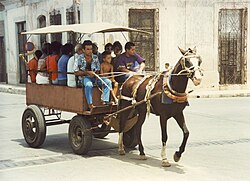
The dissolution of the Soviet Union cut off vital subsidies and trade, plunging Cuba into severe shortages of food, fuel, and electricity. Castro's government introduced emergency austerity measures and limited market reforms to survive.
Image source: Special Period
Apr 17, 1961 - Apr 19, 1961
% complete
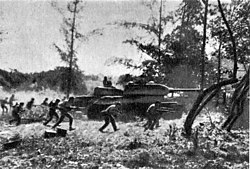
CIA-backed Cuban exiles landed at Playa Girón attempting to overthrow Castro's government, but the invasion was swiftly crushed within three days. The victory cemented Castro's popularity and pushed him closer to the Soviet Union.
Image source: Bay of Pigs Invasion
Jan 1962
% complete
The Vatican excommunicated Castro following his suppression of religious institutions and alignment with atheistic communist ideology, highlighting tensions between the revolutionary government and the Catholic Church.
Feb 7, 1962
% complete
After nationalizing American businesses and aligning with Moscow, Cuba faced a full US economic embargo banning all trade. The embargo would shape the Cuban economy and US-Cuba relations for decades.
Image source: United States embargo against Cuba
Oct 16, 1962 - Oct 28, 1962
% complete
After Soviet nuclear missiles were discovered being installed in Cuba, a tense thirteen-day standoff between Kennedy and Khrushchev gripped the world. The crisis ended with the Soviets withdrawing missiles in exchange for a US pledge not to invade Cuba and removal of missiles from Turkey.
Image source: Cuban Missile Crisis
1965
% complete
Castro's close comrade Che Guevara quietly departed Cuba to foment revolutionary movements abroad, first in the Congo and then Bolivia, where he was captured and killed in 1967.
Image source: Che Guevara
Nov 1975 - 1991
% complete
Castro dispatched tens of thousands of Cuban troops to Angola to support the MPLA government against South African and rebel forces. Cuba's prolonged military engagement boosted its prestige in the Non-Aligned Movement and the Third World.
Image source: Cuban intervention in Angola
Nov 1999 - Jun 2000
% complete
A five-year-old boy rescued off the Florida coast became the center of a custody battle between relatives in Miami and his father in Cuba. Castro mobilized mass demonstrations demanding the boy's return, which occurred in June 2000.
Image source: Elián González
2000
% complete
Castro formed a close alliance with Venezuelan President Hugo Chávez, securing subsidized oil in exchange for Cuban doctors and teachers. This partnership helped Cuba recover economically during the 2000s and revived regional leftist cooperation.
Image source: Hugo Chávez
Dec 17, 2014
% complete
US President Barack Obama and Raúl Castro announced the normalization of diplomatic ties, reopening embassies and easing travel restrictions. Fidel Castro expressed skepticism about US intentions in letters criticizing Obama's March 2016 visit.
Image source: Cuban thaw
Jul 31, 2006
% complete
Suffering from intestinal illness, Castro underwent emergency surgery and provisionally handed power over to his younger brother Raúl Castro, marking the first time since 1959 that he did not govern Cuba directly.
Feb 19, 2008
% complete
Citing failing health, Castro formally resigned from the presidency, ending his 49-year rule. The National Assembly elected his brother Raúl Castro as his successor days later.
Nov 25, 2016
% complete
Fidel Castro died in Havana on the evening of November 25, 2016. His death prompted nine days of official mourning, tributes from world leaders both admiring and condemnatory, and a state funeral in Santiago de Cuba attended by tens of thousands.
Image source: Death and state funeral of Fidel Castro
Or browse the full history timeline directory, with more than 2,000 topics.
This Fidel Castro timeline was generated with the help of AI, using information found on the internet.
We work hard to keep these timelines accurate, but mistakes do get through. If you spot one, email us at [email protected] and we'll fix it for future visitors.
Generate yours with AI or build it from scratch, for free.
Export your timeline, add your own events, edit or remove AI-generated events, and much more
No credit card required.
Cancel anytime.
Cancel anytime.
You can create an unlimited number of timelines with up to 10 events on each one, customize how they look, export them to PDF, PNG, PowerPoint, CSV, and Excel, and share them with a link. Paid plans raise the event limit and add features like spreadsheet imports and collaborators.
Yes. You can cancel your subscription from your account page at any time, and you will not be charged again. Your subscription stays active for the rest of the period you already paid for.
Yes. We will email you a reminder before the annual renewal, and we will also email you a receipt.
Yes. You can email us within 15 days of any payment, and we will issue you a full refund.
Check out our pricing docs or send us an email anytime: [email protected].