
-
Use Cases
-
Resources
-
Pricing
1688
The political crisis of 1688 laid the foundation for a constitutional monarchy in which parliamentary consent would limit royal power. Its consequences included restrictions on royal authority over laws, taxation, appointments, and the military.
1688
The events of 1688 advanced the idea of a contract between ruler and people. This challenged the Stuart ideology that monarchs possessed authority independent of political consent.
Image source: Glorious Revolution
Nov 1688
By November 1688, only a tiny minority in Scotland supported James. The Scottish political settlement therefore developed separately from the English landing while reaching a similar conclusion.
Image source: Glorious Revolution in Scotland
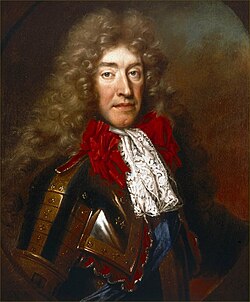
Dec 1688
The post-flight negotiations began establishing a political contract between the monarch and the people. The settlement rejected the Stuart conception of unrestricted divine-right monarchy.
Image source: Convention Parliament (1689)
Dec 1688
Following James's departure, representatives moved toward a Convention to determine the government of England. The process led to the offer of the crown to William and Mary.
Dec 1688
After James's flight, William assumed control of the government while negotiations determined the formal succession. His position rested on military intervention, parliamentary action, and the rights of his wife Mary.
Image source: William III of England
Dec 9, 1688
William asked the States General to send a delegation of three to negotiate conditions on 9 December. The request reflected the need to determine the political settlement after James's authority collapsed.
1689
News of the Glorious Revolution reached the English colonies in North America in 1689, producing a revolt in Boston and the dissolution of the Dominion of New England.
1688
The intervention connected England's constitutional crisis with the European contest against Louis XIV. William's dual position as Dutch stadtholder and prospective English monarch made the English succession strategically important across Europe.
Image source: Nine Years' War
1688
After receiving reports from England and the invitation from James's opponents, William prepared an intervention intended to secure his wife Mary's inheritance and oppose French expansion.
1688
Dutch concerns about French expansion, naval pressure, and the strategic importance of England made William increasingly determined to secure English support against France.
Image source: Grand Alliance (League of Augsburg)
Jan 1688
James demanded the repatriation of all six regiments of the Scots Brigade serving in the Dutch Republic. William refused, while using the dispute to purge officers and soldiers he considered unreliable.
Jan 1688
Following James's demand for the Scots Brigade, William removed 104 officers and 44 soldiers whom he considered unreliable. The episode further weakened James's potential military support.
Apr 1688
Louis XIV announced tariffs on Dutch herring imports and plans to support the French navy in the English Channel. These measures increased Dutch fears of French expansion and encouraged William to seek English support.
Nov 1688
The Dutch occupation and William's military presence transformed the political circumstances under which England determined its next monarch. The intervention linked the English succession to the wider European struggle against France.
Nov 5, 1688
William landed in Devon with an army on 5 November 1688. He claimed to be responding to the invitation from English opponents of James and presented the expedition as a defense of English liberties and Protestantism.
1688
The prospect of a Catholic dynasty after the birth of James Francis Edward Stuart led domestic opponents of James to invite William to intervene with Dutch support.
Image source: Invitation to William
Jan 1, 1688 - Mar 31, 1688
A pamphlet by Dutch Grand Pensionary Gaspar Fagel circulated in England. It promised that William would support freedom of worship for Dissenters while retaining the Test Acts, contrasting his position with James's proposed repeal.
Apr 1688
James prosecuted the Archbishop of Canterbury and six bishops for seditious libel after they petitioned against reading the Declaration of Indulgence. The prosecution provoked widespread public opposition.
Image source: Seven Bishops
Apr 1688
The seven bishops were confined in the Tower of London while facing prosecution. Their imprisonment transformed a dispute over religious policy into a national crisis.
Apr 1688
The confrontation over the Declaration of Indulgence and the bishops' prosecution intensified opposition to James. It helped convince many former supporters that his policies threatened established political and religious arrangements.
Apr 1688
The Archbishop of Canterbury and six other bishops refused to publish James's Declaration of Indulgence. Their resistance became a major confrontation between the Crown and the Church of England.
Apr 1688
James ordered his Declaration of Indulgence to be read in every church. The policy intensified opposition among Anglican leaders who feared that the king was using religious toleration to undermine the established church.
Image source: Declaration of Indulgence (1687)
Aug 24, 1688
James issued writs for a general election on 24 August. The planned election formed part of his effort to construct a compliant political base after suspending Parliament.
Nov 1688
William's landing exposed the weakness of James's political position. Many leaders and military figures defected or declined to support the king, causing his authority to unravel.
Nov 1688
The Glorious Revolution culminated in the deposition of King James II in November 1688. His removal ended the immediate attempt to establish a Catholic dynasty in England.
Dec 1688
James's commander-in-chief, Louis de Duras, Earl of Feversham, disbanded the English army in December. William therefore had to rebuild an effective force from scratch.
Dec 1688
James fled England in December 1688 after William's landing and the collapse of his political and military support. Louis XIV subsequently gave him refuge and assistance.
Image source: James II of England
Dec 1688
After James's flight, Louis XIV provided him with refuge, financial assistance, and diplomatic support. This assistance helped preserve the Stuart claim and contributed to later Jacobite resistance.
Or browse the full history timeline directory, with more than 2,500 topics.
This Glorious Revolution timeline was generated with the help of AI, using information found on the internet.
We work hard to keep these timelines accurate, but mistakes do get through. If you spot one, email us at [email protected] and we'll fix it for future visitors.
Generate yours with AI or build it from scratch, for free.
Export your timeline, add your own events, edit or remove AI-generated events, and much more
No credit card required.
Cancel anytime.
Cancel anytime.
You can create an unlimited number of timelines with up to 10 events on each one, customize how they look, export them to PDF, PNG, PowerPoint, CSV, and Excel, and share them with a link. Paid plans raise the event limit and add features like spreadsheet imports and collaborators.
Yes. You can cancel your subscription from your account page at any time, and you will not be charged again. Your subscription stays active for the rest of the period you already paid for.
Yes. We will email you a reminder before the annual renewal, and we will also email you a receipt.
Yes. You can email us within 15 days of any payment, and we will issue you a full refund.
Check out our pricing docs or send us an email anytime: [email protected].