-
Use Cases
-
Resources
-
Pricing
The Great Schism of 1054 was the formal division between the Eastern Orthodox Church, centered in Constantinople, and the Roman Catholic Church, centered in Rome. Driven by disputes over papal authority, theological differences such as the filioque clause, and cultural and linguistic divides between Latin and Greek Christianity, the schism permanently separated the two largest branches of Christianity. More Less
190
% complete
Towards the end of the 2nd century, Victor, the Bishop of Rome, attempted to resolve the Quartodeciman controversy over the date of Easter. Some argue the Great Schism started with Victor, who claimed the power to cut off whole Churches, a claim Roman Catholics argue was ontologically meaningful.
Image source: Quartodecimanism
366
% complete
Sporadic schisms in the common unions between East and West took place under Pope Damasus I in the 4th and 5th centuries, foreshadowing later divisions.
Image source: Pope Damasus I
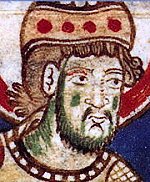
381
% complete
The bishop of Constantinople's connection with the imperial court allowed him to obtain recognition of next-after-Rome ranking from the First Council of Constantinople (381), held in the new capital, sowing seeds of rivalry with Rome.
Image source: First Council of Constantinople
400
% complete
In the 4th century, the Roman emperor reigning in Constantinople started to control the Church in his territory. This caesaropapism became a source of contention between Rome and Constantinople that led to the schism of 1054.
Image source: Caesaropapism
430 - 450
% complete
Alexandria's objections to Constantinople's promotion led to a constant struggle between the two sees in the first half of the 5th century, supported by Rome, which proposed that the most important sees were the three Petrine ones: Rome, Antioch, and Alexandria.
Image source: Pentarchy
451
% complete
Pope Leo I and his successors rejected canon 28 of the Council of Chalcedon, which elevated Constantinople's status; as a result it was not officially recorded even in the East until the 6th century. This canon remained a constant source of friction until 1054.
Image source: Council of Chalcedon
500
% complete
Resentment in the West against the Byzantine emperor's governance of the Church is shown as far back as the 6th century, when the tolerance of the Arian Gothic king was preferred to the caesaropapist claims of Constantinople.
840 - 850
% complete
In Eastern Christendom, the teaching of papal supremacy is said to be based on the pseudo-Isidorian Decretals, documents attributed to early popes but actually forged, probably in the second quarter of the 9th century, to defend bishops against metropolitans and secular authorities.
Image source: Pseudo-Isidore
879 - 880
% complete
At the 879–880 Council of Constantinople, the Eastern Orthodox Church anathematized the Filioque phrase as a novelty and augmentation of the Creed, deepening theological division over its insertion into the Nicene Creed by the West in 1014.
Image source: Filioque
1053
% complete
The first action leading to a formal schism occurred in 1053 when Patriarch Michael I Cerularius of Constantinople ordered the closure of all Latin churches in Constantinople, escalating tensions with Rome.
Image source: Michael I Cerularius
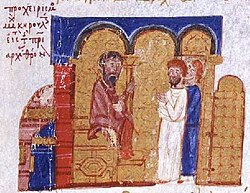
Sep 2, 1053
% complete
In response to Leo of Ohrid's attacks, Leo IX wrote the letter In terra pax of September 2, 1053, addressed to Cerularius and Leo of Ohrid, speaking at length of the privileges granted through Saint Peter to the see of Rome. Some scholars say this letter was never dispatched.
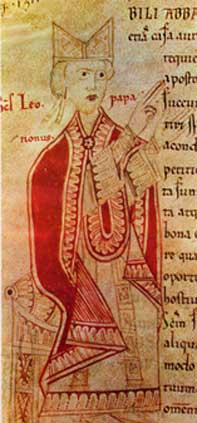
Image source: Pope Leo IX
1054
% complete
In 1054, the papal legate sent by Leo IX travelled to Constantinople to deny Cerularius the title of ecumenical patriarch, insist he recognize the pope's claim to head all churches, seek Byzantine help against the Normans, and respond to attacks on Western customs such as unleavened bread.
Image source: East–West Schism
Jan 1054
% complete
In his January 1054 reply Quantas gratias, Leo IX asked Constantine IX Monomachos for assistance against the Normans and complained of what the pope saw as Cerularius's arrogance.
Image source: Constantine IX Monomachos
Jan 1054
% complete
Some scholars say the papal reply actually sent was the softer but still harsh letter Scripta tuae of January 1054, part of the escalating correspondence before the formal break.
Jul 16, 1054 - Jul 20, 1054
% complete
On July 16, 1054, three months after Pope Leo's death, legates laid a bull of excommunication of Cerularius on the altar of Hagia Sophia. At a synod on July 20, Cerularius excommunicated the legates in turn. Historians regard these mutual excommunications as the terminal event of the schism.
1055
% complete
Even after 1054 friendly relations between East and West continued, as noted by Timothy Ware. Interactions in the 12th century show Latin crusaders incorporated local hierarchies rather than treating them as heretics or schismatics.
1080
% complete
Starting from the late 11th century, the dependency of the Byzantine Empire on the navies of Venice, Genoa, and Pisa led to the predominance of Catholic merchants in Byzantium, which had received major trading concessions since the 1080s, causing economic and social upheaval.
Image source: Republic of Venice
1150 - 1182
% complete
By the second half of the 12th century, rivalry among Italian city-states devolved to Italians raiding each other's quarters in the capital, and retaliatory draconian measures by Byzantine authorities deteriorated inter-religious relations.
Image source: Massacre of the Latins
1182
% complete
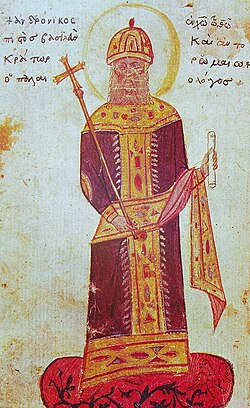
When the regency of Empress Maria of Antioch, notorious for favoring Latin merchants, was deposed by Andronikos I Komnenos, the new emperor allowed mobs to massacre the hated foreigners, greatly deepening animosity between East and West.
1185
% complete
The Massacre of the Latins in 1182 led to Western retaliation via the Sacking of Thessalonica in 1185, further poisoning relations between the Greek East and Latin West.
Image source: Sack of Thessalonica (1185)
1190
% complete
Byzantine theologian Theodore Balsamon wrote in 1190 that no Latin should be given sacraments unless he first declares he will abstain from Latin dogmas and customs and conform to Eastern practices.
Apr 1203
% complete
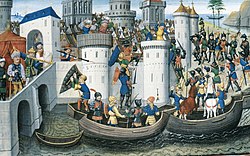
Motivated partly by lingering resentment over the massacre of the Latins, ill-fated crusade dynamics, and Alexios Angelos' request, the fourth crusader army arrived in Constantinople in April 1203.
Image source: Fourth Crusade
1204
% complete
Latin crusaders and Venetian merchants sacked Constantinople in 1204, looting the Church of Holy Wisdom and other Orthodox holy sites, converting them to Latin worship, and imposing Latin patriarchs. Some scholars believe this contributed more to the schism than the events of 1054.
Image source: Sack of Constantinople
1238
% complete
Emperor Baldwin II of Constantinople sold the relic of the Crown of Thorns while in France trying to raise funds to maintain his hold on Byzantium, part of the dispersal of looted religious artifacts to finance the Latin Empire.
Image source: Baldwin II, Latin Emperor
1242
% complete
After successes in the Northern Crusades, the Teutonic Knights attempted in 1240 to conquer the Eastern Orthodox Russian Republics of Pskov and Novgorod, somewhat endorsed by Pope Gregory IX. One major defeat they suffered was the Battle of the Ice in 1242.
Image source: Battle on the Ice
1261
% complete
In 1261, the Byzantine emperor Michael VIII Palaiologos brought the Latin Empire to an end, recovering Constantinople for the Greeks.
Image source: Michael VIII Palaiologos
1274 - 1281
% complete
The union effected at Lyon was a sham and political gambit, a fiction maintained by the emperor to prevent westerners from recovering Constantinople. In 1278, Pope Nicholas III sent legates demanding personal submission of every Orthodox cleric and adoption of the Filioque.
1281
% complete
Seeing that the union was only a sham, Pope Martin IV excommunicated Michael VIII in 1281 in support of Charles of Anjou's attempts to retake the Eastern Roman provinces lost to Michael.
Image source: Pope Martin IV
1282 - 1297
% complete
Michael VIII's son and successor Andronicus II repudiated the union, and Patriarch Bekkos was forced to abdicate, being eventually exiled and imprisoned until his death in 1297.
Image source: Andronikos II Palaiologos
1341 - 1351
% complete
Orthodox theologians assert that the theological division of East and West culminated in a direct theological conflict known as the Hesychasm controversy during several councils at Constantinople between 1341 and 1351.
Image source: Hesychasm
1438 - 1439
% complete
Pressed hard by the Ottoman Turks, eastern emperor John VIII Palaiologos arranged with Pope Eugene IV for reunion discussions at the Council of Ferrara-Florence.
Image source: Council of Florence
Jun 6, 1439
% complete
On June 6, 1439, an agreement was signed by all the Eastern bishops present but one, Mark of Ephesus, who held that Rome continued in both heresy and schism.
May 1453
% complete
At the time of the fall of Constantinople in May 1453, Orthodox Christianity was already entrenched in Russia, whose political and de facto religious centre had shifted from Kiev to Moscow. The Western attack of 1204 is seen as a factor leading to the Ottoman conquest.
Image source: Fall of Constantinople
1589
% complete
The Russian Church, a part of the Church of Constantinople until the mid-15th century, was granted full independence (autocephaly) and elevated to the rank of Patriarchate in 1589.
Image source: Russian Orthodox Church
1605 - 1612
% complete
In Russia, anti-Catholic sentiments were entrenched by the Polish intervention during the Time of Troubles in the early 17th century, seen as an attempt to convert Moscow to Catholicism. Unity Day commemorates the Our Lady of Kazan icon believed to have saved Moscow in 1612.
Image source: Time of Troubles
1724
% complete
A succession of Patriarchs of Antioch had been in communion with both Rome and Constantinople in the years preceding the Rome-Antioch schism of 1724, part of 16th- and 17th-century attempts at unions between the Roman Church and Eastern groups.
Image source: Melkite Greek Catholic Church
1729
% complete
In 1729, the Roman Church under Pope Benedict XIII prohibited communion with Orthodox Churches, contributing to the final separation between Catholicism and Eastern Orthodoxy in the 18th century.
Image source: Pope Benedict XIII
1755
% complete
In 1755, the patriarchs of Alexandria, Jerusalem and Constantinople, in retaliation, declared the final interruption of sacral communion with the Roman Church and declared Catholicism heretical.
1848
% complete
In their 1848 encyclical, the Eastern Patriarchs spoke of the Filioque as a heresy, reaffirming the condemnation first issued at the Council of Constantinople of 879–880.
1854
% complete
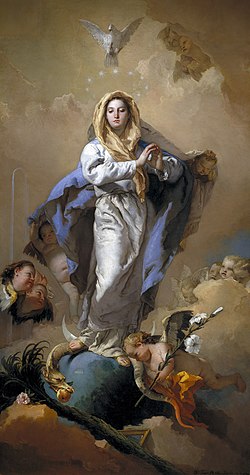
The Catholic doctrine of the Immaculate Conception, claiming God protected the Virgin Mary from original sin through no merit of her own, was dogmatically defined by Pope Pius IX in 1854, widening doctrinal differences with Orthodoxy.
Image source: Immaculate Conception
1869 - 1870
% complete
The Orthodox Church does not accept the doctrine of papal authority outlined in the First Vatican Council (1869–1870) and taught today in the Catholic Church, remaining a key obstacle to reunion.
Image source: First Vatican Council
1964
% complete
Inspired by Vatican II's adoption of the Unitatis Redintegratio decree on ecumenism in 1964, and a change of heart by the Moscow Patriarchate in 1961, new ecumenical initiatives between Catholics and Orthodox became possible.
Dec 7, 1965
% complete
In 1965, Pope Paul VI and Ecumenical Patriarch Athenagoras I lifted the mutual excommunications dating from the 11th century. This gesture of goodwill did not constitute a reunion.
1980
% complete
The Vatican and 14 universally recognised autocephalous Orthodox Churches established the Joint International Commission for Theological Dialogue, which first met in Rhodes in 1980 and remains an ongoing endeavour.
1993
% complete
In 1993, the Joint International Commission stated at Balamand, Lebanon, that 'uniatism' can no longer be accepted either as a method to be followed nor as a model of the unity the Churches are seeking.
Jun 1995
% complete
In June 1995, Patriarch Bartholomew I of Constantinople visited Vatican City for the first time and joined in the historic inter-religious day of prayer for peace at Assisi.
Image source: Ecumenical Patriarch Bartholomew of Constantinople
May 1999
% complete
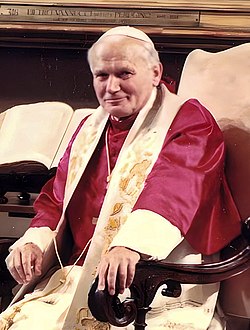
In May 1999, John Paul II was the first pope since the Great Schism to visit an Eastern Orthodox country: Romania, marking a milestone in Catholic–Orthodox reconciliation.
Image source: Pope John Paul II
Jun 2004 - Jun 29, 2004
% complete
In June 2004, Bartholomew I's visit to Rome afforded him another personal meeting with John Paul II and partial participation in the Eucharistic liturgy, following the program of past visits by Patriarch Dimitrios in 1987.
2007
% complete
The declaration of Ravenna in 2007 re-asserted the belief that the bishop of Rome is indeed the protos, although future discussions are to be held on the concrete ecclesiological exercise of papal primacy.
Nov 2008
% complete
The efforts of Orthodox patriarchs towards reconciliation with the Catholic Church have been strongly criticized by some elements of Eastern Orthodoxy, such as the Metropolitan of Kalavryta, Greece, in November 2008.
Image source: Panagia Trypiti
2010
% complete
In 2010, Patriarch Bartholomew I issued an encyclical lauding the ongoing dialogue between the Orthodox Church and other Christian churches, lamenting criticism conducted in an unacceptably fanatical way despite mutual agreement among all local Orthodox Churches.
Feb 2016
% complete
In February 2016, Pope Francis and Patriarch Kirill of the Russian Orthodox Church met in Cuba and signed a joint declaration expressing hope that their meeting may contribute to reconciliation wherever tensions exist between Greek Catholics and Orthodox.
Image source: Patriarch Kirill of Moscow
Or browse the full history timeline directory, with more than 2,000 topics.
This Great Schism timeline was generated with the help of AI, using information found on the internet.
We work hard to keep these timelines accurate, but mistakes do get through. If you spot one, email us at [email protected] and we'll fix it for future visitors.
Generate yours with AI or build it from scratch, for free.
Export your timeline, add your own events, edit or remove AI-generated events, and much more
No credit card required.
Cancel anytime.
Cancel anytime.
You can create an unlimited number of timelines with up to 10 events on each one, customize how they look, export them to PDF, PNG, PowerPoint, CSV, and Excel, and share them with a link. Paid plans raise the event limit and add features like spreadsheet imports and collaborators.
Yes. You can cancel your subscription from your account page at any time, and you will not be charged again. Your subscription stays active for the rest of the period you already paid for.
Yes. We will email you a reminder before the annual renewal, and we will also email you a receipt.
Yes. You can email us within 15 days of any payment, and we will issue you a full refund.
Check out our pricing docs or send us an email anytime: [email protected].