-
Use Cases
-
Resources
-
Pricing
Great Zimbabwe was a medieval city in south-eastern Zimbabwe and the capital of the Kingdom of Zimbabwe. Built between the 11th and 15th centuries by ancestors of the Shona people, it is renowned for its massive dry-stone walls and served as a major trading hub, connecting inland Africa to Swahili coast ports through gold and ivory trade. More Less
150 BC
% complete
Starting around 150 BC, Bantu-speaking peoples began settling the Great Zimbabwe area, eventually forming agricultural chiefdoms starting in the 4th century AD.
Image source: Great Zimbabwe
300 AD - 700 AD
% complete
Between the 4th and the 7th centuries, communities of the Gokomere or Ziwa cultures farmed the valley, and mined and worked iron, but built no stone structures.
1000 AD
% complete
Great Zimbabwe was settled from around 1000 AD, and would later serve as the capital of the Kingdom of Great Zimbabwe from the 13th century.
1000 AD - 1300 AD
% complete
Construction of the stone buildings started in the 11th century and continued for over 300 years, making Great Zimbabwe one of the most impressive stone-built cities in pre-colonial Africa.
1000 AD - 1300 AD
% complete
The Hill Complex is the oldest part of Great Zimbabwe, and was occupied from the 11th to 13th centuries, serving as an early centre of power at the site.
1100 AD - 1500 AD
% complete
Major construction on the city began in the 11th century and continued until the 15th century, transforming Great Zimbabwe into a vast complex of dry-stone walls and structures.
1100 AD
% complete
The focus of power moved from the Hill Complex in the 12th century, to the Great Enclosure, the Upper Valley and finally the Lower Valley in the early 16th century.
1200 AD - 1500 AD
% complete
The Great Enclosure was occupied from the 13th to 15th centuries, functioning as a key residential and ceremonial precinct of the city.
1200 AD
% complete
The process of urban development advanced rapidly in the 13th century, and saw the construction of large dry-stone walls that defined the city's monumental architecture.
1200 AD
% complete
From the 13th century, Great Zimbabwe served as the capital of the Kingdom of Great Zimbabwe, becoming the political heart of a powerful Shona state.
Image source: Kingdom of Zimbabwe
1200 AD - 1400 AD
% complete
The Great Enclosure, with its 11 m (36 ft) high dry stone walls constructed without mortar, was built during the 13th and 14th centuries, and likely served as the royal residence, with demarcated public spaces for rituals.
Image source: The Great Enclosure
1300 AD - 1600 AD
% complete
The Valley Complex was occupied from the 14th to 16th centuries, representing the later phase of occupation at Great Zimbabwe as power shifted down from the hilltop.
1100 AD - 1500 AD
% complete
Dated finds such as Chinese, Persian and Syrian artefacts also support the 12th- and 15th-century dates, indicating settlement in at least the 5th century, with continuous settlement between the 12th and 15th centuries and the bulk of finds from the 15th century.
1777 AD
% complete
The construction of Great Zimbabwe is also claimed by the Lemba, as documented by William Bolts in 1777 in his report to the Austrian Habsburg authorities.
Image source: Lemba people
1890 AD
% complete
Some of the carvings had been taken from Great Zimbabwe around 1890 and sold to Cecil Rhodes, who was intrigued and had copies made which he gave to friends.
Image source: Zimbabwe Bird
1891 AD - 1892 AD
% complete
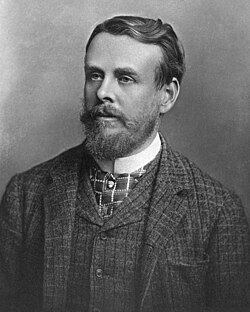
J. Theodore Bent, who had no formal archaeological training but had travelled widely in Greece and Asia Minor and excavated the Mounds of A'ali in Bahrain in 1889, investigated Great Zimbabwe alongside R. M. W. Swan (1858–1904), who also surveyed related stone ruins nearby.
Image source: James Theodore Bent
1892 AD
% complete
Bent stated in the first edition of his book The Ruined Cities of Mashonaland (1892) that the ruins revealed either the Phoenicians or the Arabs as builders, and he favoured the possibility of great antiquity for the fortress.
Image source: Mashonaland
1893 AD
% complete
In the Preface to his second edition (1893) Bent was more specific, with his primary theory being 'a Semitic race and of Arabian origin' of 'strongly commercial' traders living within a client African city — one of many fantastical theories later refuted.
1900 AD - 2000 AD
% complete
Throughout the 20th century, the historiography of Great Zimbabwe was dominated by the refutation of various fantastical and dehumanising theories ascribing the construction to Jews, Arabs, Phoenicians, and anyone but the Shona, along with other activities of the antiquarians.
1902 AD
% complete
In 1902, during the colonial period, the Great Zimbabwe Hotel was constructed in order to provide accommodation for Rhodesians and other Europeans who were visiting the Great Zimbabwe Monuments.
Image source: Great Zimbabwe
1905 AD - 1906 AD
% complete
The first scientific archaeological excavations at the site were undertaken by David Randall-MacIver for the British Association in 1905–1906, providing crucial evidence about the site's African origins.
1905 AD
% complete
Carl Peters collected a ceramic ushabti at Great Zimbabwe in 1905, an artefact that fuelled speculative theories linking the ruins to ancient Egypt, if not a relic of an old Egyptian station near the local gold mines.
Image source: Carl Peters
1926 AD
% complete
Damage to the ruins has taken place throughout the last century, threatening the preservation of this World Heritage site.
1929 AD
% complete
In mid-1929, Gertrude Caton Thompson concluded, after a twelve-day visit of a three-person team and the digging of several trenches, that the site was indeed created by Bantu peoples.
Image source: Gertrude Caton Thompson
1929 AD
% complete
Caton Thompson's most important contribution was in helping to confirm the theory of a medieval origin for the masonry work of the 14th and 15th centuries.
1931 AD
% complete
By 1931, Caton Thompson had modified her Bantu theory somewhat, allowing for a possible Arabian influence for the towers through the imitation of buildings or art seen at coastal Arabian trading cities.
1950 AD
% complete
The radiocarbon evidence is a suite of 28 measurements, for which all but the first four, from the early days of the use of that method and now viewed as inaccurate, support the 12th-to-15th-centuries chronology of continuous settlement.
1952 AD
% complete
In 1952, early radiocarbon dating produced some anomalous dates for Great Zimbabwe; these early measurements were later viewed as inaccurate, though they caused confusion for decades.
1970 AD - 1980 AD
% complete
In the 1970s, a beam that produced some of the anomalous dates in 1952 was reanalysed and gave a 14th-century date, supporting the established chronology of the site.
1980 AD
% complete
In 1980 the new internationally recognised independent country was renamed for the site, and its famous soapstone bird carvings were retained from the Rhodesian flag and Coat of Arms as a national symbol and depicted in the new Zimbabwean flag.
Image source: Zimbabwe
1980 AD
% complete
Reconstruction attempts since 1980 caused further damage, leading to alienation of the local communities from the site.
1980 AD
% complete
After the creation of the modern state of Zimbabwe in 1980, Great Zimbabwe has been employed to mirror and legitimise shifting policies of the ruling regime.
2000 AD
% complete
In the early 21st century, the government of Zimbabwe endorsed the creation of a university in the vicinity of the ruins, later known as Great Zimbabwe University.
Image source: Great Zimbabwe University
1300 AD
% complete
The growth of Great Zimbabwe has been linked to the decline of Mapungubwe from around 1300, or the greater availability of gold in the hinterland of Great Zimbabwe.
Image source: Kingdom of Mapungubwe
1300 AD
% complete
Great Zimbabwe became a centre for trading, having replaced Mapungubwe around 1300, connecting the interior of southern Africa to Indian Ocean commerce.
1300 AD - 1500 AD
% complete
Archeological evidence shows that some of the imported ceramics included Longquan green-glazed stoneware and blue-and-white porcelain that dates back to the 14th and 15th centuries, testifying to long-distance trade networks.
1400 AD
% complete
From the early 15th century, international trade began to decline amid a global economic downturn, reducing demand for gold, which adversely affected Great Zimbabwe's economy.
1450 AD
% complete
By the late 15th century, the consequences of economic decline began to manifest, as offshoots from Great Zimbabwe's royal family formed new dynasties, possibly as a result of losing succession disputes.
1500 AD
% complete
By the 16th century, political and economic power had shifted away from Great Zimbabwe to the north and west, marking the end of its dominance in the region.
1500 AD
% complete
Records indicate that there were always some of Benomotapa's wives therein, of whom Symbacayo took care. Thus, Great Zimbabwe appears to have still been inhabited as recently as the early 16th century.
1500 AD - 1700 AD
% complete
Major construction ended by the 15th century, and the site was abandoned in the 16th or 17th century. The site likely continued to be inhabited into the 17th century, before it was eventually abandoned.
1500 AD
% complete
Portuguese traders heard about the remains of the medieval city in the early 16th century, and records survive of interviews and notes made by some of them, linking Great Zimbabwe to gold production and long-distance trade.
1506 AD
% complete
In 1506, the explorer Diogo de Alcáçova described the edifices in a letter to Manuel I of Portugal, writing that they were part of the larger kingdom of Ucalanga, presumably Karanga, a dialect of the Shona people.
1513 AD - 1515 AD
% complete
The first European visit may have been made by the Portuguese traveler António Fernandes in 1513–1515, who crossed twice and reported in detail the region of present-day Zimbabwe, including fortified centers in stone without mortar.
1531 AD
% complete
Zimbabwe is the Shona name of the ruins, first recorded in 1531 by Vicente Pegado, captain of the Portuguese garrison of Sofala.
1538 AD
% complete
João de Barros left another description of Great Zimbabwe in 1538, as recounted to him by Moorish traders who had visited the area and possessed knowledge of the hinterland.
Image source: João de Barros
1867 AD
% complete
The ruins were rediscovered by Europeans during a hunting trip in 1867 by Adam Render, a German-American hunter, prospector and trader in southern Africa, who had been living with a local tribe.
Image source: Adam Render
1871 AD
% complete
In 1871 Adam Render showed the ruins to Karl Mauch, a German explorer and geographer of Africa. Investigations of the site by Europeans started in 1871, marking the beginning of formal European study of Great Zimbabwe.
Image source: Karl Mauch
Or browse the full history timeline directory, with more than 2,000 topics.
This Great Zimbabwe timeline was generated with the help of AI, using information found on the internet.
We work hard to keep these timelines accurate, but mistakes do get through. If you spot one, email us at [email protected] and we'll fix it for future visitors.
Generate yours with AI or build it from scratch, for free.
Export your timeline, add your own events, edit or remove AI-generated events, and much more
No credit card required.
Cancel anytime.
Cancel anytime.
You can create an unlimited number of timelines with up to 10 events on each one, customize how they look, export them to PDF, PNG, PowerPoint, CSV, and Excel, and share them with a link. Paid plans raise the event limit and add features like spreadsheet imports and collaborators.
Yes. You can cancel your subscription from your account page at any time, and you will not be charged again. Your subscription stays active for the rest of the period you already paid for.
Yes. We will email you a reminder before the annual renewal, and we will also email you a receipt.
Yes. You can email us within 15 days of any payment, and we will issue you a full refund.
Check out our pricing docs or send us an email anytime: [email protected].