-
Use Cases
-
Resources
-
Pricing
The Han Dynasty was one of China's most influential imperial dynasties, ruling from 206 BCE to 220 CE. Founded by Liu Bang after the fall of the Qin, it established Confucianism as state ideology, expanded Chinese territory, opened the Silk Road, and made enduring advances in papermaking, astronomy, and governance that shaped Chinese civilization for millennia. More Less
1050 BC - 256 BC
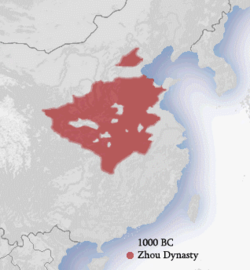
The foundations of the Chinese money economy were first laid during the Zhou dynasty (c. 1050–256 BC). This early monetary system would later provide the basis for the significant economic growth and monetization that flourished during the Han dynasty.
Image source: Zhou dynasty
202 BC - 220 AD
The Han dynasty experienced notable periods of economic prosperity, marked by agricultural expansion, thriving trade, and state monopolies on key commodities. These prosperous eras helped sustain the empire for over four centuries.
Image source: Economy of the Han dynasty

202 BC - 220 AD
During the Han dynasty, the money economy, which had first been established during the Zhou dynasty, grew significantly. Coinage circulated widely, facilitating commerce, taxation, and large-scale trade both within China and along emerging trade routes.
500 BC - 401 BC
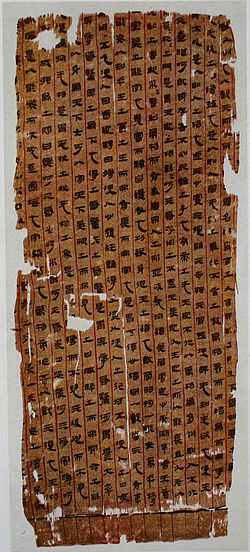
In the 5th century BC, during the Spring and Autumn period, the Chinese established the Sifen calendar, which measured the tropical year at 365.25 days. This calendar remained influential into the Han dynasty.
Image source: Han dynasty

202 BC - 220 AD
Han scholars created a musical scale of 60 tones, calculating the difference at 177147/176776 — the same value of 53 equal temperament later discovered by the German mathematician Nicholas Mercator (1620–1687).
Image source: Music of China

104 BC
In 104 BC, the Taichu calendar replaced the older Sifen calendar. It measured the tropical year at 365+385/1539 (~365.25016) days and the lunar month at 29+43/81 days, representing a refinement of Chinese astronomical calculation.
Image source: Chinese calendar

275 AD
The Greek mathematician Diophantus used negative numbers around AD 275, roughly contemporaneous with their use in Han China. This reflects the gradual global emergence of the concept of quantities below zero.
Image source: Negative number

700 AD
Negative numbers were also employed in the 7th-century Bakhshali manuscript of Gandhara, South Asia, demonstrating that the mathematical concept had spread to multiple civilizations, though it was not widely accepted in Europe until the 16th century.
Image source: Bakhshali manuscript

202 BC - 220 AD
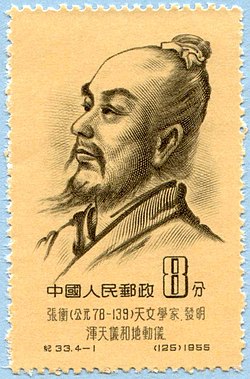
The Han dynasty was a unique period in the development of premodern Chinese science and technology, comparable in achievement to the scientific and technological growth later seen during the Song dynasty (960–1279).
Image source: Science and technology of the Han dynasty

200 BC - 101 BC
By the 2nd century BC, the three-legged iron seed drill had been invented in Han China. It enabled farmers to carefully plant crops in even rows instead of sowing seeds by hand, greatly improving agricultural efficiency and yields.
Image source: Seed drill

This Han Dynasty timeline was generated with the help of AI, using information found on the internet.
We work hard to keep these timelines accurate, but mistakes do get through. If you spot one, email us at [email protected] and we'll fix it for future visitors.
Generate yours with AI or build it from scratch, for free.