-
Use Cases
-
Resources
-
Pricing
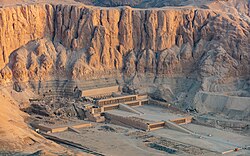
Hatshepsut was one of the most successful and longest-reigning female pharaohs of ancient Egypt. Ascending to power as regent for her young stepson Thutmose III, she eventually declared herself pharaoh and ruled for over two decades. Her reign was marked by prosperous trade expeditions, most famously to the Land of Punt, monumental construction projects including her magnificent mortuary temple at Deir el-Bahri, and a period of peace and economic stability. More Less
1526 BC
% complete
According to the high chronology estimate, Hatshepsut's father Thutmose I began his reign in 1526 BC. The exact lengths of the reigns of Thutmose I and Thutmose II cannot be determined with certainty.
Image source: Thutmose I
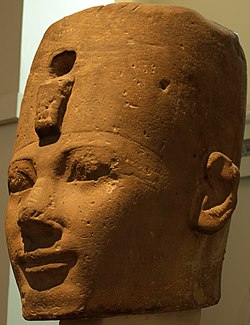
1506 BC
% complete
According to the low chronology estimate, Thutmose I began his reign in 1506 BC. This uncertainty in dating his reign affects the precise chronology of Hatshepsut's early life and subsequent rise to power.
1505 BC
% complete
Hatshepsut was born sometime between 1505 and 1495 BC as the eldest daughter of the pharaoh Thutmose I and his great royal wife Ahmose. As a princess of the Eighteenth Dynasty, she occupied a prominent position in the Egyptian royal family from birth.
Image source: Hatshepsut
1505 BC
% complete
As the eldest daughter of Thutmose I and his great royal wife Ahmose, Hatshepsut held an especially legitimate claim within the royal line, being a child of both the reigning pharaoh and his principal queen.
1495 BC
% complete
Hatshepsut became the Great Royal Wife of Pharaoh Thutmose II, her half-brother. This position made her the most powerful woman at court during his reign and positioned her to later act on behalf of the young heir.
Image source: Thutmose II
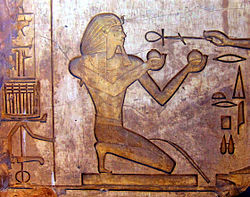
1479 BC
% complete
Upon the accession of the young Thutmose III around 1479 BC, Hatshepsut initially served as regent, governing Egypt on behalf of the child king who was too young to rule alone.
Image source: Thutmose III
1479 BC - 1472 BC
% complete
Modern scholars agree that Hatshepsut first governed Egypt as regent for her young nephew/stepson Thutmose III following his accession in c. 1479 BC. During these years she exercised full royal authority in the boy king's name.
1479 BC
% complete
When Hatshepsut assumed the position of pharaoh, she adopted Thutmose III's existing regnal count, meaning her reign was officially reckoned from Year 1, when she had served only as regent rather than as pharaoh.
1472 BC - 1458 BC
% complete
By Year 7 of Thutmose III's reign, c. 1472 BC, Hatshepsut assumed the position of pharaoh alongside him, becoming queen regnant. She shared his existing regnal count, effectively back-dating her accession as pharaoh to Year 1, when she had been merely regent.
1472 BC - 1458 BC
% complete
Hatshepsut ruled as the sixth pharaoh of the Eighteenth Dynasty of Egypt, one of the most powerful dynasties of ancient Egypt's New Kingdom period, ruling first as regent and then as queen regnant.
1471 BC
% complete
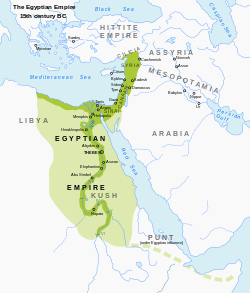
By Year 9 of the shared regnal count, c. 1471 BC, Hatshepsut was certainly ruling as pharaoh. This is the date of the famous Punt expedition, which sailed to the distant land of Punt and returned with exotic goods.
Image source: Land of Punt
1471 BC
% complete
The expedition to the land of Punt was undertaken around c. 1471 BC, in Year 9. It is among the most celebrated achievements of Hatshepsut's reign, confirming that she was unquestionably pharaoh at this time.
1460 BC
% complete
Hatshepsut's final dated attestation as pharaoh falls in Year 20 of the shared regnal count, c. 1460 BC, after which the historical record falls silent about her activities before her disappearance from documents in Year 22.
May 22, 1459 BC
% complete
Hatshepsut's last dated attestation as pharaoh is Year 20, III Peret, Day 2, corresponding approximately to 22 May 1459 BC. After this date, no further securely dated records of her reign survive.
1458 BC
% complete
After her last dated attestation in Year 20, c. 1460 BC, Hatshepsut no longer appears in official records by Year 22, c. 1458 BC, marking the effective end of her documented presence in the historical record.
Jan 16, 1458 BC
% complete
A single stela erected at Armant records the precise date of the beginning of Thutmose III's reign as sole ruler of Egypt — and presumably of Hatshepsut's death — as Year 22, II Peret, Day 10, possibly corresponding to 16 January 1458 BC or 16 January 1457 BC.
Jan 16, 1458 BC
% complete
Based on Manetho's reign length preserved by Josephus, Hatshepsut ceased to reign in Year 22, c. 1458 BC, after roughly two decades as queen regnant of Egypt.
Jan 16, 1457 BC
% complete
The Armant stela's date may alternatively correspond to 16 January 1457 BC under a different chronological reconstruction, illustrating the lingering uncertainty over when exactly Thutmose III began ruling alone.
Image source: Montu
300 BC
% complete
Manetho, writing in the 3rd century BC, recorded a reign length of 21 years and 9 months for Hatshepsut. This figure, preserved in Josephus's book Contra Apionem, indicates that she ceased to reign in Year 22, c. 1458 BC.
Image source: Against Apion
100 AD
% complete
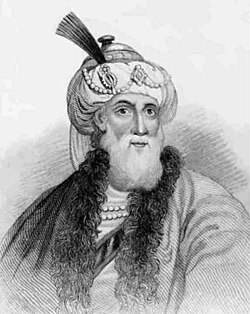
Josephus and Julius Africanus follow the earlier testimony of Manetho, mentioning a queen regnant called Amessis or Amensis, specified by Josephus as having been the sister of her predecessor — a reference generally understood to describe Hatshepsut.
Image source: Josephus
1850 - 1900
% complete
When 19th-century Egyptologists started to interpret the texts on the Deir el-Bahari temple walls, which were illustrated with two seemingly male kings, their translations made no sense, puzzling scholars for decades.
Image source: Mortuary temple of Hatshepsut
1880 - 1920
% complete
The problem of interpreting Hatshepsut's representations was a major issue in late 19th-century and early 20th-century Egyptology, centering on confusion and disagreement about the order of succession of early 18th Dynasty pharaohs.
Image source: Eighteenth Dynasty of Egypt
1903
% complete
In 1903, Egyptologist Howard Carter discovered tomb KV60 in the Valley of the Kings. This modest tomb would later become central to efforts to identify the mummy of Queen Hatshepsut herself.
Image source: KV60
1903 - 1904
% complete
Howard Carter cleared tomb KV20 in the Valley of the Kings in 1903, recovering funerary furniture belonging to Hatshepsut from what is believed to be the tomb originally prepared for her burial.
Image source: KV20
1903
% complete
Besides the objects recovered during Howard Carter's 1903 clearance of KV20, other funerary furniture belonging to Hatshepsut has been found elsewhere, enriching knowledge of her royal burial equipment.
1903
% complete
Among the funerary furnishings belonging to Hatshepsut discovered outside KV20 was a lioness throne or bedstead, a striking piece of royal furniture attesting to her status as pharaoh.
1903
% complete
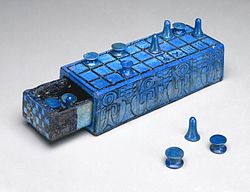
A senet game board belonging to Hatshepsut was found, complete with carved lioness-headed red-jasper game pieces bearing her pharaonic title, offering an intimate glimpse of the queen's leisure objects.
Image source: Senet
1903
% complete
Other funerary items belonging to Hatshepsut include a signet ring and a partial shabti figurine bearing her name, further documenting the dispersed remains of her burial equipment.
Image source: Ushabti
1935 - 1936
% complete
During a 1935–36 Metropolitan Museum of Art expedition, a jar stamped with the seal of the 'God's Wife Hatshepsut' was discovered in situ on a hillside near Thebes, and two other jars bore the seal of 'The Good Goddess Maatkare', her throne name.
Image source: Metropolitan Museum of Art
2007
% complete
In spring 2007, the unidentified body known as KV60A was finally removed from tomb KV60 by Dr. Zahi Hawass, initiating scientific examination aimed at identifying whether the mummy was that of Queen Hatshepsut.
2011
% complete
In 2011, the tooth previously used to identify the mummy from KV60 as Hatshepsut was identified as a lower-jaw molar, whereas the KV60 mummy was missing an upper-jaw molar, casting doubt on the supposed identification of the queen's remains.
Or browse the full history timeline directory, with more than 2,000 topics.
This Hatshepsut timeline was generated with the help of AI, using information found on the internet.
We work hard to keep these timelines accurate, but mistakes do get through. If you spot one, email us at [email protected] and we'll fix it for future visitors.
Generate yours with AI or build it from scratch, for free.
Export your timeline, add your own events, edit or remove AI-generated events, and much more
No credit card required.
Cancel anytime.
Cancel anytime.
You can create an unlimited number of timelines with up to 10 events on each one, customize how they look, export them to PDF, PNG, PowerPoint, CSV, and Excel, and share them with a link. Paid plans raise the event limit and add features like spreadsheet imports and collaborators.
Yes. You can cancel your subscription from your account page at any time, and you will not be charged again. Your subscription stays active for the rest of the period you already paid for.
Yes. We will email you a reminder before the annual renewal, and we will also email you a receipt.
Yes. You can email us within 15 days of any payment, and we will issue you a full refund.
Check out our pricing docs or send us an email anytime: [email protected].