-
Use Cases
-
Resources
-
Pricing
Egyptian mummification was a complex funerary practice developed by ancient Egyptians to preserve the body for the afterlife. Evolving over nearly 3,000 years, the process involved removing internal organs, drying the body with natron salt, wrapping it in linen bandages, and performing elaborate religious rituals. Mummification reflected core Egyptian beliefs about death, resurrection, and eternal life. More Less
6000 BCE - 3150 BCE
Although no writing survived from the Predynastic period in Egypt (c. 6000–3150 BCE), scholars believe the importance of the physical body and its preservation originated during that time. This early reverence for the intact corpse laid the conceptual foundation for the later development of mummification as a central funerary practice.
Image source: Ancient Egyptian religion

4800 BCE - 4300 BCE
Some of the earliest burial sites in ancient Egypt belong to the Merimde culture, which dates to 4800–4300 B.C. These graves represent some of the first evidence of how early Egyptians treated their dead, marking an important starting point for the evolution of Egyptian burial customs.
Image source: Merimde culture

4400 BCE - 3800 BCE
At first, people excavated round graves with one pot in the Badarian period (4400–3800 BCE), continuing the tradition of the Omari and Maadi cultures. These simple burials show the modest beginnings of a tradition that would grow increasingly elaborate over the following millennia.
Image source: Badarian culture

3650 BCE - 3300 BCE
By the end of the Predynastic period, there were increasing numbers of objects deposited with the body in rectangular graves, and there is growing evidence of rituals practiced by Egyptians of the Naqada II period (3650–3300 BCE). This marks a significant elaboration of grave goods and ceremonial treatment of the dead.
Image source: Naqada culture
3600 BCE
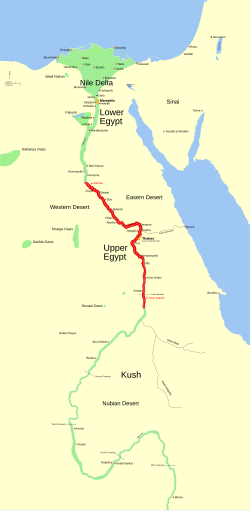
By 3600 BCE, Egyptians had begun to mummify the dead, wrapping them in linen bandages with embalming oils made from conifer resin and aromatic plant extracts. This early experimentation with preservation techniques represents the true birth of Egyptian mummification.
Image source: Ancient Egyptian funerary practices

1836 BCE - 1818 BCE
In the later Twelfth Dynasty, significant changes occurred in burials, perhaps reflecting administrative changes enacted by King Senwosret III (1836–1818 BCE). His reign brought shifts in funerary customs that may have been tied to broader reorganization of the Egyptian state.
Image source: Senusret III

450 BC
Greek historian Herodotus, writing in the 5th century BC, provides one of the most complete surviving accounts of how ancient Egyptians approached the preservation of a dead body. His descriptions detail the different tiers of embalming available and the step-by-step process used by embalmers.
Image source: Herodotus

100 BC
Diodorus Siculus, writing in the 1st century BC, provides the other most complete surviving evidence of ancient Egyptian mummification methods. Together with Herodotus, his writings form the primary literary record of how embalmers carried out their work in antiquity.
Image source: Diodorus Siculus

400 - 499
Mummification largely came to an end in the 5th century AD as Christianity spread through Egypt and traditional pagan funerary customs faded. The millennia-old practice of artificial preservation of the dead entered its final decline during this period.
641
The remaining practices of mummification were ended by the Arab conquest of 641. With the Islamic conquest of Egypt, the last vestiges of the ancient embalmers' craft disappeared after more than three thousand years of continuous tradition.
Image source: Arab conquest of Egypt

This Egyptian Mummification timeline was generated with the help of AI, using information found on the internet.
We work hard to keep these timelines accurate, but mistakes do get through. If you spot one, email us at [email protected] and we'll fix it for future visitors.
Generate yours with AI or build it from scratch, for free.