-
Use Cases
-
Resources
-
Pricing
Egyptian Pharaohs were the supreme rulers of ancient Egypt for nearly three millennia, regarded as living gods who unified political and religious authority. This timeline traces the major dynasties and pharaohs—from the unification of Upper and Lower Egypt under Narmer through the Old Kingdom pyramid builders like Khufu, the New Kingdom warrior pharaohs such as Hatshepsut, Thutmose III, Ramesses II, and Tutankhamun, to the last ruler, Cleopatra VII—highlighting how their reigns shaped one of history's greatest civilizations. More Less
3150 BC
% complete
Pharaoh Narmer, often identified with Menes, unified Upper and Lower Egypt around 3150 BC, founding the First Dynasty and establishing Memphis as the capital. His famous Narmer Palette depicts this momentous unification, marking the beginning of pharaonic civilization that would endure for three millennia.
Image source: Narmer
3100 BC
% complete
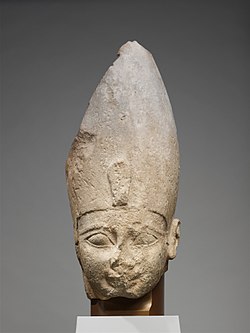
Hor-Aha succeeded Narmer as ruler of a unified Egypt, consolidating the new state through military campaigns in Nubia and Libya. He is traditionally credited with founding the city of Memphis and strengthening the institutions of divine kingship.
Image source: Hor-Aha
2670 BC
% complete
Pharaoh Djoser of the Third Dynasty commissioned his architect Imhotep to build the Step Pyramid at Saqqara, the first monumental stone building in Egypt. This revolutionary structure marked the beginning of the great age of pyramid construction.
Image source: Djoser
2613 BC - 2589 BC
% complete
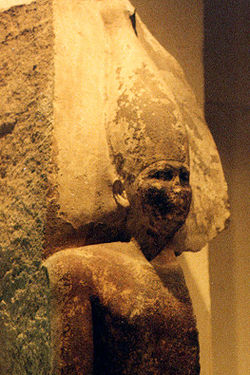
Sneferu, founder of the Fourth Dynasty, built three major pyramids including the Meidum Pyramid, the Bent Pyramid, and the Red Pyramid at Dahshur. The Red Pyramid was Egypt's first successful true smooth-sided pyramid, setting the standard for his successors.
Image source: Sneferu
2560 BC
% complete
Pharaoh Khufu constructed the Great Pyramid of Giza, the tallest man-made structure on Earth for over 3,800 years. Built from millions of limestone blocks, it remains the only surviving wonder of the ancient world and a testament to Old Kingdom engineering.
Image source: Great Pyramid of Giza
2532 BC
% complete
Khafre, son of Khufu, built the second pyramid at Giza along with the Great Sphinx, a colossal limestone statue with a lion's body and the pharaoh's head. His reign represented the height of Old Kingdom prosperity and monument building.
Image source: Khafre
2278 BC - 2184 BC
% complete
Pepi II allegedly reigned for over 90 years, one of the longest reigns in history. His death marked the effective end of the Old Kingdom, as central authority collapsed into the First Intermediate Period of competing provincial dynasties.
Image source: Pepi II Neferkare
2055 BC
% complete
Mentuhotep II of the Eleventh Dynasty defeated the Herakleopolitan kings and reunified Egypt after decades of division. He established Thebes as a royal center and ushered in the Middle Kingdom, a golden age of literature, art, and administration.
Image source: Mentuhotep II
1991 BC
% complete
Amenemhat I moved the capital north to Itjtawy near the Fayum and established co-regency with his son Senusret I to secure succession. His dynasty presided over Egypt's economic revival and expansion into Nubia.
Image source: Amenemhat I
1878 BC - 1839 BC
% complete
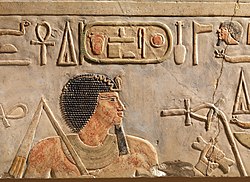
Senusret III led repeated military campaigns into Nubia, extending Egypt's southern border and building a chain of fortresses along the Nile. He also reorganized the administration, reducing the power of nomarchs and centralizing royal authority.
Image source: Senusret III
1860 BC - 1814 BC
% complete
Amenemhat III built his pyramid complex at Hawara with an adjoining temple so vast that classical writers called it the Labyrinth. His reign saw major land reclamation projects in the Fayum and peak Middle Kingdom prosperity.
Image source: Amenemhat III
1650 BC
% complete
The Hyksos, a West Asian people, took control of Lower Egypt from their capital at Avaris during the Fifteenth Dynasty, beginning the Second Intermediate Period. They introduced the horse-drawn chariot and composite bow to Egyptian warfare.
Image source: Hyksos
1550 BC - 1525 BC
% complete
Ahmose I completed the liberation of Egypt by capturing Avaris and driving the Hyksos out of the Delta. He founded the Eighteenth Dynasty and launched the New Kingdom, an era of empire, wealth, and monumental achievement.
Image source: Ahmose I
1479 BC - 1458 BC
% complete
Hatshepsut ruled as pharaoh for over two decades, initially as regent for Thutmose III before declaring herself king. She sponsored the famed expedition to Punt and built her magnificent terraced mortuary temple at Deir el-Bahari.
Image source: Hatshepsut
1457 BC
% complete
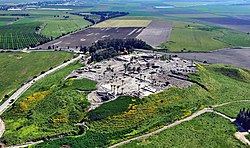
Thutmose III crushed a Canaanite coalition at Megiddo through a daring march through narrow mountain passes. He went on to lead seventeen campaigns, forging an empire stretching from the Euphrates to Nubia and earning the title 'Napoleon of Egypt.'
Image source: Battle of Megiddo (15th century BC)
1391 BC - 1353 BC
% complete
Amenhotep III presided over unprecedented prosperity, commissioning the Colossi of Memnon and lavish palaces at Malkata. Diplomatic correspondence with Babylon, Mitanni, and other powers shows Egypt at the apex of its international influence.
Image source: Amenhotep III
1353 BC - 1336 BC
% complete
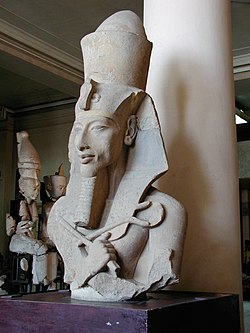
Akhenaten abandoned the traditional gods in favor of exclusive worship of the sun disk Aten, moving the capital to the newly built city of Akhetaten (Amarna). His radical religious revolution was largely reversed after his death.
Image source: Akhenaten
1332 BC - 1323 BC
% complete
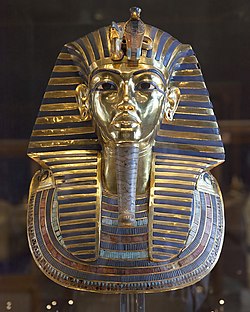
The boy king Tutankhamun reversed Akhenaten's reforms, restoring Amun and the old priesthood and returning the capital to Thebes. Though minor in life, the discovery of his intact tomb by Howard Carter in 1922 made him the most famous pharaoh today.
Image source: Tutankhamun
1274 BC
% complete
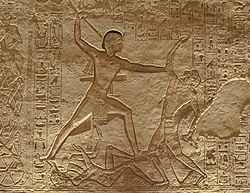
Ramesses II clashed with the Hittite Empire under Muwatalli II at Kadesh in one of the largest chariot battles in history. Though tactically inconclusive, Ramesses proclaimed a great victory and later signed the first known peace treaty with the Hittites.
Image source: Battle of Kadesh
1264 BC - 1244 BC
% complete
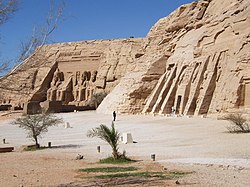
Ramesses II, the Great, erected the colossal rock-cut temples of Abu Simbel, the Ramesseum, and a new capital at Pi-Ramesses. His 66-year reign made him arguably the most celebrated builder among all Egyptian pharaohs.
Image source: Abu Simbel
1209 BC
% complete
Merneptah repulsed a coalition of Libyans and Sea Peoples invading the Delta. His Victory Stele contains the earliest known mention of Israel outside the Bible, making it a key document for biblical archaeology.
Image source: Merneptah
1175 BC
% complete
Ramesses III turned back a massive invasion by the Sea Peoples, preserving Egypt during the Late Bronze Age collapse. Often called the last great pharaoh, he was later assassinated in a palace conspiracy known as the Harem Conspiracy.
Image source: Ramesses III
943 BC
% complete
Shoshenq I, a Libyan chieftain's descendant, seized the throne and founded the Libyan Twenty-second Dynasty. He campaigned into Judah and Israel, and many scholars identify him with the biblical Shishak who plundered Jerusalem.
Image source: Shoshenq I
728 BC
% complete
Piye, king of Kush (Nubia), marched north and conquered Egypt, establishing the Twenty-fifth Dynasty of black pharaohs. His victory stele vividly describes the campaign, and Kushite rulers revived Old Kingdom artistic traditions.
Image source: Piye
671 BC - 664 BC
% complete
Taharqa, the greatest Kushite pharaoh, fought successive Assyrian invasions under Esarhaddon and Ashurbanipal. Despite initial successes, the Assyrians eventually sacked Memphis and Thebes, ending Kushite rule over Egypt.
Image source: Taharqa
664 BC - 610 BC
% complete
Psamtik I gradually drove out Assyrian garrisons and reunified Egypt under the Twenty-sixth Dynasty from Sais. His long reign inaugurated a cultural renaissance and renewed trade with Greece and the Levant.
Image source: Psamtik I
610 BC - 595 BC
% complete
Necho II launched ambitious projects including a canal linking the Nile to the Red Sea, a precursor to the Suez Canal, and reportedly sent Phoenician sailors on a circumnavigation of Africa. He also defeated Josiah of Judah at Megiddo.
Image source: Necho II
525 BC
% complete
Cambyses II of Persia defeated Pharaoh Psamtik III at the Battle of Pelusium and annexed Egypt as a satrapy, beginning the First Persian Period. Persian pharaohs of the Twenty-seventh Dynasty ruled Egypt intermittently for two centuries.
Image source: Cambyses II
404 BC
% complete
Amyrtaeus of Sais expelled the Persian occupiers and founded the Twenty-eighth Dynasty, restoring native rule. The following dynasties maintained independence until Artaxerxes III reconquered Egypt in 343 BC.
Image source: Amyrtaeus
332 BC
% complete
Alexander the Great entered Egypt in triumph, was welcomed as a liberator, and was crowned pharaoh at Memphis. He founded Alexandria, which became the greatest Hellenistic city, and visited the oracle of Amun at Siwa, where he was declared son of the god.
Image source: Alexander the Great
305 BC
% complete
After Alexander's death, his general Ptolemy declared himself King of Egypt, founding the Ptolemaic Dynasty of Greek-speaking pharaohs. He established the Library and Museum of Alexandria, making the city the intellectual capital of the Mediterranean world.
Image source: Ptolemy I Soter
51 BC - 30 BC
% complete
Cleopatra VII, the last ruler of the Ptolemaic Dynasty, allied herself with Julius Caesar and later Mark Antony in a bid to preserve Egypt's independence. Her defeat alongside Antony at Actium sealed the fate of both her kingdom and pharaonic rule itself.
Image source: Cleopatra
30 BC
% complete
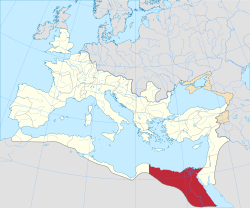
Following Cleopatra VII's suicide, Octavian annexed Egypt as a Roman province, bringing three thousand years of pharaonic rule to an end. Egypt thereafter became the personal domain of the Roman emperor and a vital source of grain for Rome.
Image source: Roman Egypt
Or browse the full history timeline directory, with more than 2,000 topics.
This Egyptian Pharaohs timeline was generated with the help of AI, using information found on the internet.
We work hard to keep these timelines accurate, but mistakes do get through. If you spot one, email us at [email protected] and we'll fix it for future visitors.
Generate yours with AI or build it from scratch, for free.
Export your timeline, add your own events, edit or remove AI-generated events, and much more
No credit card required.
Cancel anytime.
Cancel anytime.
You can create an unlimited number of timelines with up to 10 events on each one, customize how they look, export them to PDF, PNG, PowerPoint, CSV, and Excel, and share them with a link. Paid plans raise the event limit and add features like spreadsheet imports and collaborators.
Yes. You can cancel your subscription from your account page at any time, and you will not be charged again. Your subscription stays active for the rest of the period you already paid for.
Yes. We will email you a reminder before the annual renewal, and we will also email you a receipt.
Yes. You can email us within 15 days of any payment, and we will issue you a full refund.
Check out our pricing docs or send us an email anytime: [email protected].