-
Use Cases
-
Resources
-
Pricing
Cleopatra VII Philopator (69–30 BCE) was the last active ruler of the Ptolemaic Kingdom of Egypt. A highly educated and politically skilled queen, she forged powerful alliances with Julius Caesar and Mark Antony in her efforts to preserve Egypt's independence, ultimately meeting defeat by Octavian and ending three centuries of Ptolemaic rule. More Less
50 BC
% complete
Dated to the mid-1st century BC, this depiction is perhaps the earliest portrayal of Cleopatra as both a goddess and ruling pharaoh of Egypt.
Image source: Cleopatra
50 BC
% complete
In the House of Marcus Fabius Rufus at Pompeii, Italy, a mid-1st century BC Second Style wall painting of the goddess Venus holding a cupid near massive temple doors is most likely a depiction of Cleopatra as Venus Genetrix with her son Caesarion.
50 BC
% complete
Both heads are dated to the mid-1st century BC and were found in Roman villas along the Via Appia in Italy, the Vatican Cleopatra having been unearthed in the Villa of the Quintilii.
50 BC
% complete
Discovered near a sanctuary of Isis in Rome and dated to the 1st century BC, it is either Roman or Hellenistic-Egyptian in origin.
Sep 25, 46 BC
% complete
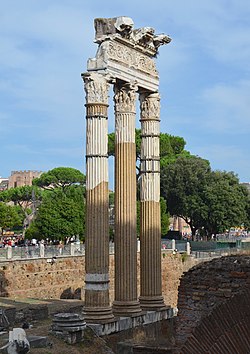
The Temple of Venus Genetrix in the Forum of Caesar was established on 25 September 46 BC and contained a golden statue of Cleopatra, associating the mother of Caesar's child directly with the goddess Venus, mother of the Romans. The statue stood there at least until the 3rd century AD.
Image source: Temple of Venus Genetrix
100
% complete
A Roman panel painting from Herculaneum, Italy, dated to the 1st century AD possibly depicts Cleopatra.
100
% complete
A painting from Pompeii, dated to the early 1st century AD and located in the House of Giuseppe II, contains a possible depiction of Cleopatra with her son Caesarion, both wearing royal diadems while she reclines and consumes poison in an act of suicide.
200
% complete
The statue erected there by Caesar remained in the temple at least until the 3rd century AD, its preservation perhaps owing to Caesar's patronage, although Augustus did not remove or destroy artworks in Alexandria depicting Cleopatra.
1874
% complete
Since the 1950s scholars have debated whether the Esquiline Venus—discovered in 1874 on the Esquiline Hill in Rome and housed in the Palazzo dei Conservatori of the Capitoline Museums—is a depiction of Cleopatra, based on the statue's hairstyle, facial features, apparent royal diadem, and uraeus cobra wrapped around the base.
1950
% complete
Since the 1950s scholars have debated whether the Esquiline Venus is a depiction of Cleopatra, based on the statue's hairstyle and facial features, apparent royal diadem worn over the head, and the uraeus Egyptian cobra wrapped around the base. It is generally thought to be a mid-1st-century AD Roman copy of a 1st-century BC Greek original from the school of Pasiteles.
Image source: Esquiline Venus
100
% complete
Publications on ancient Greek medicine attributed to Cleopatra are likely to be the work of a physician by the same name writing in the late first century AD.
100
% complete
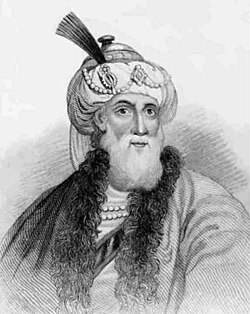
The Jewish Roman historian Josephus, writing in the 1st century AD, provides valuable information on the life of Cleopatra via her diplomatic relationship with Herod the Great.
Image source: Josephus
100
% complete
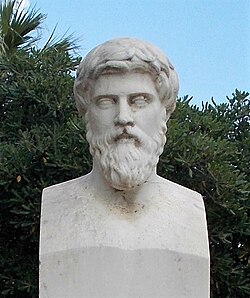
Plutarch lived a century after Cleopatra but relied on primary sources, such as Philotas of Amphissa, who had access to the Ptolemaic royal palace, Cleopatra's personal physician named Olympos, and Quintus Dellius, a close confidant of Mark Antony and Cleopatra.
Image source: Plutarch
100
% complete
Despite not being a biography of Cleopatra, the Life of Antonius written by Plutarch in the 1st century AD provides the most thorough surviving account of Cleopatra's life.
Image source: Antonius
200
% complete
The Roman History published by the official and historian Cassius Dio in the early 3rd century AD, while failing to fully comprehend the complexities of the late Hellenistic world, nevertheless provides a continuous history of the era of Cleopatra's reign.
Image source: Cassius Dio
300
% complete
Rowland highlights that the 'Berenice called Cleopatra' cited by the 3rd- or 4th-century female Roman physician Metrodora was likely conflated by medieval scholars as referring to Cleopatra.
Image source: Metrodora
40
% complete
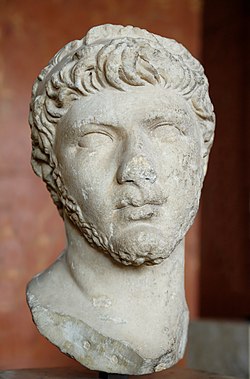
Ptolemy of Mauretania was the last known monarch of the Ptolemaic dynasty, although Queen Zenobia, of the short-lived Palmyrene Empire during the Crisis of the Third Century, claimed descent from Cleopatra.
Image source: Ptolemy of Mauretania
900
% complete
Works of Islamic historiography written in Arabic covered the reign of Cleopatra, such as the 10th-century Meadows of Gold by Al-Masudi, although his work erroneously claimed that Octavian died soon after Cleopatra's suicide.
Image source: The Meadows of Gold
1350
% complete
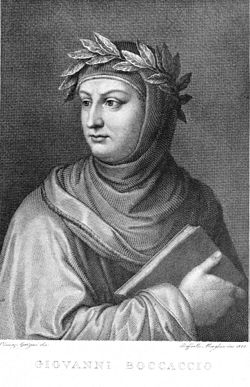
Chaucer wrote his works partly in reaction to the negative depiction of Cleopatra in De Mulieribus Claris and De Casibus Virorum Illustrium, Latin works by the 14th-century Italian poet Giovanni Boccaccio.
Image source: Giovanni Boccaccio
1380
% complete
The 14th-century English poet Geoffrey Chaucer, in The Legend of Good Women, contextualized Cleopatra for the Christian world of the Middle Ages. He highlighted Cleopatra's relationships with only two men as hardly the life of a seductress.
Image source: Geoffrey Chaucer
1409
% complete
Cleopatra appeared in miniatures for illuminated manuscripts, such as a depiction of her and Antony lying in a Gothic-style tomb by the Boucicaut Master in 1409.
Image source: Boucicaut Master
1500
% complete
Early prints depicting Cleopatra include designs by the Renaissance artists Raphael and Michelangelo, as well as 15th-century woodcuts in illustrated editions of Boccaccio's works.
1500
% complete
In the visual arts, the sculpted depiction of Cleopatra as a free-standing nude figure committing suicide began with the 16th-century sculptors Bartolommeo Bandinelli and Alessandro Vittoria.
1504
% complete
The Renaissance humanist Bernardino Cacciante, in his 1504 Libretto apologetico delle donne, was the first Italian to defend the reputation of Cleopatra and criticize the perceived moralizing and misogyny in Boccaccio's works.
1607
% complete
The death of Elizabeth I of England in 1603, and the German publication in 1606 of alleged letters of Cleopatra, inspired Samuel Daniel to alter and republish his 1594 play Cleopatra in 1607.
Image source: Samuel Daniel
1608
% complete
William Shakespeare's Antony and Cleopatra, largely based on Plutarch, was first performed in 1608 and provided a somewhat salacious view of Cleopatra in stark contrast to England's own Virgin Queen.
1724
% complete
Cleopatra was featured in operas, such as George Frideric Handel's 1724 Giulio Cesare in Egitto, which portrayed the love affair of Caesar and Cleopatra; Domenico Cimarosa wrote Cleopatra on a similar subject in 1789.
Image source: Giulio Cesare
1818
% complete
In 1818, a now lost encaustic painting was discovered in the Temple of Serapis at Hadrian's Villa, near Tivoli, Lazio, Italy, that depicted Cleopatra committing suicide with an asp biting her bare chest.
Image source: Hadrian's Villa
1822
% complete
A chemical analysis performed in 1822 confirmed that the medium for the painting was composed of one-third wax and two-thirds resin.
1825
% complete
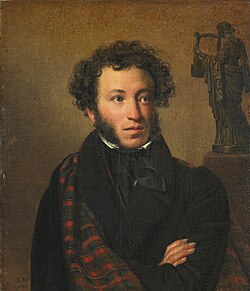
In his unfinished 1825 short story The Egyptian Nights, Alexander Pushkin popularized the claims of the 4th-century Roman historian Aurelius Victor, previously largely ignored, that Cleopatra had prostituted herself to men who paid for sex with their lives.
Image source: Alexander Pushkin
1838
% complete
Rider Haggard's Cleopatra (1889) and Théophile Gautier's One of Cleopatra's Nights (1838) depicted the queen as a sensual and mystic Easterner, while the Egyptologist Georg Ebers's Cleopatra (1894) was more grounded in historical accuracy.
Image source: Théophile Gautier
1885
% complete
A steel engraving published by John Sartain in 1885 depicting the painting as described in the archaeological report shows Cleopatra wearing authentic clothing and jewelry of Egypt in the late Hellenistic period, as well as the radiant crown of the Ptolemaic rulers.
Image source: John Sartain
1885
% complete
Its popularity led to the perception that the 1885 painting by Lawrence Alma-Tadema depicted the meeting of Antony and Cleopatra on her pleasure barge in Tarsus, although Alma-Tadema revealed in a private letter that it depicts a subsequent meeting of theirs in Alexandria.
Image source: Lawrence Alma-Tadema
1889 - 1894
% complete
Rider Haggard's Cleopatra (1889) depicted the queen as a sensual and mystic Easterner, while the Egyptologist Georg Ebers's Cleopatra (1894) was more grounded in historical accuracy.
Image source: H. Rider Haggard
1899
% complete
Georges Méliès's Robbing Cleopatra's Tomb (French: Cléopâtre), an 1899 French silent horror film, was the first film to depict the character of Cleopatra.
1917
% complete
Hollywood films of the 20th century were influenced by earlier Victorian media, which helped shape the character of Cleopatra played by Theda Bara in Cleopatra (1917). In addition to her portrayal as a 'vampire' queen, Bara's Cleopatra incorporated tropes familiar from 19th-century Orientalist painting.
Image source: Cleopatra (1917 film)
1934
% complete
Hollywood films of the 20th century were influenced by earlier Victorian media, which helped to shape the character of Cleopatra played by Claudette Colbert in Cleopatra (1934).
Image source: Cleopatra (1934 film)
1963
% complete
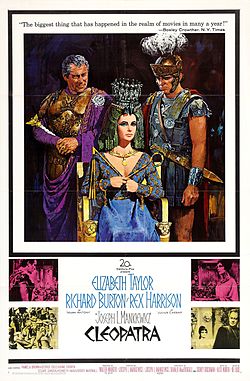
Hollywood films of the 20th century were influenced by earlier Victorian media, which helped to shape the character of Cleopatra played by Elizabeth Taylor in Cleopatra (1963).
Image source: Cleopatra (1963 film)
1966
% complete
Also based on Shakespeare's play was Samuel Barber's opera Antony and Cleopatra (1966), commissioned for the opening of the Metropolitan Opera House.
Image source: Antony and Cleopatra
2006
% complete
In his Kleopatra und die Caesaren (2006), Bernard Andreae contends that the basalt statue, like other idealized Egyptian portraits of the queen, does not contain realistic facial features and hence adds little to the knowledge of her appearance.
Image source: Sperlonga sculptures
Or browse the full history timeline directory, with more than 2,000 topics.
This Cleopatra timeline was generated with the help of AI, using information found on the internet.
We work hard to keep these timelines accurate, but mistakes do get through. If you spot one, email us at [email protected] and we'll fix it for future visitors.
Generate yours with AI or build it from scratch, for free.
Export your timeline, add your own events, edit or remove AI-generated events, and much more
No credit card required.
Cancel anytime.
Cancel anytime.
You can create an unlimited number of timelines with up to 10 events on each one, customize how they look, export them to PDF, PNG, PowerPoint, CSV, and Excel, and share them with a link. Paid plans raise the event limit and add features like spreadsheet imports and collaborators.
Yes. You can cancel your subscription from your account page at any time, and you will not be charged again. Your subscription stays active for the rest of the period you already paid for.
Yes. We will email you a reminder before the annual renewal, and we will also email you a receipt.
Yes. You can email us within 15 days of any payment, and we will issue you a full refund.
Check out our pricing docs or send us an email anytime: [email protected].