-
Use Cases
-
Resources
-
Pricing
Luxor Temple is one of the most significant religious complexes of ancient Egypt, located on the east bank of the Nile River in the city of Luxor (ancient Thebes). Constructed primarily during the New Kingdom period by pharaohs Amenhotep III and Ramses II, it was dedicated to the god Amun-Ra and served as a focal point for the annual Opet Festival. Unlike other Egyptian temples oriented east-west, Luxor Temple faces north-south toward Karnak Temple, with which it was connected by the Avenue of Sphinxes. More Less
2000 BC
% complete
Thebes rose to prominence on the east bank of the Nile as a major religious and political center in Upper Egypt. Its eastern bank would later become home to great temple complexes, including Karnak and Luxor Temple, dedicated primarily to the god Amun-Ra.
Image source: Thebes, Egypt
1473 BC - 1458 BC
% complete
Queen Hatshepsut, one of Egypt's most successful female pharaohs, commissioned building work at the southern sanctuary of Thebes. Her contributions laid some of the groundwork for what would become Luxor Temple's grand complex.
Image source: Hatshepsut
1390 BC
% complete
Pharaoh Amenhotep III initiated construction of Luxor Temple during his reign, dedicating it to Amun-Ra, Mut, and Khonsu. His builders erected the inner sanctuary, the colonnaded court, and much of the temple's core structure that still stands today.
Image source: Luxor Temple
1360 BC
% complete
Amenhotep III completed the magnificent peristyle sun court at Luxor Temple, lined with columns topped by papyrus-bud capitals. This elegant courtyard became one of the most refined architectural spaces of the New Kingdom.
1350 BC
% complete
A grand processional road nearly three kilometers long, flanked by hundreds of human-headed and ram-headed sphinxes, was built to connect Karnak Temple with Luxor Temple. It served as the ceremonial route for divine processions between the two sanctuaries.
Image source: Avenue of Sphinxes
1279 BC - 1213 BC
% complete
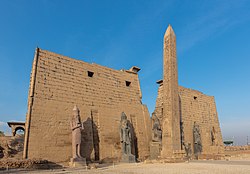
Ramesses II dramatically expanded Luxor Temple, adding a massive entrance pylon, an open forecourt surrounded by colossal statues of himself, and two towering obelisks. One obelisk remains today; its twin now stands in Paris.
Image source: Ramesses II
1250 BC
% complete
Two red granite obelisks, each around 25 meters tall and covered with inscriptions honoring Ramesses II, were raised before the temple's first pylon, creating one of the most imposing entrances in all of Egypt.
Image source: Luxor Obelisks
943 BC - 922 BC
% complete
During the Third Intermediate Period, Libyan-descended pharaoh Shoshenq I expanded Luxor Temple with additional courtyards and a monumental gateway, continuing the long tradition of royal additions to the sacred complex.
Image source: Shoshenq I
1550 BC
% complete
With the founding of the New Kingdom by Ahmose I, the god Amun-Ra was elevated to chief deity of Egypt. Thebes flourished as his cult center, and pharaohs began commissioning monumental temples to honor him along the Nile.
Image source: Amun
1332 BC - 1323 BC
% complete
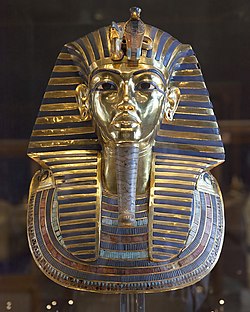
Following the Amarna heresy under Akhenaten, Tutankhamun restored the traditional cult of Amun and added decorative reliefs at Luxor Temple depicting the Opet Festival, helping reintegrate the temple into Egypt's religious life.
Image source: Tutankhamun
1300 BC
% complete
The annual Opet Festival linked Luxor Temple with Karnak Temple via a sphinx-lined processional avenue. Statues of Amun, Mut, and Khonsu were carried south amid music, feasting, and celebration, symbolically renewing the king's divine power.
Image source: Opet Festival
1187 BC - 1156 BC
% complete
Ramesses III constructed a triple barque chapel within Ramesses II's forecourt, dedicated to Amun, Mut, and Khonsu. The shrine allowed the sacred boats of the Theban triad to rest during festival processions.
Image source: Ramesses III
332 BC
% complete
After conquering Egypt, Alexander the Great embraced the traditions of Egyptian kingship and honored the cults of Amun. Macedonian rulers continued to patronize Luxor Temple, preserving its role in state religion.
Image source: Alexander the Great
330 BC
% complete
A small barque shrine dedicated to the sacred boat of Amun was built inside Luxor Temple in the name of Alexander the Great, who is depicted in relief making offerings to Amun-Min, blending Macedonian rule with Egyptian religious tradition.
30 BC
% complete
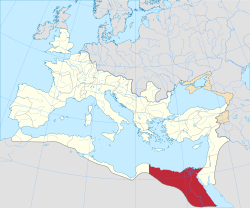
After Rome absorbed Egypt following Cleopatra VII's defeat, Luxor Temple and its surroundings were incorporated into the Roman imperial system, and parts of the complex were repurposed for new functions.
Image source: Roman Egypt
300 AD
% complete
The Romans converted the area around Luxor Temple into a military camp known as Castrum Lucii Domitii Domitianus, enclosing the temple precinct within fortress walls. The temple's chambers were reused for imperial cult worship and administrative purposes.
355 AD
% complete
Within the temple's rear chambers, Romans constructed four chapels dedicated to the imperial cult. These rooms preserved some of the finest surviving wall paintings from late antiquity, depicting Roman officials and divine figures.
Image source: Roman imperial cult
395 AD
% complete
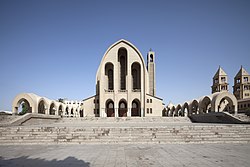
After Christianity became the dominant religion of the Roman Empire, a Coptic church was constructed inside Luxor Temple's forecourt. Pagan imagery was defaced or plastered over, marking a profound shift in the site's sacred identity.
Image source: Coptic Orthodox Church
1285 AD
% complete
The mosque of Sheikh Yusuf Abu el-Haggag, a revered local Sufi saint, was built on the ruins above the buried temple. Remarkably, the mosque remains active today, making Luxor Temple a living monument layered with millennia of faith.
Image source: Abu Haggag Mosque
1798 AD - 1801 AD
% complete
Napoleon Bonaparte's expedition to Egypt brought scholars who surveyed and illustrated Luxor Temple. Their drawings, published in the monumental Description de l'Égypte, introduced the temple to European audiences and sparked Egyptological interest.
Image source: French campaign in Egypt and Syria
1822 AD
% complete
Champollion's breakthrough decipherment of Egyptian hieroglyphs using the Rosetta Stone opened the door to understanding inscriptions at Luxor Temple, revealing the names of pharaohs and the religious significance of its reliefs.
Image source: Jean-François Champollion
1829 AD - 1836 AD
% complete
Egyptian ruler Muhammad Ali Pasha presented one of Ramesses II's obelisks to France. It was transported to Paris and erected in the Place de la Concorde in 1836, becoming one of the city's most famous landmarks.
Image source: Luxor Obelisks
1979 AD
% complete
UNESCO inscribed Ancient Thebes with its Necropolis, including Luxor Temple, Karnak Temple, and the Valley of the Kings, as a World Heritage Site, recognizing its outstanding universal value to humanity.
Image source: Thebes, Egypt
1881 AD
% complete
As head of the Egyptian antiquities service, Gaston Maspero oversaw early systematic clearance work at Theban monuments including Luxor Temple, beginning the transition from treasure hunting to scientific archaeology.
Image source: Gaston Maspero
1885 AD
% complete
Major efforts were undertaken to clear centuries of sand, rubble, and later buildings that had buried much of Luxor Temple, gradually revealing its courts, colonnades, and pylons after more than a thousand years of concealment.
1925 AD - 1930 AD
% complete
Teams of Egyptologists carried out stabilization and reconstruction projects at Luxor Temple, reassembling fallen columns, consolidating walls, and recording inscriptions to protect the monument for future study.
1989 AD
% complete
Archaeologist Mohamed el-Saghir discovered a hidden pit beneath the sun court containing over twenty superbly preserved statues of pharaohs and gods, likely buried by priests in antiquity. The find became one of the greatest discoveries in modern Egyptian archaeology.
1994 AD
% complete
Egyptian authorities launched a major project to excavate and restore the 2.7-kilometer Avenue of Sphinxes, removing modern buildings that covered the ancient processional route linking Karnak and Luxor Temples.
Nov 25, 2021
% complete
After years of restoration costing hundreds of millions of dollars, Egypt celebrated the grand reopening of the complete Avenue of Sphinxes with a lavish ceremony featuring thousands of performers, recreating the ancient Opet Festival procession.
2022 AD
% complete
Luxor Temple continues to welcome millions of visitors each year as one of Egypt's premier archaeological attractions. Conservation teams work continuously to protect its walls, columns, and reliefs while illuminating the temple at night for dramatic evening tours.
Or browse the full history timeline directory, with more than 2,000 topics.
This Luxor Temple timeline was generated with the help of AI, using information found on the internet.
We work hard to keep these timelines accurate, but mistakes do get through. If you spot one, email us at [email protected] and we'll fix it for future visitors.
Generate yours with AI or build it from scratch, for free.
Export your timeline, add your own events, edit or remove AI-generated events, and much more
No credit card required.
Cancel anytime.
Cancel anytime.
You can create an unlimited number of timelines with up to 10 events on each one, customize how they look, export them to PDF, PNG, PowerPoint, CSV, and Excel, and share them with a link. Paid plans raise the event limit and add features like spreadsheet imports and collaborators.
Yes. You can cancel your subscription from your account page at any time, and you will not be charged again. Your subscription stays active for the rest of the period you already paid for.
Yes. We will email you a reminder before the annual renewal, and we will also email you a receipt.
Yes. You can email us within 15 days of any payment, and we will issue you a full refund.
Check out our pricing docs or send us an email anytime: [email protected].