
-
Use Cases
-
Resources
-
Pricing
Karnak Temple, located near Luxor (ancient Thebes), Egypt, is one of the largest religious complexes in the world. Built and expanded over roughly 2,000 years by pharaohs of the Middle Kingdom through the Ptolemaic period, it was dedicated primarily to the Theban triad of Amun-Ra, Mut, and Khonsu. Its vast halls, towering obelisks, and massive hypostyle hall showcase the grandeur of ancient Egyptian architecture and religious devotion. More Less
2000 BC - 30 BC
% complete
Karnak formed part of the monumental city of Thebes, one of ancient Egypt's greatest capitals, whose temples and tombs made it a center of religious and political power.
Image source: Thebes, Egypt
2000 BC - 1700 BC
% complete
During the Middle Kingdom (c. 2000–1700 BC), the period in which construction at the complex began, Karnak saw its first monumental building campaigns initiated by rulers such as Senusret I.
Image source: Karnak
1971 BC - 1926 BC
% complete
Construction at the Karnak temple complex began during the reign of Senusret I (reigned 1971–1926 BC) in the Middle Kingdom (c. 2000–1700 BC), marking the earliest phase of what would become Egypt's largest religious complex.
1550 BC - 1070 BC
% complete
Most of the extant buildings at Karnak date from the New Kingdom, when pharaohs expanded the temple complex on a grand scale with pylons, courts, and hypostyle halls.
305 BC - 30 BC
% complete
Construction and embellishment of the Karnak temple complex continued into the Ptolemaic Kingdom (305–30 BC), extending a building tradition that had lasted for nearly two millennia.
Image source: Ptolemaic Kingdom
1390
% complete
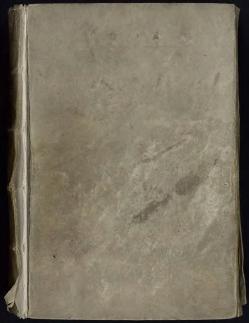
Maps of Egypt, based on the 2nd century Claudius Ptolemaeus' mammoth work Geographia, had been circulating in Europe since the late 14th century, all showing Thebes' (Diospolis) location.
Image source: Geography (Ptolemy)
1480 - 1500
% complete
Despite accurate maps, several European authors of the 15th and 16th centuries who visited only Lower Egypt and published travel accounts, such as Joos van Ghistele, put Thebes in or close to Memphis.
1550 - 1590
% complete
André Thévet was among the 16th century European authors who visited only Lower Egypt yet published travel accounts placing Thebes in or close to Memphis, perpetuating confusion about the site.
Image source: André Thevet
1589
% complete
The first European description of the Karnak temple complex was made by an unknown Venetian in 1589; his account is housed in the Biblioteca Nazionale Centrale di Firenze, though it gives no name for the complex.
1668
% complete
Karnak ('Carnac') as a village name, and the name of the complex, is first attested in 1668, when two Capuchin missionary brothers, Protais and Charles François d'Orléans, travelled through the area.
1670 - 1696
% complete
Protais' writing about his travels was published by Melchisédech Thévenot in Relations de divers voyages curieux across editions from the 1670s to 1696, spreading knowledge of Karnak in Europe.
1678
% complete
Johann Michael Vansleb published Protais' account of the region in his work The Present State of Egypt (1678), further disseminating early descriptions of Karnak.
1699 - 1703
% complete
Lucas travelled in Egypt during 1699–1703, visiting Karnak during his journeys through the country.
1704
% complete
The first drawing of Karnak is found in Paul Lucas' travel account of 1704, Voyage du Sieur Paul Lucas au Levant, giving Europeans their first visual impression of the temple ruins.
1718
% complete
Claude Sicard visited and described Karnak in succession with his travel companion Pierre Laurent Pincia in 1718 and again during 1720–21, contributing to growing scholarly interest in the site.
Image source: Claude Sicard
1720 - 1721
% complete
During 1720–21, Claude Sicard and his travel companion Pierre Laurent Pincia returned to describe Karnak again, continuing their documentation begun in 1718.
1731
% complete
In 1731, Granger visited and described Karnak, joining the growing line of European travellers documenting the temple complex in the early 18th century.
1737 - 1738
% complete
Frederick Louis Norden visited and described Karnak during 1737–38, adding detailed observations of the monuments to the expanding body of European accounts.
Image source: Frederic Louis Norden
1738
% complete
In 1738, Richard Pococke visited and described Karnak, publishing observations that contributed to European understanding of the great temple complex of Thebes.
Image source: Richard Pococke
1769
% complete
James Bruce visited and described Karnak in 1769, continuing the succession of 18th century European explorers who recorded the temple's remains.
Image source: James Bruce
1777
% complete
Charles-Nicolas-Sigisbert Sonnini de Manoncourt visited and described Karnak in 1777, adding a naturalist's perspective to the documentation of the site.
Image source: Charles-Nicolas-Sigisbert Sonnini de Manoncourt
1777 - 1778
% complete
Savary visited Lower Egypt in 1777–78 and published a work about that journey too, providing source material he later wove into his 1785 account of Upper Egypt.
1785
% complete
Claude-Étienne Savary described the complex in rather great detail in his work of 1785, especially notable because it was a fictional account of a pretend journey to Upper Egypt composed from other travellers' information.
1792 - 1793
% complete
William George Browne visited and described Karnak during 1792–93, among the last independent European travellers before the Napoleonic expedition reached Egypt.
Image source: William George Browne
1798 - 1799
% complete
During 1798–1799, a number of scientists of the Napoleon expedition, including Vivant Denon, visited and described Karnak, bringing systematic scholarly recording to the temple complex.
Image source: French campaign in Egypt and Syria
1798 - 1799
% complete
Vivant Denon, a member of Napoleon's expedition, was among the scientists who visited and described Karnak during 1798–1799, producing influential depictions of its colossal ruins.
Image source: Vivant Denon
1979
% complete
In 1979, Karnak was added to the UNESCO World Heritage List along with the rest of the monumental city of Thebes, securing international recognition and protection for the site.
Image source: Thebes, Egypt
1979
% complete
As part of the UNESCO inscription of 1979, the entire monumental city of Thebes — with Karnak at its heart — was inscribed together, acknowledging millennia of accumulated history from Senusret I through the Ptolemies.
2006
% complete
In 2006, Bryan presented her findings of a festival that included apparent intentional overindulgence in alcohol, shedding light on ritual practices connected to the Karnak complex.
2009
% complete
In 2009, UCLA launched a website dedicated to virtual reality digital reconstructions of the Karnak complex and other resources, making the ancient temples digitally accessible worldwide.
Or browse the full history timeline directory, with more than 2,000 topics.
This Karnak Temple timeline was generated with the help of AI, using information found on the internet.
We work hard to keep these timelines accurate, but mistakes do get through. If you spot one, email us at [email protected] and we'll fix it for future visitors.
Generate yours with AI or build it from scratch, for free.
Export your timeline, add your own events, edit or remove AI-generated events, and much more
No credit card required.
Cancel anytime.
Cancel anytime.
You can create an unlimited number of timelines with up to 10 events on each one, customize how they look, export them to PDF, PNG, PowerPoint, CSV, and Excel, and share them with a link. Paid plans raise the event limit and add features like spreadsheet imports and collaborators.
Yes. You can cancel your subscription from your account page at any time, and you will not be charged again. Your subscription stays active for the rest of the period you already paid for.
Yes. We will email you a reminder before the annual renewal, and we will also email you a receipt.
Yes. You can email us within 15 days of any payment, and we will issue you a full refund.
Check out our pricing docs or send us an email anytime: [email protected].