-
Use Cases
-
Resources
-
Pricing
Hildegard of Bingen was a 12th-century German Benedictine abbess, mystic, composer, writer, and polymath. Renowned for her theological visions, musical compositions, scientific writings, and correspondence with popes and emperors, she became one of the most influential women of the Middle Ages and was declared a Doctor of the Church in 2012. More Less
1098
% complete
Hildegard of Bingen, later known as the 'Sibyl of the Rhine', was born around 1098. She would grow up to become a German Benedictine abbess and polymath, active during the High Middle Ages as a writer, composer, philosopher, mystic, visionary, and medical writer and practitioner.
Image source: Hildegard of Bingen
1112
% complete
In 1112, when Hildegard was 14 years old, Jutta of Sponheim was enclosed as an anchoress at the monastery of Disibodenberg, with the young Hildegard joining her. Jutta would teach and mentor Hildegard in the religious life.
Image source: Jutta von Sponheim
Nov 1112
% complete
On All Saints Day in 1112, the vows of the women enclosed with Jutta were received by Bishop Otto of Bamberg, formally committing them to the monastic life.
Image source: Otto of Bamberg
1136
% complete
Upon Jutta's death in 1136, Hildegard was unanimously elected magistra (mother superior) of the community at Disibodenberg by her fellow nuns, taking on leadership of the convent.
1150
% complete
In 1150, Hildegard founded the monastery of Rupertsberg near Bingen, moving her community toward independence. At Rupertsberg, Volmar served as provost, as well as Hildegard's confessor and scribe.
Image source: Hildegard of Bingen
1151
% complete
In 1151, Richardis, one of Hildegard's close associates, was elected abbess of a distant convent, much to Hildegard's displeasure. Their relationship is famously explored in later portrayals of Hildegard's life.
1160
% complete
Hildegard's preaching was not limited to monasteries; in 1160 she preached publicly throughout Germany, an unusual activity for a woman of her time that demonstrated her remarkable authority and influence.
1165
% complete
In 1165, Hildegard founded a second monastery for her nuns at Eibingen, expanding her religious community across the Rhine from Rupertsberg.
Image source: St. Hildegard, Eibingen
1173
% complete
Volmar, who had served Hildegard as provost, confessor, and scribe at Rupertsberg, died in 1173. Following his death, Guibert of Gembloux, one of Hildegard's devoted followers who wrote to her frequently, became her secretary.
1178 - 1179
% complete
Before Hildegard died in 1179, a problem arose with the clergy of Mainz: a man buried at Rupertsberg had died after being excommunicated by the Catholic Church, leading the authorities to demand his removal from consecrated ground, a dispute that troubled Hildegard's final years.
1141
% complete
Throughout her life Hildegard continued to have many visions. In 1141, at the age of 42, she received a vision she believed to be an instruction from God to 'write down that which you see and hear.' Still hesitant to record her visions, Hildegard became physically ill.
1142 - 1151
% complete
Hildegard began composing Scivias ('Know the Ways'), the first of her three volumes of visionary theology. The work, completed around 1151, records her visions and their interpretations and became one of her most significant works.
Image source: Scivias
1147 - 1148
% complete
At the behest of her abbot Kuno, Bernard of Clairvaux advanced Hildegard's work at the Synod of Trier in 1147 and 1148. Hildegard corresponded with notable figures such as Bernard, popes Eugene III and Anastasius IV, Abbot Suger, and Emperor Frederick I Barbarossa.
Image source: Bernard of Clairvaux
Nov 1147 - Feb 1148
% complete
It was between November 1147 and February 1148 at the synod in Trier that Pope Eugenius heard about Hildegard's writings, sparking papal interest in her visionary work.
Image source: Pope Eugene III
Jan 1, 1148 - Mar 31, 1148
% complete
In early 1148, Pope Eugenius III sent a commission to Disibodenberg to learn more about Hildegard and her writings, examining the authenticity of her visions.
Image source: Disibodenberg
1148
% complete
Portions of the still uncompleted Scivias were read aloud to Pope Eugenius III at the Synod of Trier in 1148, after which he sent Hildegard a letter with his blessing, granting approval for her to continue writing.
1151
% complete
It is uncertain when some of Hildegard's compositions were composed, though the Ordo Virtutum, a liturgical drama considered the earliest surviving morality play, is thought to have been composed as early as 1151.
Image source: Ordo Virtutum
1151
% complete
Scivias ('Know the Ways'), Hildegard's first major volume of visionary theology, was completed around 1151 after nearly a decade of composition, cementing her reputation as a mystic and theological writer.
1158 - 1163
% complete
Between 1158 and 1163, after moving her community into independence at the Rupertsberg in Bingen, Hildegard composed Liber Vitae Meritorum ('Book of Life's Merits'), tackling the moral life through dramatic confrontations between the virtues and the vices.
1163
% complete
As she described in an autobiographical passage included in her Vita, sometime around 1163 Hildegard received 'an extraordinary mystical vision' in which was revealed the 'sprinkling drops of sweet rain' that she stated John the Evangelist experienced when he wrote 'In the beginning was the Word'.
1163 - 1174
% complete
Begun around 1163 or 1164 and completed around 1172 or 1174, Liber Divinorum Operum ('Book of Divine Works') was Hildegard's third and final volume of visionary theology, also known as De operatione Dei ('On God's Activity').
Sep 17, 1179
% complete
On 17 September 1179, Hildegard died. Her sisters said they saw two streams of light appear in the skies and cross over the room where she was dying, an event regarded by her community as a sign of sanctity.
1180
% complete
Although the history of Hildegard's formal canonization is complicated, regional calendars of the Catholic Church have listed her as a saint for centuries following her death.
1882
% complete
In 1882, Jean-Baptiste Pitra published an edited collection of Hildegard's works at Monte Cassino, helping preserve and disseminate her writings to modern scholarship.
Image source: Jean-Baptiste-François Pitra
1920 - 1929
% complete
Towards the end of her life, Hildegard commissioned a richly decorated manuscript of Scivias known as the Rupertsberg Codex. Although the original has been lost since its evacuation to Dresden for safekeeping in 1945, its images are preserved in a hand-painted facsimile created in the 1920s.
1924
% complete
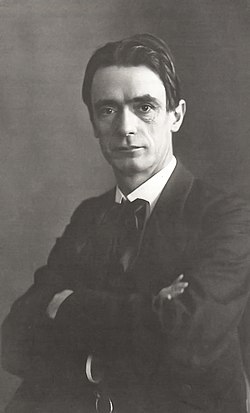
Reincarnation of Hildegard has been debated since 1924, when Austrian mystic Rudolf Steiner lectured that a nun of her description was the past life of Russian poet-philosopher Vladimir Soloviev, whose visions of Holy Wisdom are often compared to Hildegard's.
Image source: Rudolf Steiner
1945
% complete
The original richly decorated Rupertsberg Codex of Scivias was lost when it was evacuated to Dresden for safekeeping in 1945 during World War II, though its imagery survives through the 1920s facsimile.
1979
% complete
Recordings and performances of Hildegard's music have received critical acclaim and gained popularity since 1979, sparking a modern revival of interest in her compositions and their distinctive melismatic style.
1994
% complete
In film, Hildegard was portrayed by Patricia Routledge in a BBC documentary called Hildegard of Bingen released in 1994, bringing her story to television audiences.
Image source: Patricia Routledge
1998
% complete
Alois Albrecht created Hildegard von Bingen, a liturgical play featuring texts and music by Hildegard of Bingen herself, premiered in 1998 as part of her cultural legacy.
2009
% complete
Hildegard's life story was portrayed in the 2009 film Vision: From the Life of Hildegard von Bingen, directed by Margarethe von Trotta, in which Barbara Sukowa played Hildegard and the relationship between Hildegard and Richardis was explored.
2009
% complete
Hildegard was portrayed by Ángela Molina in the 2009 film Barbarossa, depicting her interactions with Emperor Frederick I Barbarossa, with whom she corresponded during her lifetime.
2010
% complete
Hildegard was the subject of season 2, episode 3 of the ZDF documentary series Die Deutschen, titled Hildegard von Bingen und die Macht der Frauen ('Hildegard of Bingen and the Power of Women'), released in 2010.
2012
% complete
Hildegard was the subject of a 2012 fictionalized biographic novel, Illuminations, by Mary Sharratt, exploring her life from her childhood enclosure to her rise as a visionary leader.
2012
% complete
Hildegard was the subject of an episode of the Vision TV Apocalypse-themed documentary series 'I Prophesy' in 2012, highlighting her prophetic visions.
Image source: VisionQuest
2013
% complete
Devendra Banhart released 'Für Hildegard von Bingen', a single from his 2013 album Mala, paying musical tribute to the medieval polymath.
Image source: Mala (Devendra Banhart album)
2022
% complete
Naomi Wood and Sophie Seita created The Hildegard von Bingen Society for Gardening Companions, an artistic project running from 2022 to the present that engages with Hildegard's legacy.
Image source: Uljana Wolf
2025
% complete
The 2025 opera 'HILDEGARD' by composer Sarah Kirkland Snider follows the story of Hildegard as she receives and transcribes her visions. Premiered by Lady Clare's Consort & Ensemble, with Isaac Chan and Doraly Gill.
Image source: Sarah Kirkland Snider
Nov 2025
% complete
In November 2025, the LA Opera debuted a new opera titled 'Hildegard', inspired by the life of Hildegard von Bingen.
Image source: Los Angeles Opera
Or browse the full history timeline directory, with more than 2,000 topics.
This Hildegard of Bingen timeline was generated with the help of AI, using information found on the internet.
We work hard to keep these timelines accurate, but mistakes do get through. If you spot one, email us at [email protected] and we'll fix it for future visitors.
Generate yours with AI or build it from scratch, for free.
Export your timeline, add your own events, edit or remove AI-generated events, and much more
No credit card required.
Cancel anytime.
Cancel anytime.
You can create an unlimited number of timelines with up to 10 events on each one, customize how they look, export them to PDF, PNG, PowerPoint, CSV, and Excel, and share them with a link. Paid plans raise the event limit and add features like spreadsheet imports and collaborators.
Yes. You can cancel your subscription from your account page at any time, and you will not be charged again. Your subscription stays active for the rest of the period you already paid for.
Yes. We will email you a reminder before the annual renewal, and we will also email you a receipt.
Yes. You can email us within 15 days of any payment, and we will issue you a full refund.
Check out our pricing docs or send us an email anytime: [email protected].