
-
Use Cases
-
Resources
-
Pricing
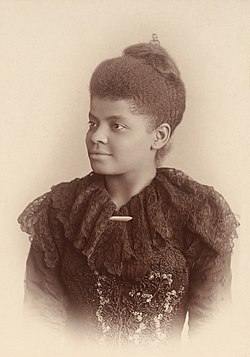
Ida B. Wells (1862–1931) was an African American journalist, educator, and civil rights leader who courageously documented and campaigned against lynching in the United States. Born into slavery in Mississippi, she became a co-owner of the Memphis Free Speech newspaper and used investigative journalism to expose racial violence. A founding member of the NAACP and a tireless advocate for women's suffrage, Wells spent her life fighting for racial justice and equality. More Less
Jul 16, 1862
% complete
Ida Bell Wells was born into slavery in Holly Springs, Mississippi, just months before the Emancipation Proclamation. Her parents, James and Lizzie Wells, gained their freedom at the end of the Civil War, and the family remained in Mississippi as freedpeople.
Image source: Ida B. Wells
Sep 1870
% complete
Wells attended Shaw University, later renamed Rust College, a Freedmen's school in Holly Springs. She excelled academically but was expelled after a dispute with the college president, reportedly over a confrontation involving her rebellious behavior.
Image source: Rust College
Sep 1878
% complete
A yellow fever epidemic swept through Holly Springs, killing Wells's parents and infant brother. At age sixteen, she took responsibility for raising her five surviving siblings, refusing offers to split up the family.
1880
% complete
To support her younger siblings, Wells passed an examination and began working as a schoolteacher in rural Mississippi schools, earning a modest salary that sustained the family through difficult years.
May 1884
% complete
Wells relocated to Memphis, Tennessee, where she could earn better wages as a teacher while continuing her education during summer sessions at Fisk University and LeMoyne College.
May 4, 1884
% complete
Seventy-one years before Rosa Parks, Wells refused to move from a ladies' car on a Chesapeake & Ohio Railroad train to the smoking car reserved for Black passengers. She was dragged off the train by three men as white passengers applauded.
Image source: Chesapeake and Ohio Canal
Dec 24, 1884
% complete
Wells sued the Chesapeake & Ohio Railroad and won $500 in damages in a local circuit court. In 1887, however, the Tennessee Supreme Court overturned the verdict, ruling against her and deepening her commitment to fighting injustice.
Jun 1893 - Oct 1893
% complete
During the Chicago World's Fair, Wells joined Frederick Douglass and others to protest the fair's failure to fairly represent Black Americans. They distributed thousands of copies of a pamphlet titled 'The Reason Why the Colored American Is Not in the World's Columbian Exposition' to international visitors.
Image source: World's Columbian Exposition
Jul 21, 1896
% complete
Wells helped found the National Association of Colored Women (NACW) at a convention in Washington, D.C., uniting Black women's clubs nationwide around causes including anti-lynching work, suffrage, and community uplift.
Image source: National Association of Colored Women's Clubs
1898
% complete
Wells was among the founders of the Afro-American Council, a national civil rights organization formed to combat racial violence and disenfranchisement, serving as its secretary before later tensions with Booker T. Washington's allies.
Image source: National Afro-American Council
Jan 30, 1913
% complete
Wells founded the Alpha Suffrage Club, believed to be the first Black women's suffrage organization in Illinois, to mobilize African American women voters ahead of Illinois granting partial suffrage to women.
Mar 3, 1913
% complete
At the national woman suffrage parade in Washington, organizers asked Black participants to march at the rear. Wells defiantly stepped out of the crowd mid-parade and marched alongside the Illinois delegation, insisting on integrated participation.
Image source: Woman Suffrage Procession
May 1889
% complete
After writing articles for church publications under the pen name 'Iola,' Wells bought a one-third interest in the Memphis Free Speech and Headlight, becoming editor and co-owner of one of the most outspoken Black newspapers in the South.
Image source: Ida B. Wells
1891
% complete
Wells wrote an exposé about conditions in Memphis's segregated colored schools, criticizing unequal funding and poor treatment of teachers. She was fired from her teaching position, freeing her to pursue journalism full time.
Mar 9, 1892
% complete
Three Black businessmen, including Wells's friend Thomas Moss, were lynched by a white mob in Memphis after their successful grocery store competed with a white-owned store. The murders transformed Wells's life and launched her anti-lynching crusade.
Image source: People's Grocery lynchings
Mar 25, 1892
% complete
Following the lynching of Moss and his partners, Wells wrote impassioned editorials documenting lynching and urging Black residents to abandon Memphis because it showed neither justice nor mercy. Thousands left for Oklahoma and other destinations.
May 27, 1892
% complete
While Wells was traveling in Philadelphia and New York, a mob destroyed the offices of the Free Speech and threatened to kill her if she returned to Memphis. She was warned that her body would be tied to a tree and branded. She never returned, beginning decades of exile.
Oct 1892
% complete
Wells published her first major pamphlet, Southern Horrors, which systematically debunked the myth that lynchings punished Black men for assaulting white women. She documented how many lynchings arose from economic competition, interracial relationships, and white efforts to maintain power.
Jan 1895
% complete
Wells published A Red Record, a statistical study of lynching based on careful research of press reports, tabulating hundreds of lynchings and analyzing their causes. It became a foundational work of data-driven advocacy journalism.
Image source: The Red Record
1895
% complete
After marrying Barnett, Wells became part owner and editor of his newspaper, the Conservator, continuing to publish her investigative journalism while balancing family life and motherhood.
Image source: Ferdinand Lee Barnett (Chicago)
Mar 1898
% complete
When postmaster Frazier Baker and his infant daughter were murdered by a white mob in Lake City, South Carolina, Wells led a delegation to Washington to petition President William McKinley for federal intervention and prosecution.
Image source: Lynching of Frazier B. Baker and Julia Baker
Jul 1899
% complete
Wells published a pamphlet investigating the torture and lynching of Sam Hose in Georgia, with supporting material contributed by W. E. B. Du Bois, further cementing her reputation as the nation's leading anti-lynching investigator.
Apr 1893 - Jun 1893
% complete
Invited by British reformers including Catherine Impey and Isabella Mayo, Wells lectured throughout England, Scotland, and Wales, exposing American mob violence to international audiences and generating pressure on the United States.
Mar 1894 - Jun 1894
% complete
On her second tour abroad, Wells spoke to packed audiences across Britain and helped establish the British Anti-Lynching Committee. Her speeches prompted public debate and condemnation of lynching on both sides of the Atlantic.
Jun 27, 1895
% complete
Wells married Ferdinand L. Barnett, a Chicago lawyer and founder of the Conservator, Chicago's first Black newspaper. Unusually for the era, she hyphenated her name, becoming Ida B. Wells-Barnett, and continued her activism after marriage.
1928
% complete
In her final years, Wells worked on her autobiography, Crusade for Justice, recounting her battles against racism, sexism, and violence. The unfinished manuscript was published posthumously in 1970, edited by her daughter Alfreda Duster.
1930
% complete
Wells ran as an Independent candidate for the Illinois General Assembly, becoming one of the first Black women in the United States to run for public office, though she was unsuccessful.
Mar 25, 1931
% complete
Ida B. Wells-Barnett died of kidney disease in Chicago at age 68, leaving behind a legacy of fearless investigative journalism and lifelong activism against lynching, segregation, and the disenfranchisement of Black Americans.
1970
% complete
Nearly four decades after her death, Wells's daughter Alfreda Duster edited and published her autobiography, reintroducing her pioneering work to new generations of readers and scholars.
Or browse the full history timeline directory, with more than 2,000 topics.
This Ida B. Wells timeline was generated with the help of AI, using information found on the internet.
We work hard to keep these timelines accurate, but mistakes do get through. If you spot one, email us at [email protected] and we'll fix it for future visitors.
Generate yours with AI or build it from scratch, for free.
Export your timeline, add your own events, edit or remove AI-generated events, and much more
No credit card required.
Cancel anytime.
Cancel anytime.
You can create an unlimited number of timelines with up to 10 events on each one, customize how they look, export them to PDF, PNG, PowerPoint, CSV, and Excel, and share them with a link. Paid plans raise the event limit and add features like spreadsheet imports and collaborators.
Yes. You can cancel your subscription from your account page at any time, and you will not be charged again. Your subscription stays active for the rest of the period you already paid for.
Yes. We will email you a reminder before the annual renewal, and we will also email you a receipt.
Yes. You can email us within 15 days of any payment, and we will issue you a full refund.
Check out our pricing docs or send us an email anytime: [email protected].