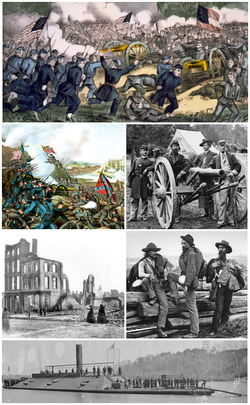
-
Use Cases
-
Resources
-
Pricing
Susan B. Anthony (1820–1906) was an American social reformer and women's rights activist who played a pivotal role in the women's suffrage movement. She co-founded the National Woman Suffrage Association with Elizabeth Cady Stanton, campaigned tirelessly for voting rights and abolition, and became an enduring symbol of the fight for gender equality in the United States. More Less
Feb 15, 1820
% complete
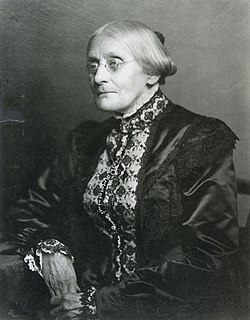
Susan Brownell Anthony was born on February 15, 1820, in Adams, Massachusetts, the second of seven children born to Daniel and Lucy Read Anthony. Her Quaker upbringing emphasized equality and moral responsibility, values that would shape her lifelong commitment to social reform.
Image source: Susan B. Anthony
1826
% complete
In 1826, when Susan was six years old, her family moved to Battenville, New York, where her father managed a large cotton mill. The family home became a meeting place for reformers and abolitionists, exposing young Susan to progressive ideas from an early age.
1839
% complete
At age nineteen, Susan B. Anthony began working as a teacher at a Quaker seminary near New Rochelle, New York. Teaching became her profession for over a decade and gave her firsthand experience with the wage inequality faced by women, who earned a fraction of what male teachers were paid.
1845
% complete
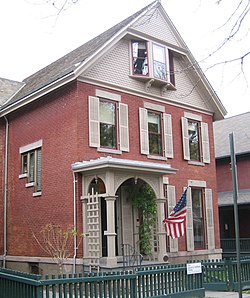
The Anthony family moved to a farm on the outskirts of Rochester, New York, in 1845. Their farm became a gathering place for local abolitionists, including Frederick Douglass, and Rochester would remain Susan's home base for the rest of her life.
Image source: Susan B. Anthony House
1846 - 1849
% complete
Anthony took a position as headmistress of the female department at Canajoharie Academy in upstate New York, earning $110 per year compared to male headmasters' salaries. She left teaching in 1849 to devote herself fully to reform work.
Image source: Canajoharie (village), New York
Jul 19, 1848 - Jul 20, 1848
% complete
The Seneca Falls Convention, organized by Elizabeth Cady Stanton, Lucretia Mott, and others, marked the formal beginning of the American women's rights movement. Although Anthony did not attend, the convention's Declaration of Sentiments deeply influenced her, and she soon joined forces with Stanton.
Image source: Seneca Falls Convention
1851
% complete
In 1851, abolitionist Amelia Bloomer introduced Susan B. Anthony to Elizabeth Cady Stanton on a street corner in Seneca Falls, New York. The two formed one of the most consequential partnerships in American history, collaborating for over fifty years on the cause of women's rights.
Image source: Elizabeth Cady Stanton
1854 - 1860
% complete
Beginning in 1854, Anthony and Stanton campaigned across New York State, collecting thousands of signatures on petitions demanding legal rights for married women, including the right to own property and keep their own wages. Their efforts contributed to New York's expanded Married Women's Property Act of 1860.
Image source: Married Women's Property Act 1870
Oct 23, 1854
% complete
Anthony attended and spoke at the National Women's Rights Convention held in Philadelphia in October 1854. She soon became a key organizer of these annual conventions, which kept the women's movement visible and coordinated through the 1850s.
Image source: National Women's Rights Convention

May 10, 1866
% complete
Anthony and Stanton helped found the American Equal Rights Association, which advocated for suffrage for both African Americans and women. The organization fractured within three years when its leaders chose to support the Fifteenth Amendment granting voting rights to Black men but not to women.
Image source: American Equal Rights Association
Jan 8, 1868
% complete
Anthony launched The Revolution, a weekly women's rights newspaper, with Stanton as editor. The paper boldly advocated for women's suffrage, equal pay, and divorce reform. Its uncompromising tone and financial struggles left Anthony personally responsible for debts of about $10,000.
Image source: The Revolution (newspaper)
May 15, 1869
% complete
After the split in the equal rights movement, Anthony and Stanton founded the National Woman Suffrage Association (NWSA) in May 1869. The NWSA focused exclusively on women's suffrage and pushed for a federal constitutional amendment, while rival Lucy Stone's American Woman Suffrage Association focused on state campaigns.
Image source: National Woman Suffrage Association
Feb 3, 1870
% complete
The Fifteenth Amendment prohibited denying voting rights based on race but did not include sex, meaning women remained excluded from the franchise. Feeling betrayed by former allies, Anthony opposed the amendment as written, deepening the rift between suffragists and abolitionists.
Image source: Fifteenth Amendment to the United States Constitution
Nov 5, 1872
% complete
On November 5, 1872, Susan B. Anthony cast a ballot in the presidential election in Rochester, New York, arguing that as a citizen she had a constitutional right to vote. She was arrested days later for voting illegally, turning her trial into a national sensation and a powerful platform for the suffrage cause.
Image source: 1872 United States presidential election
Nov 18, 1872
% complete
Federal marshals arrested Anthony at her Rochester home on November 18, 1872, for having voted illegally. She was charged with violating election laws and faced trial before a federal court, becoming the most famous political prisoner of the women's suffrage movement.
Image source: Trial of Susan B. Anthony
Jun 18, 1873
% complete
At her trial in Canandaigua, New York, Judge Ward Hunt refused to let Anthony testify and directed the jury to find her guilty. He then fined her $100 plus court costs. Anthony defiantly declared she would never pay the fine, and it was never collected, leaving the case unresolved.
1881 - 1902
% complete
Anthony collaborated with Elizabeth Cady Stanton and Matilda Joslyn Gage to produce the multi-volume History of Woman Suffrage, documenting the movement's origins and progress. The massive project preserved the historical record of the struggle for women's voting rights for future generations.
Image source: History of Woman Suffrage
Feb 21, 1890
% complete
The rival suffrage organizations reunited in February 1890 to form the National American Woman Suffrage Association (NAWSA). Anthony played a crucial role in negotiating the merger and later served as NAWSA president from 1892 to 1900, unifying the movement under one banner.
Image source: National American Woman Suffrage Association
1892 - 1900
% complete
Anthony served as president of NAWSA from 1892 until 1900, providing steady leadership during a period when the movement professionalized and expanded. Under her guidance, NAWSA adopted a strategy of combining state-level campaigns with continued pressure for a federal amendment.
1851
% complete
Anthony became an agent for the American Anti-Slavery Society, traveling extensively to organize anti-slavery meetings despite facing hostile crowds and physical threats. Her abolitionist work honed the organizing skills she would later apply to women's rights.
Image source: American Anti-Slavery Society
Apr 12, 1861 - Apr 9, 1865
% complete
During the Civil War, Anthony and Stanton suspended much of their women's rights activity to focus on ending slavery. They founded the Women's National Loyal League in 1863, which gathered nearly 400,000 signatures supporting the Thirteenth Amendment abolishing slavery.
Image source: American Civil War
Dec 6, 1865
% complete
The ratification of the Thirteenth Amendment in December 1865 legally ended slavery nationwide. Anthony had worked tirelessly toward this goal, but its passage also set the stage for a painful split in the reform community over whether Black men or all women would gain suffrage first.
Feb 15, 1906
% complete
At a Washington, D.C., dinner honoring her eighty-sixth birthday, Anthony delivered her famous final public speech, declaring 'failure is impossible.' Weakened by illness, she told the assembled suffragists that the movement must carry on, entrusting the younger generation with the unfinished fight.
Mar 13, 1906
% complete
Susan B. Anthony died of heart failure and pneumonia on March 13, 1906, at her home in Rochester, fourteen years before women won the right to vote. Thousands attended memorial services across the country, mourning the woman who had become the symbol of the suffrage movement.
Nov 6, 1917
% complete
New York voters approved a referendum granting women full voting rights in November 1917, making New York one of the first eastern states to do so. This victory in Anthony's home state energized the national campaign and demonstrated that suffrage could win popular support.
Image source: Women's suffrage in the United States
Feb 14, 1920
% complete
Six months before the Nineteenth Amendment was ratified, NAWSA transformed itself into the League of Women Voters, founded by Carrie Chapman Catt. The organization carried forward Anthony's legacy by educating new voters and encouraging women's civic participation.
Image source: League of Women Voters
Aug 18, 1920
% complete
The Nineteenth Amendment, prohibiting denial of voting rights on the basis of sex, was ratified on August 18, 1920. Often called the 'Susan B. Anthony Amendment,' it fulfilled the goal she had pursued for more than half a century, though she did not live to see it achieved.
1965
% complete
The Susan B. Anthony House in Rochester, New York, where she lived for the last decades of her life and where she was arrested in 1872, was declared a National Historic Landmark in 1965. It now operates as a museum preserving her memory and educating visitors about her life and work.
Jul 2, 1979
% complete
The United States Mint issued the Susan B. Anthony dollar coin in July 1979, making Anthony the first real woman depicted on circulating U.S. currency. Though the coin was unpopular due to its similarity to the quarter, it cemented her image as an icon of American history.
Image source: Susan B. Anthony dollar
Aug 18, 2020
% complete
On the centennial of the Nineteenth Amendment's ratification, President Donald Trump signed a proclamation pardoning Susan B. Anthony for her 1872 arrest for illegal voting. The symbolic gesture sparked debate, since Anthony had famously refused to accept any pardon for an act she considered justified.
Image source: Susan B. Anthony
Or browse the full history timeline directory, with more than 2,000 topics.
This Susan B. Anthony timeline was generated with the help of AI, using information found on the internet.
We work hard to keep these timelines accurate, but mistakes do get through. If you spot one, email us at [email protected] and we'll fix it for future visitors.
Generate yours with AI or build it from scratch, for free.
Export your timeline, add your own events, edit or remove AI-generated events, and much more
No credit card required.
Cancel anytime.
Cancel anytime.
You can create an unlimited number of timelines with up to 10 events on each one, customize how they look, export them to PDF, PNG, PowerPoint, CSV, and Excel, and share them with a link. Paid plans raise the event limit and add features like spreadsheet imports and collaborators.
Yes. You can cancel your subscription from your account page at any time, and you will not be charged again. Your subscription stays active for the rest of the period you already paid for.
Yes. We will email you a reminder before the annual renewal, and we will also email you a receipt.
Yes. You can email us within 15 days of any payment, and we will issue you a full refund.
Check out our pricing docs or send us an email anytime: [email protected].