
-
Use Cases
-
Resources
-
Pricing
Afrobeat is a genre of music that originated in Nigeria in the late 1960s, pioneered by multi-instrumentalist and bandleader Fela Kuti. Blending traditional West African rhythms such as highlife with jazz, funk, and psychedelic rock, Afrobeat features complex percussion, extended instrumental grooves, and politically charged lyrics often sung in Pidgin English. The genre became a powerful voice against corruption and colonialism in Africa and continues to influence contemporary artists worldwide. More Less
Jan 1, 1920
% complete
Highlife, a genre blending African rhythms with Western instruments and jazz influences, emerged along the West African coast in the 1920s. Popularized by artists like E.T. Mensah in Ghana, highlife became a foundational influence on Nigerian musicians and set the stage for the birth of Afrobeat.
Image source: Highlife
Oct 15, 1938
% complete
Olufela Olusegun Oludotun Ransome-Kuti was born in Abeokuta, Nigeria, into a prominent family of activists and musicians. His mother Funmilayo Ransome-Kuti was a renowned women's rights activist, and his upbringing would deeply shape his political consciousness and musical vision.
Image source: Fela Kuti
Jan 1, 1958
% complete
Fela moved to London in 1958 to study at the Trinity College of Music, intending to become a doctor like his brothers. Instead he pursued music, learning classical composition and trumpet while forming his first band, Koola Lobitos, which performed highlife and jazz.
Jan 1, 1960
% complete
While studying in London, Fela formed Koola Lobitos, a band blending highlife and jazz. After returning to Nigeria in the early 1960s, the group became a fixture of the Lagos club scene, laying the groundwork for Fela's later musical innovations.
Aug 1, 1969 - Dec 31, 1969
% complete
During a ten-month stay in Los Angeles, Fela discovered the writings of Malcolm X and other Black Power thinkers through his partner Sandra Smith (later Sandra Izsadore). This transformative experience politicized his music and inspired him to rename his band Nigeria '70 and embrace Pan-Africanism.
Jan 1, 1968 - Jan 1, 1979
% complete
Nigerian drummer Tony Allen joined Fela's band and became the rhythmic architect of Afrobeat. His innovative blend of highlife, jazz, and funk drumming over more than a decade with Africa '70 earned him praise from Brian Eno as perhaps the greatest drummer who ever lived.
Image source: Tony Allen (musician)
Jan 1, 1970
% complete
Back in Nigeria, Fela changed his band's name to Africa '70 and established the Afro Spot and later The Shrine in Lagos, venues where he developed and showcased his new sound. These clubs became epicenters of Lagos nightlife and political discourse.
Image source: New Afrika Shrine
Jan 1, 1970
% complete
Combining West African highlife and Yoruba rhythms with American funk, jazz, and soul, Fela coined 'Afrobeat' to describe his extended, percussion-driven compositions featuring horn sections, chanted vocals, and pointed social commentary delivered often in Pidgin English.
Image source: Afrobeat
Jan 1, 1970
% complete
Rejecting what he saw as a colonial legacy, Fela dropped his surname Ransome for Anikulapo, meaning 'he who carries death in his pouch.' He adopted traditional African dress and declared his compound an independent commune called Kalakuta Republic.
Jan 1, 1973
% complete
'Gentleman' showcased Fela's critique of Westernized Africans who imitated European manners. The album's title track became one of his signature songs, exemplifying his fusion of infectious grooves with biting social satire.
Image source: Gentleman (Budjerah album)
Feb 23, 1974
% complete
Fela declared his Lagos communal residence the independent 'Kalakuta Republic,' complete with its own constitution. It housed his family, band members, and studio, becoming both a creative haven and a symbol of defiance against the Nigerian state.
Sep 1, 1976
% complete
'Zombie' mocked the blind obedience of Nigerian soldiers, comparing them to zombies who follow orders without thought. The record became hugely popular across Africa and enraged the military government, directly provoking the attack on Fela's compound.
Feb 23, 1977
% complete
Roughly a thousand armed soldiers stormed and burned the Kalakuta Republic following the release of Fela's scathing hit 'Zombie.' Fela suffered severe injuries, and his mother Funmilayo died from injuries sustained after being thrown from a window, an event that radicalized Fela further.
May 1, 1978
% complete
In a controversial ceremony, Fela simultaneously married 27 members of his entourage, many of them former dancers and singers, declaring the union a protest against societal norms and a means of protecting the women who had been ostracized after the Kalakuta attack.
Jan 1, 1979
% complete
After a decade as Fela's indispensable drummer, Tony Allen left Africa '70 over disputes about pay and recognition. He continued a celebrated solo career that would later bridge Afrobeat with electronic music and inspire a new generation of musicians worldwide.
Jan 1, 1979
% complete
Fela founded the Movement of the People (MOP) political party, intending to run for president of Nigeria on a platform of Pan-Africanism and social justice. His candidacy was rejected by electoral authorities, but the party embodied his lifelong political ambitions.
Jan 1, 1984 - Apr 24, 1985
% complete
The military government of General Muhammadu Buhari arrested Fela on charges of currency smuggling widely regarded as politically motivated. Amnesty International declared him a prisoner of conscience, and international pressure helped secure his release after nearly two years in prison.
Jan 1, 1989
% complete
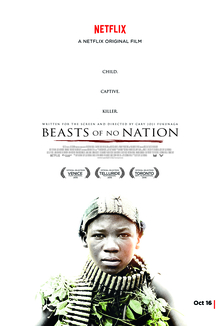
Written largely during his imprisonment, 'Beasts of No Nation' attacked the United Nations, apartheid South Africa, and global power structures. It demonstrated Fela's undiminished capacity for ambitious, multi-part political epics late in his career.
Image source: Beasts of No Nation (film)
Aug 2, 1997
% complete
Fela died in Lagos at age 58 from complications related to AIDS. His funeral drew an estimated one million mourners in one of the largest crowds in Nigerian history, testifying to his immense cultural and political impact across Africa and beyond.
Nov 1, 1978 - Nov 30, 1978
% complete
Fela's appearance at the Berlin Jazz Festival introduced Afrobeat to large European audiences. During this period tensions within Africa '70 grew, and shortly afterward most of his bandmates departed, marking a turning point in his career.
Aug 25, 1986
% complete
Paul Simon's landmark album 'Graceland' ignited global interest in African popular music. Though rooted in South African styles rather than Afrobeat, the album's success opened Western markets for African artists and paved the way for Afrobeat's international spread.
Image source: Graceland (album)
Jan 1, 1998
% complete
Brooklyn-based ensemble Antibalas revived classic big-band Afrobeat outside Africa, touring internationally and collaborating on the 'Fela!' musical. Their work proved the genre could thrive far beyond its Nigerian roots and influenced countless Western bands.
Image source: Antibalas
Jun 1, 1998
% complete
Tribute projects such as the Red Hot Organization's compilation honored Fela's legacy, pairing reworked classics with contributions from hip-hop, jazz, and pop luminaries. These albums introduced Fela's catalog to younger audiences and cemented his status as a global icon.
Nov 23, 2009 - Jan 22, 2012
% complete
Produced by Shawn 'Jay-Z' Carter and Will Smith among others, the Tony Award-nominated musical 'Fela!' brought the life and music of Fela Kuti to Broadway audiences, significantly boosting mainstream awareness of Afrobeat in the United States.
Image source: Fela!
Jan 1, 1997
% complete
At just 14, Seun Kuti assumed leadership of his father's band Egypt '80 after Fela's death. He has since carried authentic big-band Afrobeat forward globally, releasing acclaimed albums and earning Grammy nominations while maintaining his father's political fire.
Image source: Seun Kuti
Jan 1, 1998
% complete
Fela's eldest son Femi Kuti took up the mantle with his band Positive Force, earning multiple Grammy nominations and reopening the New Afrika Shrine in Lagos, which now hosts the annual Felabration festival celebrating his father's life and music.
Image source: Femi Kuti
Oct 1, 1998
% complete
Established by Yeni Kuti in memory of her father, Felabration is a week-long annual festival held each October around Fela's birthday. It draws artists and fans from around the world to Lagos for concerts, debates, and art exhibitions celebrating Afrobeat.
Image source: Felabration
Jan 1, 2007
% complete
Veteran Afrobeat drummer Tony Allen teamed with Blur frontman Damon Albarn in a supergroup blending rock and Afrobeat grooves. Their collaboration exemplified Afrobeat's deep integration into contemporary Western popular music before Allen's death in 2020.
Image source: The Good, the Bad & the Queen
Jan 1, 2012
% complete
A new generation of Nigerian and Ghanaian artists including Wizkid, Davido, Burna Boy, and Sarkodie popularized 'Afrobeats,' a danceable pop genre distinct from Fela's Afrobeat though indebted to it. Streaming platforms and diaspora communities propelled the sound onto charts worldwide.
Image source: Afrobeats
Jul 26, 2019
% complete
Burna Boy's album 'African Giant' explicitly invoked Fela Kuti's spirit and sound, winning international awards and a Grammy nomination. His success highlighted how Fela's Afrobeat legacy directly informs contemporary African music's global ascendancy.
Image source: African Giant
Or browse the full history timeline directory, with more than 2,000 topics.
This History of Afrobeat timeline was generated with the help of AI, using information found on the internet.
We work hard to keep these timelines accurate, but mistakes do get through. If you spot one, email us at [email protected] and we'll fix it for future visitors.
Generate yours with AI or build it from scratch, for free.
Export your timeline, add your own events, edit or remove AI-generated events, and much more
No credit card required.
Cancel anytime.
Cancel anytime.
You can create an unlimited number of timelines with up to 10 events on each one, customize how they look, export them to PDF, PNG, PowerPoint, CSV, and Excel, and share them with a link. Paid plans raise the event limit and add features like spreadsheet imports and collaborators.
Yes. You can cancel your subscription from your account page at any time, and you will not be charged again. Your subscription stays active for the rest of the period you already paid for.
Yes. We will email you a reminder before the annual renewal, and we will also email you a receipt.
Yes. You can email us within 15 days of any payment, and we will issue you a full refund.
Check out our pricing docs or send us an email anytime: [email protected].