-
Use Cases
-
Resources
-
Pricing
Arizona's history spans thousands of years, beginning with ancient Indigenous cultures such as the Hohokam, Ancestral Puebloans, and Navajo. Spanish explorers arrived in the 16th century, followed by Mexican rule after independence in 1821. The United States acquired most of Arizona through the Mexican Cession of 1848 and the Gadsden Purchase of 1853. After a period as part of the New Mexico Territory, Arizona became its own territory in 1863 and achieved statehood on February 14, 1912, as the 48th state. The state's history is marked by mining booms, conflicts during the Apache Wars, the growth of cities like Phoenix and Tucson, and rapid modern development. More Less
300 AD - 1500
% complete
The Hohokam people built an extensive irrigation civilization along the Salt and Gila Rivers, digging hundreds of miles of canals near present-day Phoenix. Their culture flourished for over a millennium before declining around 1450.
Image source: Hohokam
600 AD - 1300
% complete
The Ancestral Puebloans constructed remarkable dwellings in northeastern Arizona, including the multi-story pueblos of Canyon de Chelly and Wupatki. Drought and social change led to their migration by around 1300, with descendants including the Hopi.
Image source: Ancestral Puebloans
1539
% complete
Fray Marcos de Niza became the first European known to enter Arizona, traveling north from Mexico in search of the fabled Seven Cities of Cíbola and claiming the region for Spain based on his reports.
Image source: Marcos de Niza
1540 - 1542
% complete
Francisco Vázquez de Coronado led a large Spanish expedition through Arizona in search of gold, exploring the Hopi pueblos and the Grand Canyon via a detachment under García López de Cárdenas before returning to Mexico empty-handed.
Image source: Francisco Vázquez de Coronado
1687 - 1711
% complete
Jesuit missionary Eusebio Kino founded a chain of missions and visitas among the O'odham people, including Mission San Xavier del Bac in 1700, introducing European agriculture and livestock to the region.
Image source: Eusebio Kino
1695 - 1821
% complete
Throughout the Spanish and Mexican periods, repeated uprisings by the O'odham and persistent Apache raids limited European settlement in Arizona, keeping most of the region a sparsely populated frontier.
Image source: Apache Wars
Sep 27, 1821
% complete
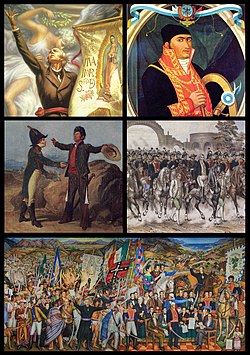
Mexico's independence transferred control of Arizona from Spain to the new Mexican nation, though the remote northern frontier remained thinly settled and vulnerable to Apache raids.
Image source: Mexican War of Independence
1826 - 1846
% complete
American trappers such as Sylvester Pattie, James Ohio Pattie, and Bill Williams explored and trapped along Arizona rivers, producing early accounts of the region and opening routes used by later emigrants.
Image source: Fur trade
1846 - 1847
% complete
During the Mexican–American War, the Mormon Battalion blazed a wagon route across southern Arizona en route to California, completing one of the longest infantry marches in U.S. history and improving access to the territory.
Image source: Mormon Battalion
Feb 2, 1848
% complete
The treaty ending the Mexican–American War ceded most of what is now Arizona north of the Gila River to the United States, making it part of the New Mexico Territory.
Image source: Treaty of Guadalupe Hidalgo
Jun 8, 1854
% complete
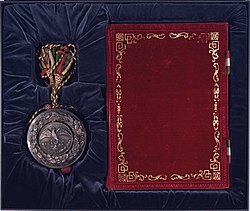
James Gadsden negotiated the purchase of nearly 30,000 square miles of land south of the Gila River for $10 million, giving the United States its final contiguous boundary and securing a route for a transcontinental railroad through southern Arizona.
Image source: Gadsden Purchase
Apr 15, 1862
% complete
Confederate and Union cavalry clashed at Picacho Peak northwest of Tucson in the westernmost battle of the Civil War, part of Confederate efforts to claim Arizona as its own territory.
Image source: Battle of Picacho Pass
1863 - 1866
% complete
Kit Carson's scorched-earth campaign against the Diné culminated in the forced removal of thousands of Navajo to Bosque Redondo in New Mexico, a devastating 300-mile march remembered as the Long Walk.
Image source: Long Walk of the Navajo
Feb 24, 1863
% complete
President Abraham Lincoln signed legislation creating the Arizona Territory, separating it from New Mexico Territory with its capital first at Fort Whipple and Prescott. John N. Goodwin served as its first governor.
Image source: Arizona Territory
Apr 30, 1871
% complete
A joint force of Tohono O'odham, Mexican, and American attackers killed approximately 100–144 mostly women and children of the Aravaipa Apache band near Camp Grant, prompting national outrage and federal investigations into Indian policy.
Image source: Camp Grant massacre
1877 - 1900
% complete
Rich copper discoveries at Bisbee, Clifton, Morenci, and Jerome transformed Arizona's economy, drawing thousands of miners and investors and making copper the territory's dominant industry.
Image source: Copper mining in Arizona
Mar 20, 1880
% complete
The Southern Pacific Railroad's arrival in Tucson connected Arizona to national markets, accelerating settlement, mining, and cattle ranching throughout the territory.
Image source: Southern Pacific Railroad
Oct 26, 1881
% complete
Wyatt Earp, his brothers, and Doc Holliday faced off against Ike Clanton's Cowboys near the O.K. Corral in Tombstone, producing the most famous gunfight in American frontier history in the silver boomtown.
Image source: Gunfight at the O.K. Corral
Sep 4, 1886
% complete
Geronimo's surrender to General Nelson Miles at Skeleton Canyon ended decades of Apache conflict, closing the era of armed Native American resistance in Arizona and leading to his imprisonment in Florida.
Image source: Geronimo
Feb 4, 1889
% complete
The territorial legislature relocated Arizona's capital to Phoenix, whose central location and irrigated agricultural economy made it the natural hub of the growing territory.
Image source: History of Phoenix, Arizona
1905 - 1911
% complete
Built under the new Reclamation Act, Roosevelt Dam harnessed the Salt River to provide reliable water and power for central Arizona, enabling Phoenix's transformation into a major agricultural center.
Image source: Theodore Roosevelt Dam
Feb 14, 1912
% complete
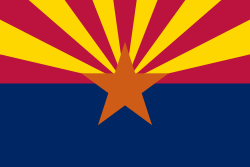
After years of statehood bids and debates, Arizona was admitted as the 48th state on Valentine's Day 1912, with George W. P. Hunt serving as its first governor.
Image source: Arizona
Feb 14, 1912
% complete
Arizona's new constitution included pioneering progressive reforms such as initiative, referendum, recall, women's suffrage in state elections, and limits on child labor, reflecting the influence of miners and labor organizers.
Jul 12, 1917
% complete
Over 1,000 striking copper miners were forcibly rounded up and deported from Bisbee to New Mexico by a vigilante posse organized by mine owners, becoming one of the largest illegal deportations in American labor history.
Image source: Bisbee Deportation
Feb 26, 1919
% complete
Congress established Grand Canyon National Park, protecting one of the world's most spectacular natural wonders and laying the foundation for tourism to become a pillar of Arizona's economy.
Image source: Grand Canyon National Park
Apr 20, 1931 - Mar 1, 1936
% complete
The massive Hoover Dam project on the Arizona-Nevada border employed thousands of workers during the Depression and created Lake Mead, providing flood control, water storage, and hydroelectric power vital to Arizona's growth.
Image source: Hoover Dam
1934
% complete
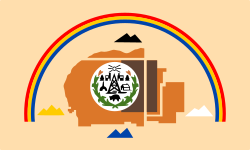
The Indian Reorganization Act of 1934 allowed tribes to formally organize self-governments, strengthening the Navajo Nation, which grew to become the largest reservation in the United States, spanning parts of Arizona, New Mexico, and Utah.
Image source: Navajo Nation
Aug 7, 1942 - 1945
% complete
Hundreds of Navajo Marines used their native language to create an unbreakable military code, transmitting critical battlefield communications in the Pacific Theater and earning lasting recognition for their service.
Image source: Code talker
1945 - 1965
% complete
Air conditioning, defense industries, and retirement migration fueled explosive postwar growth, transforming Phoenix and Tucson from modest towns into major metropolitan areas and shifting Arizona's economy toward services and technology.
Image source: Phoenix, Arizona
Jul 16, 1964
% complete
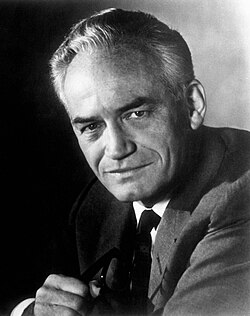
Arizona Senator Barry Goldwater captured the 1964 Republican presidential nomination, running a campaign that reshaped American conservatism even as he lost decisively to Lyndon B. Johnson.
Image source: Barry Goldwater
1968 - 1993
% complete
Authorized by President Johnson in 1968, the Central Arizona Project canal system began delivering Colorado River water across 336 miles to Phoenix and Tucson, sustaining the state's rapid urban expansion.
Sep 21, 1981
% complete
Former Arizona state senator and appellate judge Sandra Day O'Connor became the first woman appointed to the United States Supreme Court, nominated by President Ronald Reagan and confirmed unanimously.
Image source: Sandra Day O'Connor
1987 - 1988
% complete
Governor Evan Mecham became the first U.S. governor removed from office by impeachment conviction since 1929, following controversies over offensive remarks and allegations of obstruction and misuse of funds.
Image source: Evan Mecham
Apr 4, 1988
% complete
Secretary of State Rose Mofford succeeded Evan Mecham upon his removal, becoming the first woman to serve as governor of Arizona and guiding the state through a period of political turbulence.
Image source: Rose Mofford
Jan 28, 1996
% complete
Tempe hosted Super Bowl XXX at Sun Devil Stadium, where the Dallas Cowboys defeated the Pittsburgh Steelers, marking Arizona's arrival as a venue for premier national sporting events.
Image source: Super Bowl XXX
Nov 4, 2001
% complete
In only their fourth season, the Arizona Diamondbacks defeated the New York Yankees in seven games, with Luis Gonzalez's walk-off hit delivering the championship months after the September 11 attacks.
Image source: 2001 World Series
Jun 18, 2002 - Jul 7, 2002
% complete
The Rodeo–Chediski Fire burned nearly 470,000 acres in the White Mountains, forcing tens of thousands to evacuate and highlighting the escalating threat of catastrophic wildfire in Arizona's forests.
Image source: Rodeo–Chediski Fire
Jun 28, 2013 - Jul 10, 2013
% complete
Nineteen members of the Prescott-based Granite Mountain Hotshots died when winds shifted and overran them during the Yarnell Hill Fire — the deadliest loss of U.S. firefighters since September 11, 2001.
Image source: Yarnell Hill Fire
Or browse the full history timeline directory, with more than 2,000 topics.
This History of Arizona timeline was generated with the help of AI, using information found on the internet.
We work hard to keep these timelines accurate, but mistakes do get through. If you spot one, email us at [email protected] and we'll fix it for future visitors.
Generate yours with AI or build it from scratch, for free.
Export your timeline, add your own events, edit or remove AI-generated events, and much more
No credit card required.
Cancel anytime.
Cancel anytime.
You can create an unlimited number of timelines with up to 10 events on each one, customize how they look, export them to PDF, PNG, PowerPoint, CSV, and Excel, and share them with a link. Paid plans raise the event limit and add features like spreadsheet imports and collaborators.
Yes. You can cancel your subscription from your account page at any time, and you will not be charged again. Your subscription stays active for the rest of the period you already paid for.
Yes. We will email you a reminder before the annual renewal, and we will also email you a receipt.
Yes. You can email us within 15 days of any payment, and we will issue you a full refund.
Check out our pricing docs or send us an email anytime: [email protected].