-
Use Cases
-
Resources
-
Pricing
1614
% complete
Dutch fur trader and navigator Adriaen Block explored the Connecticut River and coastline, mapping the region and establishing Dutch claims that led to early trading posts in the area later known as Connecticut.
Image source: Adriaen Block
Sep 26, 1633
% complete
Settlers from Plymouth Colony established a trading post at Windsor on the Connecticut River, marking the first English settlement in what would become the Connecticut colony.
Image source: Windsor, Connecticut
1634 - 1636
% complete
English Puritans settled Wethersfield around 1634, followed by Hartford in 1635-1636, when Reverend Thomas Hooker led his congregation from Massachusetts Bay to the Connecticut River valley.
Image source: Hartford, Connecticut
1636
% complete
Reverend Thomas Hooker led about one hundred followers west from Massachusetts Bay Colony to found Hartford, seeking greater political and religious freedom and laying the foundation of the Connecticut colony.
Image source: Thomas Hooker
Jul 1636
% complete
Rising tensions between English colonists and the Pequot people erupted into war, a brutal conflict fought over trade, land, and dominance in southern New England.
Image source: Pequot War
May 26, 1637
% complete
English colonists and their Narragansett allies attacked the fortified Pequot village at Mystic, killing hundreds of Pequots by burning the palisade. The attack devastated the tribe and decisively shaped the outcome of the Pequot War.
Image source: Mystic massacre
1638
% complete
Puritans led by John Davenport and Theophilus Eaton established the New Haven Colony as a separate theocratic settlement, which remained independent until merging with Connecticut in 1662.
Image source: New Haven Colony

Jan 14, 1639
% complete
The towns of Windsor, Hartford, and Wethersfield adopted the Fundamental Orders, often considered the first written constitution in the American colonies, establishing a framework of self-government for the Connecticut colony.
Image source: Fundamental Orders of Connecticut
1662
% complete
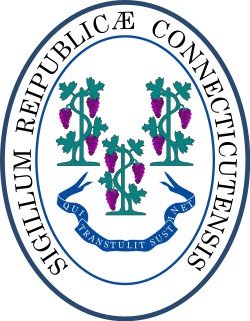
King Charles II granted John Winthrop the Younger a royal charter that merged the New Haven Colony with the Connecticut Colony, expanding its boundaries and legitimizing its government.
Image source: Charter Oak
1687
% complete
When royal governor Edmund Andros attempted to seize Connecticut's charter, legend holds that colonists hid it inside the hollow of a great white oak tree in Hartford, making the Charter Oak an enduring symbol of Connecticut independence.
Oct 9, 1701
% complete
Congregationalist ministers founded the Collegiate School at Saybrook, which moved to New Haven in 1716 and became Yale College, growing into one of America's most prestigious institutions of higher learning.
Image source: Yale University
1739 - 1745
% complete
Religious revivalism swept the colonies, deeply affecting Connecticut through preachers like Jonathan Edwards and George Whitefield, sparking new churches and religious divisions across the colony.
Image source: First Great Awakening
1754 - 1763
% complete
Connecticut supplied thousands of militiamen to British campaigns against France and its Native allies, including expeditions against Fort Carillon and Fort Niagara, helping secure British victory in North America.
Image source: French and Indian War
1765
% complete
Connecticut colonists joined widespread resistance to the Stamp Act, with protests in Hartford and elsewhere forcing stamp distributors to resign and fueling the movement toward revolution.
Image source: Stamp act
May 10, 1775
% complete
Connecticut-born Benedict Arnold joined Ethan Allen's Green Mountain Boys in a surprise dawn assault that captured Fort Ticonderoga from the British, yielding cannons vital to the patriot cause.
Image source: Capture of Fort Ticonderoga
Apr 27, 1777
% complete
Connecticut militia under General Israel Putnam clashed with British forces under William Tryon during a raid on Danbury's patriot supply depots, one of the few battles fought on Connecticut soil.
Sep 6, 1781
% complete
Turncoat Benedict Arnold led a British raid on his native New London, burning the town while British troops stormed Fort Griswold in Groton, where defenders were massacred after surrendering.
Image source: Battle of Groton Heights
Sep 3, 1783
% complete
Britain formally recognized American independence, ending the war in which Connecticut earned its nickname 'the Provision State' for supplying food, weapons, and goods to the Continental Army.
Image source: Treaty of Paris (1783)
1787
% complete
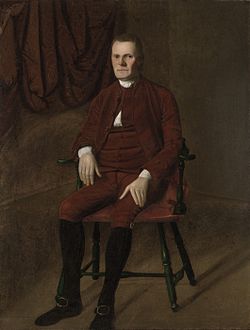
Connecticut delegates Roger Sherman and Oliver Ellsworth helped craft the 'Great Compromise,' creating a bicameral Congress that balanced large and small states' interests and enabled ratification of the U.S. Constitution.
Image source: Connecticut Compromise
Jan 9, 1788
% complete
Connecticut became the fifth state to ratify the U.S. Constitution, earning the enduring nickname 'the Constitution State' for its role in shaping federal governance.
1848
% complete
Connecticut passed legislation gradually emancipating remaining enslaved persons, completing abolition decades after other Northern states had begun the process.
Image source: History of slavery in Connecticut
1793
% complete
Massachusetts-born Eli Whitney, working in Connecticut, patented the cotton gin, revolutionizing Southern agriculture and demonstrating manufacturing ingenuity that flourished in Connecticut industry.
Image source: Cotton gin
1798
% complete
Eli Whitney won a U.S. Army contract for muskets made with interchangeable parts at his New Haven armory, pioneering the American system of manufacturing that made Connecticut a center of precision production.
Image source: Interchangeable parts
1810
% complete
Beginning with Hartford Fire Insurance Company in 1810 and accelerating after the Civil War, Hartford grew into the 'Insurance Capital of the World,' hosting major firms like Aetna and Travelers.
Feb 25, 1836
% complete
Samuel Colt received a patent for his revolving firearm, founding Colt's Patent Fire-Arms Manufacturing Company in Hartford, which became a cornerstone of Connecticut arms manufacturing.
Image source: Samuel Colt
1839
% complete
Charles Goodyear accidentally discovered rubber vulcanization in Woburn and developed the process further in Naugatuck, Connecticut, launching the state's rubber industry centered in the Naugatuck Valley.
Image source: Charles Goodyear
Apr 12, 1861 - Apr 9, 1865
% complete
Connecticut sent roughly 55,000 men to fight for the Union and its factories produced rifles, uniforms, and supplies, playing a major role in the Union victory despite deep internal divisions over abolition.
Image source: Connecticut in the American Civil War
1871
% complete
Author Mark Twain built an ornate mansion in Hartford's Nook Farm neighborhood, where he wrote classics including The Adventures of Tom Sawyer and Adventures of Huckleberry Finn.
Image source: Mark Twain House
1925
% complete
Aviation pioneer Igor Sikorsky established Sikorsky Aero Engineering Corporation in Stratford, developing flying boats and, in 1939, the first practical American helicopter, anchoring Connecticut's aerospace industry.
Image source: Sikorsky Aircraft
Sep 21, 1938
% complete
The unexpected Great New England Hurricane slammed into Connecticut, killing dozens, destroying thousands of homes, flooding coastal communities, and causing massive damage along the shoreline.
Image source: 1938 New England hurricane
1941 - 1945
% complete
During World War II, Connecticut factories churned out submarines, helicopters, machine tools, and munitions, employing hundreds of thousands and cementing the state's reputation as the 'Arsenal of Democracy.'
Image source: United States home front during World War II
1954
% complete
The world's first nuclear-powered submarine, USS Nautilus, was launched at Electric Boat in Groton, transforming naval warfare and making southeastern Connecticut a hub of submarine construction.
Image source: USS Nautilus (SSN-571)
Nov 7, 1954
% complete
Democrat Abraham Ribicoff was elected governor, championing urban renewal and civil rights before joining John F. Kennedy's cabinet and later serving as senator from Connecticut.
Image source: Abraham Ribicoff
1956 - 1969
% complete
Federal interstate highway funding brought I-95, I-84, and I-91 through Connecticut, spurring suburbanization, commuting patterns, and economic shifts from cities to suburbs.
Image source: Interstate 95 in Connecticut
1960 - 1989
% complete
From the 1960s onward, Connecticut lost tens of thousands of manufacturing jobs as defense cuts and global competition shuttered factories, prompting painful economic restructuring toward finance and services.
Image source: Deindustrialization
Nov 5, 1974
% complete
Ella Grasso won election as governor of Connecticut in 1974, becoming the first woman in U.S. history elected governor in her own right, not as the wife or widow of a former governor.
Image source: Ella Grasso
Oct 12, 1996
% complete
The Mohegan Tribe opened Mohegan Sun in Uncasville, following Foxwoods Resort Casino opened by the Mashantucket Pequot in 1992; together they made Connecticut a major gaming destination and generated significant tribal revenue.
Image source: Mohegan Sun
Sep 11, 2001
% complete
Connecticut lost over 150 residents in the September 11 terrorist attacks, many of whom commuted to work in lower Manhattan, profoundly affecting communities across Fairfield County and the state.
Image source: September 11 attacks
Oct 29, 2012 - Oct 30, 2012
% complete
Hurricane Sandy's surge flooded coastal towns from Greenwich to Mystic, knocked out power to hundreds of thousands, and caused billions of dollars in damage, prompting renewed focus on coastal resilience.
Image source: Effects of Hurricane Sandy in New England
2019 - 2021
% complete
Governor Ned Lamont confronted pension deficits, population stagnation, and budget pressures while investing in infrastructure and education, navigating the COVID-19 pandemic that struck Connecticut hard in 2020.
Image source: Ned Lamont
Or browse the full history timeline directory, with more than 2,000 topics.
This History of Connecticut timeline was generated with the help of AI, using information found on the internet.
We work hard to keep these timelines accurate, but mistakes do get through. If you spot one, email us at [email protected] and we'll fix it for future visitors.
Generate yours with AI or build it from scratch, for free.

Export your timeline, add your own events, edit or remove AI-generated events, and much more
No credit card required.
Cancel anytime.
Cancel anytime.
You can create an unlimited number of timelines with up to 10 events on each one, customize how they look, export them to PDF, PNG, PowerPoint, CSV, and Excel, and share them with a link. Paid plans raise the event limit and add features like spreadsheet imports and collaborators.
Yes. You can cancel your subscription from your account page at any time, and you will not be charged again. Your subscription stays active for the rest of the period you already paid for.
Yes. We will email you a reminder before the annual renewal, and we will also email you a receipt.
Yes. You can email us within 15 days of any payment, and we will issue you a full refund.
Check out our pricing docs or send us an email anytime: [email protected].