-
Use Cases
-
Resources
-
Pricing
Athens, one of the world's oldest cities, has been inhabited for over 3,000 years. Widely regarded as the cradle of Western civilization and the birthplace of democracy, Athens flourished as a powerful city-state in ancient Greece. It produced remarkable achievements in philosophy, art, drama, and architecture during its Golden Age under leaders like Pericles. Throughout its history, Athens experienced periods of dominance, decline under Roman, Byzantine, and Ottoman rule, and a dramatic resurgence as the capital of modern Greece. More Less
1600 BCE - 1150 BCE
% complete
During the Mycenaean period (1600/1550-1200/1150 BCE), Athens emerged as one of the main centers of Mycenaean culture in the Aegean region.
Image source: Mycenaean Greece
1412 BCE
% complete
By 1412 BC, the settlement had become an important center of the Mycenaean civilization, and the Acropolis was the site of a major Mycenaean fortress whose remains can be recognized from sections of the characteristic Cyclopean walls.
Image source: Acropolis of Athens
1250 BCE
% complete
Around 1250 BCE, Athens had a massive fortification system with walls built of Cyclopean stones, similar to those found at Mycenae and Tiryns. The wall enclosed the entire acropolis with the main gate on the west side and a smaller postern gate to the northeast.
Image source: Cyclopean masonry
1250 BCE - 1200 BCE
% complete
Between 1250 and 1200 BC, to feed the needs of the Mycenaean settlement, a staircase was built down a cleft in the rock to reach a water supply protected from enemy incursions, comparable to similar works carried out at Mycenae.
1250 BCE - 1100 BCE
% complete
At Athens, in the late 13th century BCE and early 12th century BCE, there was intense building activity to withstand a siege—a classic archaeological indicator of a high-threat environment where defenders prioritized security over accessibility. Once the threat passed, the risky deep-access shaft was abandoned.
Image source: Late Bronze Age collapse
1200 BCE
% complete
It is unclear whether Athens suffered destruction in about 1200 BC, an event traditionally attributed to a Dorian invasion but now commonly attributed to a systems collapse as part of the Late Bronze Age collapse.
1200 BCE - 950 BCE
% complete
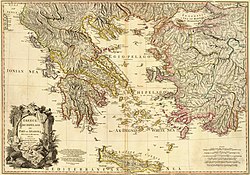
Iron I (1200/1150-950 BCE) represents the post-palatial Submycenaean period, or Greek Dark Ages. The Kerameikos cemetery shows a transition from Mycenaean chamber tombs to individual cist graves, suggesting a shift in social structure rather than a total societal wipeout.
Image source: Greek Dark Ages
1100 BCE
% complete
Following the peak tension of the early 12th century BCE, the settlement pattern shifted to the slopes of the Acropolis, indicating a transition from a citadel-and-subject model to a more integrated, proto-urban community living on the slopes and in the valley.
900 BC
% complete
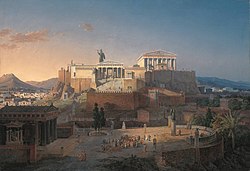
According to legend, Athens was formerly ruled by kings, a situation which may have continued up until the 9th century BC.
Image source: History of Athens
800 BC - 701 BC
% complete
By the 8th century BC, Athens had evolved into a prominent city-state, or polis, within the region of Attica.
Image source: Polis
700 BC - 601 BC
% complete
By the 7th century BC, social unrest had become widespread, and the Areopagus appointed Draco to draft a strict new code of law—hence the word 'draconian'.
Image source: Draco (legislator)
600 BC - 501 BC
% complete
The 7th and 6th centuries BC saw the establishment of legal codes by Draco, Solon, and Cleisthenes, which aimed to address social inequalities and set the stage for the development of democracy.
Image source: Solonian constitution
500 BC - 478 BC
% complete
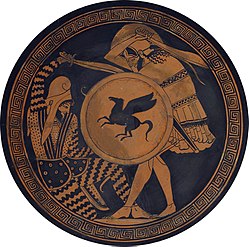
In the early 5th century BC, Athens played a central role in repelling Persian invasions and subsequently established its hegemony over other city-states through the formation of the Delian League.
Image source: Greco-Persian Wars
450 BC - 430 BC
% complete
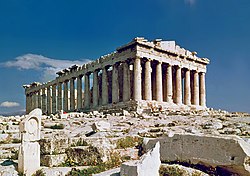
The leading statesman of the mid-fifth century BC was Pericles, who used the tribute paid by the members of the Delian League to build the Parthenon and other great monuments of classical Athens.
Image source: Parthenon
400 BC - 301 BC
% complete
In the 4th century BC the water supply was replaced by a system of terracotta pipes in a stone-built underground channel, sometimes called the Hymettos aqueduct, with round, oval or square access holes on top.
350 BC
% complete
By the mid-4th century BC, the northern Greek kingdom of Macedon was becoming dominant in Athenian affairs.
Image source: Macedonia (ancient kingdom)
330
% complete
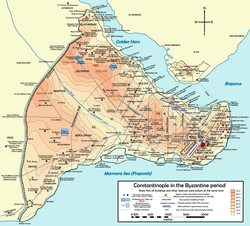
In the early 4th century AD, the eastern Roman empire began to be governed from Constantinople, and with the construction and expansion of the imperial city, many of Athens's works of art were taken by the emperors to adorn it.
Image source: Constantinople
896
% complete
In 896, Athens was raided and possibly occupied for a short period by Saracens, an event which left archaeological remains and elements of Arabic ornamentation in contemporary buildings; evidence also suggests a mosque existed in the city at the time.
Image source: Saracen
1000 - 1199
% complete
The medieval town experienced rapid and sustained growth starting in the 11th century, benefiting from Italian trade. The 11th and 12th centuries were the Golden Age of Byzantine art in Athens, when almost all the most important Middle Byzantine churches in and around the city were built.
Image source: Byzantine art
1204
% complete
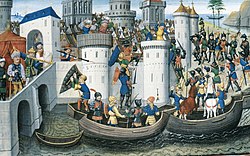
In 1204, the Fourth Crusade conquered Athens, and the city was not recovered from the Latins before it was taken by the Ottoman Turks. From 1204 until 1458, Athens was ruled by Latins in three separate periods following the Crusades.
Image source: Fourth Crusade
1311 - 1388
% complete
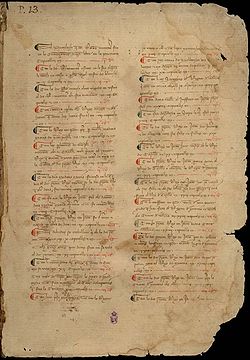
In 1311, Athens was conquered by the Catalan Company, a band of mercenaries called Almogavars. After Thebes was lost after 1379, Athens became the capital of the duchy again. It was held by the Catalans until 1388.
Image source: Catalan Company
1388
% complete
In 1388, the Florentine Nerio I Acciajuoli took the city and made himself duke. His descendants ruled the city as their capital until the Turkish conquest of 1458, disputing it with Venice, which ruled from 1395 to 1402 before the Florentines prevailed.
Image source: Nerio I Acciaioli
1397
% complete
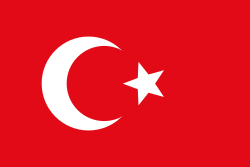
The first Ottoman attack on Athens, which involved a short-lived occupation of the town, came in 1397 under the Ottoman generals Yaqub Pasha and Timurtash.
Image source: Ottoman Empire
1458
% complete
Finally, in 1458, Athens was captured by the Ottomans under the personal leadership of Sultan Mehmed II, beginning more than three centuries of Ottoman rule.
Image source: Mehmed II
1640
% complete
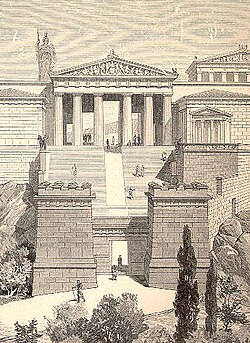
In 1640, a lightning bolt struck the Propylaea, causing its destruction. From the early 17th century, Athens had come under the jurisdiction of the Kizlar Agha, the chief black eunuch of the Sultan's harem.
Image source: Propylaea
1687 - Apr 9, 1688
% complete
In 1687, during the Morean War, the Acropolis was besieged by Venetians under Francesco Morosini, and the temple of Athena Nike was dismantled by the Ottomans to fortify the Parthenon. During the Venetian occupation the two mosques were converted into churches, but the Venetians abandoned Athens back to the Ottomans on Apr 9, 1688.
Image source: Morean War
1752 - 1753
% complete
This peaceful situation was interrupted in 1752–1753, when the execution of the previous Kizlar Agha resulted in the dispatch of a new pasha, Sari Muselimi.
1759
% complete
In 1759, the new pasha destroyed one of the pillars of the Temple of Olympian Zeus to provide material for a fifth mosque for the city—an illegal act, as the temple was considered the Sultan's property.
Image source: Temple of Olympian Zeus, Athens
1795
% complete
Through protests in Constantinople, the Athenians achieved the recall of Haseki several times, but he always returned, until his final downfall and execution in 1795.
1801 - 1805
% complete
Between 1801 and 1805, Lord Elgin, the British ambassador to the Ottoman Empire, arranged for the removal of many sculptures from the Parthenon, known as the Elgin Marbles.
Image source: Elgin Marbles
1822 - Jun 1827
% complete
In 1822, a Greek insurgency captured the city, but it fell to the Ottomans again in 1826, though the Acropolis held until June 1827. Ottoman forces remained in possession until March 1833, when they withdrew.
Image source: Greek War of Independence
1832
% complete
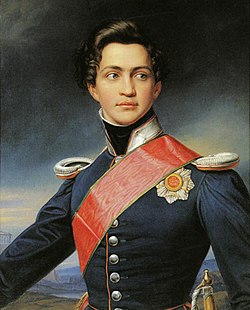
In 1832, Otto, Prince of Bavaria, was proclaimed King of Greece, and Athens re-emerged as the capital of the independent and self-governing Greek state.
Image source: Otto of Greece
1837 - 1897
% complete
The finest legacy of this era are the buildings of the University of Athens (1837), National Gardens (1840), National Library of Greece (1842), Old Royal Palace (1843), Old Parliament Building (1858), City Hall (1874), Zappeion (1878), Greek National Academy (1885) and New Royal Palace (1897).
Image source: National and Kapodistrian University of Athens
1896
% complete
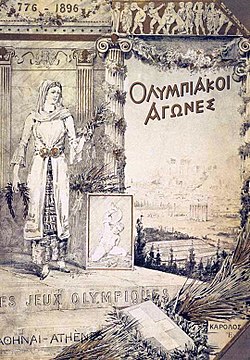
Athens hosted the 1896 Summer Olympics, the first Olympic Games of the modern era.
Image source: 1896 Summer Olympics
1922 - 1923
% complete
Athens experienced its second period of explosive growth following the disastrous Greco-Turkish War in 1921, when more than a million Greek refugees from Asia Minor were resettled in Greece after the Asia Minor Catastrophe in 1922.
Image source: Population exchange between Greece and Turkey
1981
% complete
Greek entry into the European Union in 1981 brought a flood of new investment to the city, but also increasing social and environmental problems.
Image source: Enlargement of the European Union
1996
% complete
The city's environmental and infrastructure problems were the main reason why Athens failed to secure the 1996 Centenary Olympic Games. Following this failure, both the city and the Greek government, aided by EU funds, undertook major infrastructure projects such as the new Athens Airport and a new metro system.
Image source: 1996 Summer Olympics
2004
% complete
As a result of its infrastructure improvements, Athens won its bid to host the 2004 Summer Olympic Games, returning the Games to their birthplace after 108 years.
Image source: 2004 Summer Olympics
Dec 2008
% complete
The 2008 Greek Riots began in Athens following the killing of a 15-year-old student by an officer, sparking widespread protests and civil unrest.
Image source: 2008 Greek riots
May 2024 - 2029
% complete
As of May 2024, construction of a new metro line in Athens, Line 4, is underway—the biggest infrastructure project in Greece at present. The project is expected to be completed in 2029.
Image source: Athens Metro
Or browse the full history timeline directory, with more than 2,000 topics.
This History of Athens timeline was generated with the help of AI, using information found on the internet.
We work hard to keep these timelines accurate, but mistakes do get through. If you spot one, email us at [email protected] and we'll fix it for future visitors.
Generate yours with AI or build it from scratch, for free.
Export your timeline, add your own events, edit or remove AI-generated events, and much more
No credit card required.
Cancel anytime.
Cancel anytime.
You can create an unlimited number of timelines with up to 10 events on each one, customize how they look, export them to PDF, PNG, PowerPoint, CSV, and Excel, and share them with a link. Paid plans raise the event limit and add features like spreadsheet imports and collaborators.
Yes. You can cancel your subscription from your account page at any time, and you will not be charged again. Your subscription stays active for the rest of the period you already paid for.
Yes. We will email you a reminder before the annual renewal, and we will also email you a receipt.
Yes. You can email us within 15 days of any payment, and we will issue you a full refund.
Check out our pricing docs or send us an email anytime: [email protected].