-
Use Cases
-
Resources
-
Pricing
The Bahamas is an island nation whose history spans thousands of years. Originally inhabited by the Lucayan Taíno people, it became the first landfall of Christopher Columbus in 1492. After Spanish depopulation of the islands, British settlers arrived in 1648, and the islands became a haven for pirates in the late 17th century. The Bahamas developed a plantation economy based on enslaved African labor, abolished slavery in 1834. It achieved internal self-government in 1964 and full independence from Britain on July 10, 1973, becoming a parliamentary democracy within the Commonwealth. More Less
Aug 3, 1492
% complete
In 1492, Christopher Columbus sailed from Spain with three ships — the Niña, the Pinta, and the flagship Santa María — seeking a direct route to Asia.
Image source: Christopher Columbus
Oct 12, 1492
% complete
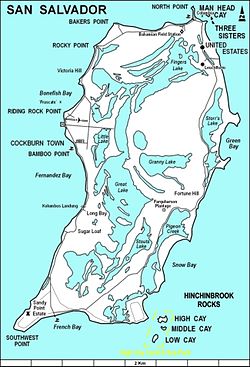
Recorded history of the Bahamas began on 12 October 1492, when Christopher Columbus landed on the island of Guanahani, which he renamed San Salvador Island, on his first voyage to the New World.
Image source: San Salvador Island
1500
% complete
By around the year 1500, the indigenous Lucayan people of the Bahamas had grown to a population of about 40,000, living across the islands long before sustained European contact.
Image source: Lucayan people
1520
% complete
When the Spanish decided in 1520 to remove the remaining Lucayans to Hispaniola, they could find only eleven, marking the effective end of the indigenous population of the Bahamas.
1565
% complete
In 1565, a group of French Huguenots settled on the island of Abaco. They were never heard of again, and their fate remains unknown.
Image source: Abaco Islands
1648
% complete
In 1648, a group from Bermuda called "The Company of Adventurers for the Plantation of the Islands of Eleutheria", led by William Sayle, sailed to the Bahamas to found a colony. It was the earliest permanent European settlement, on Eleuthera.
Image source: Eleuthera
1666
% complete
In 1666, other colonists from Bermuda settled on New Providence, which soon became the centre of population and commerce in the Bahamas, with almost 500 people living on the island by 1670.
Image source: New Providence
1670
% complete
In 1670, the Proprietors of Carolina were issued a patent for the Bahamas, but the governors they sent had difficulty imposing their authority on the independent-minded residents of New Providence.
Image source: History of the Bahamas
1670
% complete
The Bahamian capital was founded in 1670 as Charles Town, with about 20 families living in the Eleuthera communities by that time. The town was rebuilt under its present name, Nassau, in 1695.
Image source: Nassau, The Bahamas
1684
% complete
In 1684, the Spanish burned the settlements on New Providence and Eleuthera, after which they were largely abandoned.
1686
% complete
New Providence was settled a second time in 1686 by colonists from Jamaica, reviving the main centre of population in the Bahamas.
1696
% complete
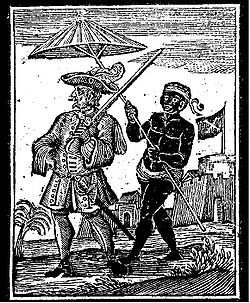
In 1696, Henry Every (or Avery), using the assumed name Henry Bridgeman, brought his ship Fancy, loaded with pirates' loot, into Nassau harbor, cementing the port's reputation as a haven for piracy.
Image source: Henry Every
1697
% complete
Following peace with France in 1697, many privateers became pirates, and they increasingly made their base at Nassau, turning it into a notorious pirate stronghold.
Image source: Golden Age of Piracy
1703
% complete
With England at war with France and Spain from 1701, combined French-Spanish fleets attacked and sacked Nassau in 1703, and again in 1706. Some settlers left, and the Proprietors gave up trying to govern the islands.
Image source: Jack Sparrow
1713
% complete
Although the War of the Spanish Succession ended in 1714, some privateers slipped into piracy. One estimate puts at least 1,000 pirates in the Bahamas in 1713, outnumbering the 200 families of permanent settlers.
Image source: Republic of Pirates
1717
% complete
In 1717, King George appointed Woodes Rogers governor of the Bahamas and issued a proclamation granting a pardon to any pirate who surrendered to a British governor within one year.
Image source: Woodes Rogers
Jul 1718
% complete
Woodes Rogers arrived in Nassau in late July 1718 with his own 460-ton warship, three ships belonging to his company, and an escort of three Royal Navy ships, beginning his campaign to suppress piracy.
1719
% complete
When Britain and Spain went to war again in 1719, many of the ex-pirates were commissioned by the British government as privateers, helping defend the Bahamas.
1720
% complete
In 1720, the Spaniards finally attacked Nassau, testing the defenses that Governor Woodes Rogers had worked to build up.
Image source: Raid on Nassau (1720)
Aug 1720
% complete
In August 1720, Calico Jack Rackham stole the sloop William out of Nassau harbor. His crew included Anne Bonny and Mary Read; Read later died in prison, while Bonny was likely quietly released and died in obscurity in late 1733.
Image source: John Rackham
1722
% complete
Rogers returned to Britain in 1722 to plead for repayment of money he had borrowed to build up Nassau, only to find he had been replaced as governor. After the 1724 publication of A General History of the Robberies and Murders of the Most Notorious Pirates praised his efforts, his fortunes improved, and the king awarded him a pension retroactive to 1721.
1728 - 1732
% complete
In 1728, Woodes Rogers was appointed Governor of the Bahamas for a second term. He died in Nassau in 1732, having largely ended the era of piracy in the islands.
1741
% complete
In 1741, Governor John Tinker and Peter Henry Bruce constructed Fort Montague to strengthen the defenses of Nassau.
Image source: The House in the Rock
1768
% complete
In 1768, Governor William Shirley filled in mosquito-breeding swamps and extended Nassau. He also reported that over 2,300 sumptuous houses were built during this period of growth.
1776
% complete
In 1776, American forces launched an amphibious assault against Nassau during the American Revolutionary War, resulting in its two-week occupation.
Image source: Raid of Nassau
1782
% complete
In 1782, Spanish forces under General Bernardo de Gálvez captured the Bahamas during the American Revolutionary War.
Image source: Capture of the Bahamas (1782)
1783
% complete
A British-American Loyalist expedition led by Colonel Andrew Deveaux recaptured the islands in 1783. Under the Peace of Paris in 1783, Spain ceded them to Britain in exchange for East Florida, ending titular Spanish claims.
Image source: Peace of Paris (1783)
1700 - 1807
% complete
During the 18th century slave trade, many purchased African slaves were brought to the Bahamas to work unpaid on plantations and other enterprises.
Image source: Slavery in the Bahamas
1807
% complete
After the abolition of the British slave trade in 1807, thousands of captive Africans liberated from foreign slave ships by the British navy were resettled as free persons in the Bahamas.
1823
% complete
Enslaved people sought freedom in the Bahamas from nearby territories; three hundred escaped in a mass flight in 1823, and although the flow was reduced by federal construction of a lighthouse at Cape Florida in 1825, slaves continued to find freedom in the Bahamas.
Aug 1834
% complete
In August 1834, traditional plantation life ended with the British emancipation of slaves throughout most of its colonies, including the Bahamas.
Image source: Slavery Abolition Act 1833
1840 - 1841
% complete
American slave ships were brought into Bahamian ports where slaves gained freedom, including the Hermosa (1840) and the Creole (1841), the latter brought in after a slave revolt on board.
Image source: La Amistad
1853 - 1855
% complete
In 1853, Britain and the United States signed a claims treaty and submitted to arbitration for claims dating to 1814; they paid each other in 1855.
1911
% complete
In 1911, there was a short-lived movement to make the Bahamas part of Canada, but it did not gain lasting support.
1915 - 1918
% complete
"The Gallant Thirty" Bahamians set out to join the British West Indies Regiment as early as 1915, and as many as 1,800 served in the armed forces of Canada, Britain, and the United States during World War I.
Image source: The Bahamas
Jan 1940
% complete
Oakes Field, the Bahamas' first airport, was opened in Nassau in January 1940, laying the groundwork for future air travel and tourism.
Image source: Lynden Pindling International Airport
Aug 1940 - Mar 16, 1945
% complete
The Duke of Windsor was installed as governor of the Bahamas, arriving in August 1940 with his new wife. He opened parliament on October 29, 1940, visited the Out Islands, and resigned the post on 16 March 1945.
Image source: Edward VIII
Apr 1942 - 1946
% complete
In April 1942, the United Kingdom asked Canada to provide military support in Nassau, partly to protect the Duke of Windsor. No. 33 Company was relieved in 1943 by the Pictou Highlanders, and the Canadian garrison left Nassau in 1946.
Jun 1942
% complete
In June 1942, civil unrest over low wages erupted into a full-scale riot in Nassau. The Duke of Windsor was praised for resolving the unrest, though he controversially blamed "communists" and others for the trouble.
1953 - 1956
% complete
The Progressive Liberal Party (PLP) was formed in 1953, and the United Bahamian Party (UBP) was formed in 1956, establishing the two-party political landscape of the modern Bahamas.
Image source: Progressive Liberal Party
1957
% complete
The wartime airfield became Nassau's international airport in 1957, helping spur the growth of mass tourism, which accelerated after Havana was closed to American tourists in 1961.
Image source: Tourism in the Bahamas
1964
% complete
Bahamians achieved self-government in 1964, with Sir Roland Symonette of the United Bahamian Party serving as the first Premier.
Image source: Roland Theodore Symonette
1967
% complete
Lynden Pindling, leader of the Progressive Liberal Party, became the first black Premier of the colony in 1967, and in 1968 the title was changed to Prime Minister.
Image source: Lynden Pindling
Jul 10, 1973
% complete
The Bahamas achieved full independence as a Commonwealth realm within the Commonwealth of Nations on 10 July 1973, ending British colonial rule.
Image source: Flag of the Bahamas
1974
% complete
The College of the Bahamas was founded in 1974 and provided the nation's higher or tertiary education. In 2016, it was chartered as the University of the Bahamas, offering baccalaureate, masters, and associate degrees across three campuses and teaching and research centres throughout the country.
Image source: University of the Bahamas
1992
% complete
Lynden Pindling was prime minister until 1992. He was succeeded by Hubert Ingraham, leader of the Free National Movement, who was prime minister until 2002.
Image source: Hubert Ingraham
2002
% complete
In the 2002 Bahamian general election, the Progressive Liberal Party returned to power under Perry Christie, restoring PLP leadership after a decade of Free National Movement rule.
Image source: 2002 Bahamian general election
2007 - 2017
% complete
Ingraham returned to power from 2007 to 2012, followed by Christie again from 2012 to 2017, as the two major parties alternated control of the government.
2017
% complete
With economic growth faltering, Bahamians re-elected the Free National Movement in 2017, with Hubert Minnis becoming the fourth prime minister of the independent Bahamas.
Image source: Hubert Minnis
Sep 2019
% complete
In September 2019, Hurricane Dorian struck the Abaco Islands and Grand Bahama at Category 5 intensity, devastating the northwestern Bahamas and causing catastrophic damage.
Image source: Hurricane Dorian
Sep 17, 2021
% complete
Prime Minister Hubert Minnis lost a snap election in September 2021 as the economy struggled to recover from its deepest crash since at least 1971. On 17 September 2021, Progressive Liberal Party leader Phillip "Brave" Davis was sworn in as the new Prime Minister of the Bahamas.
Image source: Philip Davis (Bahamian politician)
Or browse the full history timeline directory, with more than 2,000 topics.
This History of Bahamas timeline was generated with the help of AI, using information found on the internet.
We work hard to keep these timelines accurate, but mistakes do get through. If you spot one, email us at [email protected] and we'll fix it for future visitors.
Generate yours with AI or build it from scratch, for free.
Export your timeline, add your own events, edit or remove AI-generated events, and much more
No credit card required.
Cancel anytime.
Cancel anytime.
You can create an unlimited number of timelines with up to 10 events on each one, customize how they look, export them to PDF, PNG, PowerPoint, CSV, and Excel, and share them with a link. Paid plans raise the event limit and add features like spreadsheet imports and collaborators.
Yes. You can cancel your subscription from your account page at any time, and you will not be charged again. Your subscription stays active for the rest of the period you already paid for.
Yes. We will email you a reminder before the annual renewal, and we will also email you a receipt.
Yes. You can email us within 15 days of any payment, and we will issue you a full refund.
Check out our pricing docs or send us an email anytime: [email protected].