-
Use Cases
-
Resources
-
Pricing
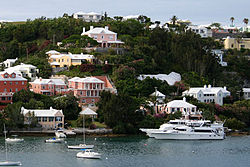
Bermuda is a British Overseas Territory in the North Atlantic Ocean whose recorded history began with Spanish discovery in 1505. Uninhabited at the time, it was permanently settled by the English in 1612 after the famous shipwreck of the Sea Venture in 1609. Over the centuries, Bermuda developed a plantation economy dependent on enslaved labor until emancipation in 1834, later served as a strategic British naval base, and in the 20th century transformed into a major center for tourism and international finance. More Less
1503
% complete
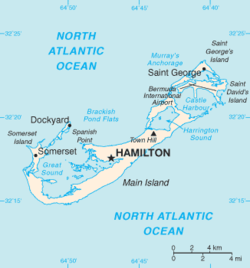
Spanish navigator Juan de Bermúdez is credited with first sighting the uninhabited island chain that would later bear his name. The islands' treacherous reef-strewn waters, which wrecked many ships, kept European powers from settling them for over a century.
Image source: History of Bermuda
Jul 28, 1609
% complete
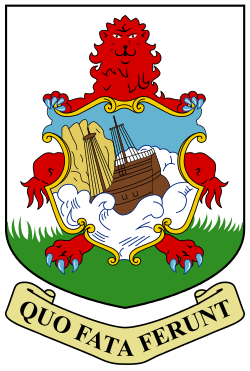
The flagship Sea Venture of the Virginia Company, carrying Admiral Sir George Somers and Governor-elect Sir Thomas Gates, was wrecked on Bermuda's reefs during a hurricane. All 150 passengers survived for ten months on the islands, building new vessels from local cedar to continue to Jamestown.
Image source: Sea Venture
1612
% complete
The Virginia Company's Somers Isles Company sent about 60 settlers under Richard Moore to establish the Town of St. George, one of the oldest continuously inhabited English settlements in the Americas.
1615
% complete
King James I granted a charter to a separate company to administer Bermuda, known then as the Somers Isles. The company oversaw land division into tribes (parishes) and promoted tobacco as the colony's principal export.
1616
% complete
Enslaved Africans were first brought to Bermuda in 1616, beginning nearly three centuries of slavery in the colony. Enslaved laborers worked in shipbuilding, salt raking, and agriculture, shaping Bermuda's demographic and cultural makeup.
Image source: Bermuda
1620
% complete
Bermuda's House of Assembly held its first session in 1620 at St. Peter's Church in St. George's, making it one of the oldest legislatures in the world still meeting continuously.
1684
% complete
The Crown revoked the Somers Isles Company's charter after years of disputes with settlers, making Bermuda a crown colony directly administered by royal governors.
1690 - 1815
% complete
With limited farmland, Bermudians turned to maritime trades, including licensed privateering against enemy shipping during wars between England, Spain, France, and later the United States, bringing prosperity to the islands.
Image source: Privateer
1700 - 1800
% complete
Throughout the eighteenth century, Bermuda's economy was deeply tied to slavery, with enslaved people comprising roughly half the population by the late 1700s and working across maritime industries rather than large plantations.
1776 - 1783
% complete
Bermuda's dependence on American food supplies made the Revolutionary War difficult for the islands. In 1775 Bermudians secretly traded gunpowder from their magazine to American rebels in exchange for food, while the war disrupted traditional trade routes.
1795
% complete
Following American independence, Britain recognized Bermuda's strategic value, establishing a naval base and later the massive Royal Naval Dockyard at Ireland Island, which became known as the 'Gibraltar of the West.'
Image source: Royal Naval Dockyard, Bermuda
Aug 24, 1814
% complete
British forces assembled at Bermuda sailed north to raid Chesapeake Bay, burning Washington, D.C., including the White House and Capitol, during the War of 1812.
Image source: Burning of Washington
Aug 1, 1834
% complete
The Slavery Abolition Act of 1833 took effect across the British Empire, freeing thousands of enslaved people in Bermuda and marking a major social transformation in the colony.
Image source: Slavery Abolition Act 1833
1901 - 1902
% complete
Thousands of Boer prisoners of war were interned on Bermuda's islands during the Second Boer War, with some dying there; several escaped dramatically, and graves remain on Boffin Island.
Image source: Second Boer War
1850
% complete
As steam navigation transformed the Atlantic, Bermuda's mid-ocean position made it an invaluable coaling station and communications link between Britain, the Americas, and later transatlantic cables.
1861 - 1865
% complete
During the American Civil War, St. George's became a major base for Confederate blockade runners evading the Union navy, briefly enriching the town before the war's end.
Image source: Blockade runners of the American Civil War
1883
% complete
A visit by Queen Victoria's daughter Princess Louise popularized Bermuda as a fashionable winter resort among wealthy North Americans, laying the foundation for a century of tourism-driven economic growth.
Image source: Economy of Bermuda
1890
% complete
Submarine telegraph cables connected Bermuda to North America in the late nineteenth century, ending its relative isolation and integrating it into global communication networks.
2000
% complete
Following Hurricane Andrew and subsequent disasters, international insurers and reinsurers clustered in Bermuda, transforming it into one of the world's largest captive insurance and reinsurance markets.
Image source: Economy of Bermuda
May 26, 2017 - Jun 26, 2017
% complete
Bermuda hosted the 35th America's Cup on the Great Sound, drawing global attention, boosting tourism infrastructure, and showcasing the island as a world-class sailing venue.
Image source: 2017 America's Cup
1941
% complete
In exchange for surplus US Navy destroyers, Britain leased land to the United States for military bases, including Kindley Air Force Base and a naval air station, deepening American strategic presence on the islands.
Image source: Destroyers-for-bases deal
Dec 4, 1953 - Dec 8, 1953
% complete
Winston Churchill, Dwight D. Eisenhower, and French premier Joseph Laniel met at Hamilton to discuss Cold War strategy, marking one of the first major postwar summits held in Bermuda.
Image source: 1953 British Mount Everest expedition
1963
% complete
Voting rights were extended to all adults regardless of property ownership, a milestone in Bermuda's political development, followed by further constitutional reforms expanding self-government.
Image source: Politics of Bermuda
1968
% complete
Bermuda received its Constitution, establishing a system of internal self-government with an elected Premier and bicameral legislature, while Britain retained responsibility for defense and foreign affairs.
1968
% complete
Tensions over racial inequality and political exclusion erupted into riots in Hamilton, prompting reforms and the rise of Black political organizations such as the Progressive Labour Party.
1995
% complete
A referendum on independence from Britain was decisively rejected, with about 74% voting against, reflecting public concern about economic stability and ties to the United Kingdom.
1995
% complete
The United States closed its Bermuda bases, returning the former naval air station and annex lands to the Bermuda government, which repurposed parts for the airport and nature reserves.
Image source: Naval Air Station Bermuda
1998
% complete
The Progressive Labour Party, founded in 1963 to advocate for Black Bermudians, won power for the first time, ending decades of United Bermuda Party rule and electing Jennifer Smith as Premier.
Sep 5, 2003
% complete
Hurricane Fabian, a powerful Category 3 storm, struck Bermuda directly, causing significant damage and four deaths — the island's worst hurricane impact in decades.
Image source: Hurricane Fabian
May 5, 2017
% complete
Same-sex marriage became legal following a Supreme Court ruling, though the legislature briefly replaced it with domestic partnerships before the court restored marriage equality, making Bermuda a focal point in LGBT rights debates.
Image source: LGBTQ rights in Bermuda
Or browse the full history timeline directory, with more than 2,000 topics.
This History of Bermuda timeline was generated with the help of AI, using information found on the internet.
We work hard to keep these timelines accurate, but mistakes do get through. If you spot one, email us at [email protected] and we'll fix it for future visitors.
Generate yours with AI or build it from scratch, for free.
Export your timeline, add your own events, edit or remove AI-generated events, and much more
No credit card required.
Cancel anytime.
Cancel anytime.
You can create an unlimited number of timelines with up to 10 events on each one, customize how they look, export them to PDF, PNG, PowerPoint, CSV, and Excel, and share them with a link. Paid plans raise the event limit and add features like spreadsheet imports and collaborators.
Yes. You can cancel your subscription from your account page at any time, and you will not be charged again. Your subscription stays active for the rest of the period you already paid for.
Yes. We will email you a reminder before the annual renewal, and we will also email you a receipt.
Yes. You can email us within 15 days of any payment, and we will issue you a full refund.
Check out our pricing docs or send us an email anytime: [email protected].