-
Use Cases
-
Resources
-
Pricing
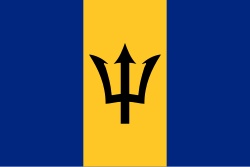
Barbados, the easternmost Caribbean island, was settled by Amerindians around 1600 BCE and claimed for England in 1625. It became one of Britain's earliest and most profitable colonies, driven by sugarcane plantations worked by enslaved Africans from the 1640s onward. Barbados gained internal self-government in 1961 and full independence on November 30, 1966, becoming a constitutional monarchy, and in 2021 it transitioned to a parliamentary republic, removing the British monarch as head of state. More Less
800 AD
% complete
A second wave of settlers, whom the Spanish referred to as 'Arawaks', appeared on Barbados around 800 AD, establishing agricultural communities on the island.
Image source: History of Barbados
1250
% complete
A third wave of Amerindian settlers arrived in Barbados in the mid-13th century, adding to the island's Indigenous population.
1500 - 1541
% complete
Frequent slave-raiding missions by the Spanish Empire in the early 16th century caused a massive decline in the Amerindian population; by 1541 a Spanish writer claimed the island was uninhabited.
1532 - 1620
% complete
After brief Spanish claims based on sightings of bearded fig trees (which gave the island its name), Portugal claimed Barbados from 1532 until 1620.
May 14, 1625
% complete
The first English ship touched Barbados on 14 May 1625, captained by John Powell. England claimed the island in the name of King James I of England and Scotland.
Feb 17, 1627
% complete
The first lasting English settlement began on 17 February 1627 near present-day Holetown, led by Henry Powell, brother of John Powell, with 80 settlers and 10 English labourers, alongside six African enslaved people who had arrived with earlier ships.
1639
% complete
Governor Henry Hawley established the House of Assembly in 1639 to appease planters who might otherwise have opposed his controversial appointment as governor.
Image source: Parliament of Barbados
1640 - 1660
% complete
In the period 1640–1660, the West Indies attracted over two-thirds of all English emigrants to the Americas. By 1650 there were 44,000 settlers in the West Indies, compared to 12,000 on the Chesapeake and 23,000 in New England.
May 7, 1650
% complete
On 7 May 1650, the General Assembly of Barbados voted to receive Lord Willoughby as governor, confirming the Royalist Cavaliers as the government of Barbados during the English Civil War era.
Oct 3, 1650
% complete
To bring the recalcitrant Royalist colony to heel, the Commonwealth Parliament passed an act on 3 October 1650 prohibiting trade between England and Barbados, followed by further navigation acts barring Dutch vessels from trading with English colonies.
Oct 1651 - Jan 1652
% complete
The Commonwealth of England sent an invasion force under Sir George Ayscue, which arrived in October 1651 and blockaded the island, forcing its submission to the Commonwealth.
Image source: George Ayscue
Jan 17, 1652
% complete
The conditions of the colony's surrender were incorporated into the Charter of Barbados (Treaty of Oistins), signed at the Mermaid's Inn, Oistins, on 17 January 1652.
Image source: Oistins
1670
% complete
In 1670, the Province of South Carolina was founded when some of Barbados's surplus population left the island for the North American mainland.
Image source: Province of South Carolina
1876
% complete
Governor John Pope Hennessy tried to pressure Barbadian politicians to integrate more firmly into the Windward Islands, a proposal that provoked deadly riots in 1876.
Image source: John Pope-Hennessy
1884
% complete
In 1884, the Barbados Agricultural Society sent a letter to Sir Francis Hincks asking whether the Dominion of Canada would favourably entertain admitting the Colony of Barbados as a member of the Canadian Confederation.
1885
% complete
From 1800 until 1885, Barbados served as the main seat of government for the former British colonies of the Windward Islands. After Barbados officially exited the union in 1885, the seat of government moved from Bridgetown to St. George's, Grenada.
Image source: British Windward Islands
1637
% complete
Sugar cane was introduced to Barbados in 1637 by Pieter Blower. Its cultivation began in the 1640s and completely transformed society and the economy, with sugar becoming the focus of the industry by 1642.
1655 - 1715
% complete
In 1655 the population was estimated at 43,000, including about 20,000 people of African descent. By 1660 there were 27,000 blacks and 26,000 whites; by 1673 slaves outnumbered whites; and by 1684 there were 46,502 enslaved Africans versus 19,568 white settlers, reaching an estimated 42,000 enslaved Africans by 1696 while whites declined to 16,888 by 1715.
1661 - 1688
% complete
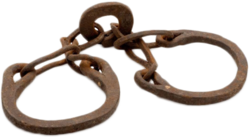
Black or slave codes were implemented in Barbados in 1661, 1676, 1682, and 1688. These harsh laws led to several attempted slave rebellions, none of which was successful.
Image source: Slave codes
1668 - 1750
% complete
In 1668 the West Indian sugar crop sold for £180,000 after customs of £18,000. By 1680 over half the arable land was held by 175 large planters using at least 60 slaves each. Increasingly after 1750, plantations were owned by absentee landlords living in Britain and operated by hired managers. By 1750 there were about 18,000 white settlers versus roughly 65,000 African slaves.
1700 - 1731
% complete
By 1700, Bridgetown was one of the three largest cities in English America alongside Boston and Port Royal, Jamaica. The English West Indies produced 25,000 tons of sugar that year, more than Brazil's 20,000. Even after being surpassed by larger islands like Jamaica from 1713, Barbados's estimated value in 1730–1731 was as much as £5,500,000.
Image source: Bridgetown
1807
% complete
Britain abolished the slave trade in 1807, ending the importation of enslaved Africans into Barbados, although slavery itself remained legal in the empire for decades longer.
Image source: Slave Trade Act 1807
1816
% complete
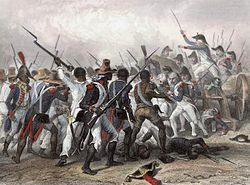
In 1816, enslaved persons rose up in what was the first of three rebellions in the British West Indies between the end of the slave trade and emancipation, and the largest slave uprising in Barbadian history.
Image source: Bussa's rebellion
1826
% complete
Following the largest slave rebellion in Barbadian history, the Barbados legislature passed the Consolidated Slave Law in 1826, which simultaneously granted concessions to the enslaved while providing reassurances to slave owners.
1834
% complete
Slavery was finally abolished throughout the British Empire in 1834 under the Slavery Abolition Act of 1833, freeing the enslaved population of Barbados.
Image source: Slavery Abolition Act 1833
1938
% complete
During the Great Depression, Sir Grantley Adams founded the Barbados Progressive League in 1938, which later became known as the Barbados Labour Party (BLP).
Image source: Barbados Labour Party
1942 - 1951
% complete
Progress toward democracy came in 1942 when the exclusive income qualification was lowered and women gained the right to vote. This was followed by the introduction of universal adult suffrage in 1951.
1953 - 1958
% complete
By 1949, governmental control was wrested from the planters, and in 1953 Grantley Adams became Premier of Barbados, leading the island toward greater self-governance.
Image source: Grantley Adams International Airport
1958 - 1962
% complete
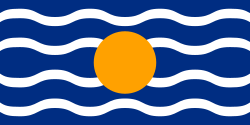
From 1958 to 1962, Barbados was one of the ten members of the West Indies Federation, a federalist organisation doomed by nationalist attitudes and limited legislative power.
Image source: West Indies Federation
1961
% complete
In 1961, Errol Walton Barrow supplanted Grantley Adams as Premier as the Democratic Labour Party took control of the government, positioning him to lead the island to independence.
Image source: Errol Barrow
Jun 1966
% complete
Due to years of growing autonomy, Barbados successfully negotiated its independence at a constitutional conference with the United Kingdom in June 1966.
Nov 30, 1966
% complete
After years of peaceful and democratic progress, Barbados became an independent state and joined the Commonwealth of Nations on 30 November 1966, with Errol Barrow as its first prime minister and Elizabeth II as Queen of Barbados.
Image source: Barbados Independence Act 1966
1976
% complete
The Democratic Labour Party lost the 1976 general election to the Barbados Labour Party under Tom Adams, ushering in a new political era.
Image source: 1976 Barbadian general election
1983
% complete
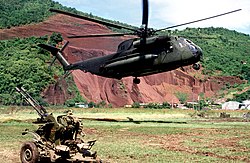
Prime Minister Tom Adams adopted a strongly pro-Western stance, allowing the United States to use Barbados as a launchpad for its invasion of Grenada in 1983.
Image source: United States invasion of Grenada
1985 - 1986
% complete
Tom Adams died in office in 1985 and was replaced by Harold Bernard St. John, whose BLP then lost the 1986 general election to the DLP under Errol Barrow, who had been highly critical of US intervention in Grenada.
Image source: Tom Adams (politician)
1994 - 2008
% complete
Owen Arthur of the BLP won the 1994 general election and remained prime minister until 2008. A strong advocate of republicanism, he planned a referendum to replace Queen Elizabeth as head of state in 2008, but it never took place.
Image source: Owen Arthur
2008 - 2010
% complete
The Democratic Labour Party won the 2008 general election under Prime Minister David Thompson, who died in office in 2010 and was succeeded by Freundel Stuart.
Image source: David Thompson (Barbadian politician)
2018
% complete
The Barbados Labour Party returned to power in 2018 under Mia Mottley, who became Barbados's first female prime minister.
Image source: Mia Mottley
Sep 15, 2020
% complete
On 15 September 2020, the Government of Barbados announced its intention to become a republic by 30 November 2021, the 55th anniversary of independence, replacing the hereditary monarch with an elected president.
Image source: Barbados
Sep 20, 2021
% complete
On 20 September 2021, just over a year after the transition announcement, the Constitution (Amendment) (No. 2) Bill, 2021 was introduced to the Parliament of Barbados.
Oct 12, 2021
% complete
On 12 October 2021, Governor-General Sandra Mason was jointly nominated by the Prime Minister and Leader of the Opposition as candidate to be the first President of Barbados, and was elected on 20 October. A UWI survey conducted that autumn showed 34% support for becoming a republic.
Image source: Sandra Mason
Nov 30, 2021
% complete
Barbados became a republic on 30 November 2021 under Mia Mottley, removing Queen Elizabeth II as head of state. Sandra Mason took office as the country's first president the same day.
Image source: President of Barbados
Jan 2022
% complete
In January 2022, Mia Mottley's Barbados Labour Party won a landslide victory, taking all 30 legislative seats, in the first general election since Barbados became a republic.
Image source: 2022 Barbadian general election
Jun 20, 2022 - 2024
% complete
On 20 June 2022, a Constitutional Review Commission was formed and sworn in to review the Constitution of Barbados. Toward the end of 2024, Barbados released the final report of the commission.
Image source: Constitution of Barbados
Feb 2026
% complete
In February 2026, Prime Minister Mia Mottley won her third consecutive election victory by landslide, with her Barbados Labour Party again winning all 30 seats in the House of Assembly.
Or browse the full history timeline directory, with more than 2,000 topics.
This History of Barbados timeline was generated with the help of AI, using information found on the internet.
We work hard to keep these timelines accurate, but mistakes do get through. If you spot one, email us at [email protected] and we'll fix it for future visitors.
Generate yours with AI or build it from scratch, for free.
Export your timeline, add your own events, edit or remove AI-generated events, and much more
No credit card required.
Cancel anytime.
Cancel anytime.
You can create an unlimited number of timelines with up to 10 events on each one, customize how they look, export them to PDF, PNG, PowerPoint, CSV, and Excel, and share them with a link. Paid plans raise the event limit and add features like spreadsheet imports and collaborators.
Yes. You can cancel your subscription from your account page at any time, and you will not be charged again. Your subscription stays active for the rest of the period you already paid for.
Yes. We will email you a reminder before the annual renewal, and we will also email you a receipt.
Yes. You can email us within 15 days of any payment, and we will issue you a full refund.
Check out our pricing docs or send us an email anytime: [email protected].