-
Resources
-
Pricing
The history of binoculars traces the development of paired optical instruments from early telescopes to the compact, powerful devices used today for astronomy, nature observation, navigation, and military purposes. More Less
Build a timeline like this one in minutes, for free. Start Yours →
1800 - 1899
Galilean binocular designs were widely used during the 19th century, before later giving way to Porro prism types near the end of the century.
1849
Carl Kellner invented the configuration that became the most common form of Kellner eyepiece, an optical design used in viewing instruments including binoculars.
1854
Ignazio Porro patented the image-erecting prism system that later became the basis of Porro prism binoculars.
Image source: Porro prism
1873
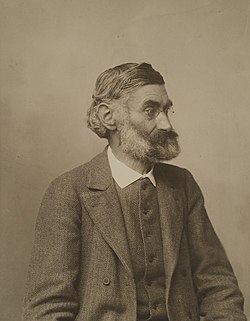
At the 1873 Vienna Trade Fair, German optical designer and scientist Ernst Abbe displayed a prism telescope using two cemented Porro prisms.
Image source: Ernst Abbe
1888
Glass scientist Otto Schott produced a better type of Crown glass in 1888, an advance that contributed to later improvements in binocular optics.
1890 - 1899
By the end of the 19th century, Galilean binoculars had largely been superseded by Porro prism designs.
1894
The refinement of Porro prism optics by Ernst Abbe, Otto Schott, and instrument maker Carl Zeiss resulted in the commercial introduction of improved modern Porro prism binoculars by Carl Zeiss in 1894.
1897
Moritz Hensoldt began marketing binoculars based on pentaprisms, an early roof-prism approach to erecting images and folding the optical path.
Image source: Roof prism
1899
The Schmidt–Pechan prism design was invented in 1899 and later became one of the principal prism systems used in roof prism binoculars.
Image source: Schmidt–Pechan prism
1905
Carl Zeiss patented the Abbe–Koenig prism in 1905. The design was named after Ernst Karl Abbe and Albert König and was developed to erect images while folding the optical path.
Image source: Abbe–Koenig prism
1921
An Erfle configuration was patented in 1921. Variants of this wide-field optical arrangement became typical in wide-field binoculars.
1950 - 1959
Binoculars with roof prisms came into use to a large extent from the second half of the 20th century onward.
1975
A reversed Kellner eyepiece was developed in 1975. Its field lens is a double-concave/double-convex achromatic doublet, while its eye lens is a double-convex singlet.
1900 - 1999
With a typical five-mil scale in which each mark represents five mils, a lighthouse measuring three marks high and known to be 120 meters tall is calculated to be 8,000 meters away.
1900 - 1999
In binocular reticles, one mil is equivalent to the angle between the top and bottom of an object one meter high at a distance of 1,000 meters.
1900 - 1999
Very large binocular naval rangefinders were used for ranging naval gun targets. Some had objective lenses separated by up to 15 meters and weighed as much as 10 tons.
1900 - 1999
Among celestial objects readily viewed through binoculars are the M17 nebula in Sagittarius and the North America Nebula, NGC 7000, in Cygnus.
Image source: Binoculars
1939
During World War II, very large binocular naval rangefinders were used to measure distances to naval gun targets as far away as 25 kilometers.
1975 - 1999
Late-20th-century laser range-finding technology further made the naval rangefinding application of very large binoculars mostly redundant.
1975 - 1999
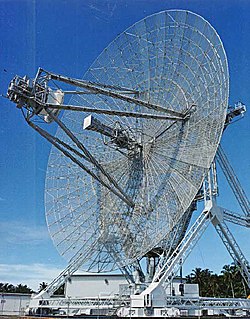
Late-20th-century radar technology made the use of very large binocular naval rangefinders for this application mostly redundant.
Image source: Radar
1976
Bausch & Lomb stopped making binoculars in 1976 and licensed its name to Bushnell, Inc., which continued making binoculars under the Bausch & Lomb name until the license expired and was not renewed in 2005.
1900 - 1999
For 16 atmosphere-to-optical-glass surfaces, a 4 percent reflection loss theoretically results in about 52 percent light transmission, whereas a 1.5 percent reflection loss results in about 78.5 percent transmission.
1935
Olexander Smakula invented Transparentbelag, designated T, the first transparent interference-based coating used by Zeiss.
1988
Before phase correction coatings were invented in 1988, Porro prism binoculars generally offered superior resolution and contrast to non-phase-corrected roof prism binoculars.
1988
Adolf Weyrauch developed the P-coating at Carl Zeiss in 1988. Phase correction coatings addressed a major optical disadvantage of roof prism binoculars.
2000 - 2099
Advances in optical coatings allow high-quality 21st-century binoculars to achieve practical light-transmission values above 90 percent when measured at the eye or ocular lens in low-light conditions.
2000 - 2099
In high-quality 21st-century binoculars, the various lens and prism coatings can total about 200 often superimposed coating layers.
2000 - 2099
The complex production requirements of high-quality roof prism binoculars make them more costly to produce than Porro prism binoculars of equivalent optical quality.
2004
Zeiss introduced the P-coating in its Victory FL binoculars in 2004. These binoculars featured Schmidt–Pechan prisms.
Image source: Carl Zeiss AG
Build a timeline like this one in minutes, for free. Start Yours →
Or browse the full history timeline directory, with more than 2,500 topics.
This History of Binoculars timeline was generated with the help of AI, using information found on the internet.
We work hard to keep these timelines accurate, but mistakes do get through. If you spot one, email us at [email protected] and we'll fix it for future visitors.
Generate yours with AI or build it from scratch, for free.
Export your timeline, add your own events, edit or remove AI-generated events, and much more
No credit card required.
15-day money-back guarantee.
You can create an unlimited number of timelines with up to 10 events on each one, customize how they look, export them to PDF, PNG, PowerPoint, CSV, and Excel, and share them with a link. Timelines made with Timeline Maker AI keep every event the generator created, and you can add up to 5 events of your own. Paid plans remove the event limit, add spreadsheet imports and hide Preceden's branding, and the higher-priced plan also adds collaborators, a custom logo and a custom domain.
Yes. You can cancel your subscription from your account page at any time, and you will not be charged again. Your subscription stays active for the rest of the period you already paid for.
Yes. We email you a reminder 15 days before your annual renewal, and we email you a receipt after every payment.
Yes. You can email us within 15 days of any payment, and we will issue you a full refund.
Check out our pricing docs or send us an email anytime: [email protected].