
-
Use Cases
-
Resources
-
Pricing
1500 BC
The Hittites of Anatolia first discovered or developed the smelting of iron ores around 1500 BC, marking a foundational development in the history of blacksmithing and iron production.
Image source: Iron Age
1500 BC - 1200 BC
For several hundred years, the Hittites appear to have maintained a near monopoly on the knowledge of iron production.
Image source: Hittites
1200 BC
When the Hittite Empire collapsed during the Eastern Mediterranean upheavals around 1200 BC, knowledge of iron production appears to have escaped in many directions.
1200 BC
Events described in Homeric tradition probably occurred around 1200 BC, although Homer is thought to have composed the relevant epic poem around 700 BC, making exact dating uncertain.
Image source: Homer

1000 BC
China, following a separate developmental tradition, was producing cast iron at least 1000 years before cast iron became possible in western Europe.
Image source: Cast iron
700 BC
Homer is thought to have composed the epic poem describing events associated with early ironworking around 700 BC; the chronology remains uncertain.
400 BC
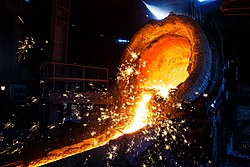
The Romans, who ensured that their own weapons were made with good steel, recorded a distinction between the Celts’ iron and higher-quality steel.
Image source: Steel
400 BC
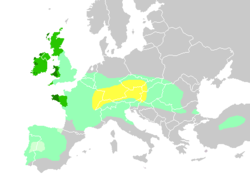
In the 4th century BC, the Romans noted that the Celts of the Po River Valley possessed iron, although their steel was not considered high quality.
Image source: Celts
1900 - 1930
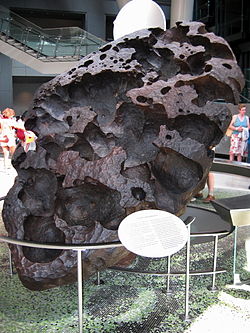
During polar exploration in the early 20th century, Inughuit of northern Greenland were found making iron knives from two particularly large nickel-iron meteorites.
1346
In 1346, Katherine Le Fevre was appointed by Edward III to keep up the king’s forge within the Tower and carry on its work while receiving the wages attached to the office.
1403
In York in 1403, Agnes Hecche was left her father’s mail-making equipment in his will and took over the family business with her brother.
1800 - 1850
During the first half of the 19th century, the United States government included blacksmith and striker employment provisions in treaties with many Native American tribes.
1800 - 1850
Blacksmiths and strikers at Army forts were employed to provide Native Americans with iron tools and repair services.
1800 - 1850
During the early to mid-19th century, European armies employed blacksmiths to shoe horses and repair military equipment.
1800 - 1850
Both the U.S. Federal and Confederate armies employed blacksmiths during the early to mid-19th century.
1800 - 1850
Military blacksmiths repaired wagons, horse tack, and artillery equipment during the early to mid-19th century.
1973
In 1973, the Artists Blacksmiths’ Association of North America was formed with 27 members.
1978
The British Artist Blacksmiths Association was created in 1978 with 30 charter members.
2013
By 2013, the Artists Blacksmiths’ Association of North America had grown to almost 4000 members.
2013
By 2013, the British Artist Blacksmiths Association had about 600 members and published a quarterly magazine for members.
1500
In the western European and Middle Eastern tradition, technology capable of producing fires hot enough to melt iron did not arise until the 16th century.
1500
Cast-iron frying pans and cookware became possible in Europe only around 3000 years after the introduction of iron smelting.
1500
During the 16th century, smelting operations grew large enough to require exceptionally large bellows, enabling fires hot enough to melt iron.
Image source: Blast furnace
1700 - 1800
During the 18th century, agents for the Sheffield cutlery industry traveled through the British countryside offering new carriage springs in exchange for old ones.
1800 - 1900
Clocksmiths as recently as the 19th century used work-hardening techniques to harden the teeth of brass gears and ratchets.
1900 - 2000
During the 20th century, various gases, including natural gas and acetylene, came to be used as fuels for blacksmithing.
1600 - 1700
Coal did not begin to replace charcoal in Britain until the 17th century, when forests had become substantially depleted.
Image source: History of coal mining
1750 - 1800
Cast-iron elements began to be incorporated into forged-iron designs during the final part of the 18th century.
1750 - 1800
As forged ironwork declined late in the 18th century, surfaces increasingly began to be covered in paint.
1750 - 1800
Late-18th-century designs for window grilles and other decorative functional items used shapes that contradicted natural forms.
1750 - 1800
In the final part of the 18th century, forged ironwork continued to decline as the Industrial Revolution altered production and design.
Image source: Industrial Revolution
1800 - 1900
Coal began replacing charcoal in the eastern United States during the 19th century, after forests were largely depleted.
1900 - 2100
During the 20th century and into the 21st century, the traditional blacksmithing role became increasingly unnecessary and automated through trip hammers and reciprocating power hammers.
Or browse the full history timeline directory, with more than 2,500 topics.
This History of Blacksmithing timeline was generated with the help of AI, using information found on the internet.
We work hard to keep these timelines accurate, but mistakes do get through. If you spot one, email us at [email protected] and we'll fix it for future visitors.
Generate yours with AI or build it from scratch, for free.
Export your timeline, add your own events, edit or remove AI-generated events, and much more
No credit card required.
Cancel anytime.
Cancel anytime.
You can create an unlimited number of timelines with up to 10 events on each one, customize how they look, export them to PDF, PNG, PowerPoint, CSV, and Excel, and share them with a link. Paid plans raise the event limit and add features like spreadsheet imports and collaborators.
Yes. You can cancel your subscription from your account page at any time, and you will not be charged again. Your subscription stays active for the rest of the period you already paid for.
Yes. We will email you a reminder before the annual renewal, and we will also email you a receipt.
Yes. You can email us within 15 days of any payment, and we will issue you a full refund.
Check out our pricing docs or send us an email anytime: [email protected].