-
Use Cases
-
Resources
-
Pricing
Cairo, the capital of Egypt, is one of the world's great historical cities. Founded in 969 CE by the Fatimid dynasty near older settlements like Fustat, it grew into a major center of Islamic culture, trade, and learning, home to Al-Azhar University. Over the centuries, Cairo was ruled by the Ayyubids, Mamluks, Ottomans, and eventually became the heart of modern Egypt, blending medieval Islamic architecture with contemporary urban life. More Less
2560 BC
% complete
The Great Pyramid was built on the Giza plateau, now part of Greater Cairo, as the tomb of Pharaoh Khufu. It remained the tallest man-made structure in the world for nearly 4,000 years and remains an enduring symbol of Egypt.
Image source: Great Pyramid of Giza
300
% complete
The Romans built the Babylon Fortress on the east bank of the Nile in what is now Old Cairo. The fortified camp became the nucleus around which later settlements, including Fustat, would develop.
Image source: Babylon Fortress
641
% complete
The Arab general Amr ibn al-As conquered Byzantine Egypt and founded Fustat as the new capital, just north of the Babylon Fortress. It became the first Muslim settlement in Egypt and the earliest nucleus of Cairo.
Image source: Fustat
642
% complete
Amr ibn al-As built Egypt's first mosque in Fustat, originally a simple structure that was repeatedly expanded. Known as the Crown of Mosques, it remains an important religious and historic site in Old Cairo.
Image source: Amr ibn al-As Mosque
969
% complete
The Fatimid general Jawhar al-Siqilli laid out a new palace city north of Fustat, named al-Qahira (the Victorious). Intended initially as an enclosed royal city, it grew to absorb Fustat and become the capital of Egypt.
Image source: Cairo
970
% complete
The Fatimids founded Al-Azhar Mosque as the centerpiece of their new city. It later evolved into Al-Azhar University in 988, one of the world's oldest universities and a preeminent center of Islamic scholarship.
Image source: Al-Azhar Mosque
1171
% complete
Saladin ended Fatimid rule and established the Ayyubid dynasty, making Cairo the seat of Sunni power in Egypt. He began the construction of the Cairo Citadel and strengthened the city's fortifications.
Image source: Saladin
1250
% complete
The Mamluks seized power and ruled from Cairo for over two centuries. Under their patronage the city flourished into one of the largest and wealthiest cities of the medieval world, famed for its mosques, madrasas, and caravanserais.
Image source: Mamluk Sultanate
1260
% complete
After Mamluk forces defeated the Mongols at Ain Jalut, Cairo emerged as the protector of the Islamic heartlands. The city welcomed refugees and scholars fleeing Mongol destruction, boosting its cultural prominence.
Image source: Battle of Ain Jalut
1326
% complete
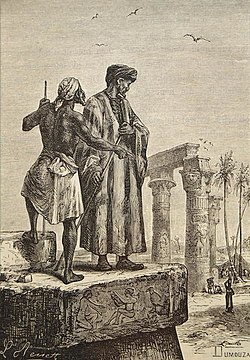
The Moroccan traveler Ibn Battuta described Cairo as the mistress of broad provinces and mother of cities, marveling at its vast size, thriving bazaars, and monumental Islamic architecture during the height of Mamluk prosperity.
Image source: Ibn Battuta
1348
% complete
The plague killed an estimated third or more of Cairo's inhabitants, severely weakening the economy of the Mamluk state. Recurring epidemics over subsequent centuries kept the city's population depressed.
Image source: Black Death in the Middle East
1356 - 1363
% complete
One of the largest mosques in the world was built beneath the Citadel, regarded as the pinnacle of Mamluk architecture. Its monumental scale and unified design make it a landmark of historic Cairo.
Image source: Mosque-Madrasa of Sultan Hasan
1400
% complete
Timur's campaigns in Syria drove artisans, scholars, and merchants to seek safety in Cairo. The influx enriched the city's craft industries even as Mamluk political power gradually declined.
Image source: Siege of Damascus (1400)
1517
% complete
Sultan Selim I defeated the Mamluks and captured Cairo, ending its role as capital of an independent empire. Cairo became the administrative seat of an Ottoman province, though it remained a major cultural center.
Image source: Ottoman–Mamluk War (1516–1517)
1798 - 1801
% complete
Napoleon Bonaparte captured Cairo and introduced modern institutions, printing presses, and scientific study through his savants. The occupation ended when French forces surrendered to Anglo-Ottoman forces in 1801.
Image source: French campaign in Egypt and Syria
1805
% complete
Muhammad Ali Pasha rose to power and launched sweeping reforms, building a modern army, industry, and schools. His dynasty ruled Egypt from Cairo for nearly 150 years and transformed the city's urban landscape.
Image source: Muhammad Ali of Egypt
1858
% complete
Auguste Mariette established the first national museum of Egyptian antiquities, eventually housed in a purpose-built neoclassical building on Tahrir Square in 1902. It became home to treasures including Tutankhamun's mask.
Image source: Egyptian Museum
1869
% complete
The opening of the Suez Canal transformed Egypt into a crossroads of world trade. Cairo hosted grand celebrations and attracted European investment, accelerating its modernization and expansion toward the Nile.
Image source: Suez Canal
1882
% complete
Following anti-European unrest, Britain bombarded Alexandria and occupied Egypt, ruling indirectly from Cairo. The city became headquarters of British administration, with new suburbs built along European lines.
Image source: History of Egypt under the British
1922
% complete
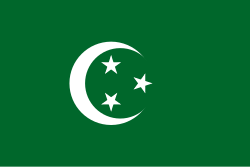
Britain unilaterally recognized Egyptian independence, making Cairo the capital of the Kingdom of Egypt under Fuad I. Real power remained partly in British hands until the revolution three decades later.
Image source: Kingdom of Egypt
Mar 22, 1945
% complete
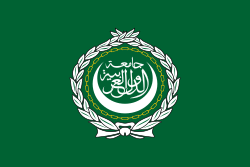
Seven Arab states signed the Pact of the Arab League in Cairo, establishing a regional organization headquartered in the city. This cemented Cairo's status as the political and cultural capital of the Arab world.
Image source: Arab League
Jul 23, 1952
% complete
The Free Officers movement led by Gamal Abdel Nasser overthrew King Farouk in a coup launched from Cairo. The revolution abolished the monarchy in 1953 and declared Egypt a republic, transforming the nation's trajectory.
Image source: Egyptian revolution of 1952
Oct 29, 1956 - Nov 7, 1956
% complete
Israel, Britain, and France attacked Egypt after Nasser nationalized the Suez Canal. International pressure forced withdrawal, marking a symbolic victory for Nasser and the decline of European colonial influence in the region.
Image source: Suez Crisis
Feb 22, 1958 - 1961
% complete
Egypt and Syria united into a single pan-Arab state with Cairo as its capital. The union collapsed in 1961 but reflected Cairo's centrality to Arab nationalism during the Nasser era.
Image source: United Arab Republic
1961
% complete
The 187-meter lattice tower, clad in mosaic evoking lotus leaves, became an icon of post-revolutionary Cairo. Funded reportedly by US aid money repurposed by Nasser, it offered panoramic views over the growing metropolis.
Image source: Cairo Tower
Sep 28, 1970
% complete
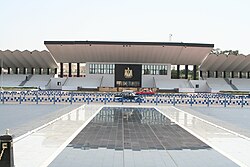
Nasser's death prompted an enormous outpouring of grief, with millions lining Cairo's streets for his funeral procession. Anwar Sadat succeeded him and soon shifted Egypt's political and economic orientation.
Image source: Death and state funeral of Gamal Abdel Nasser
1979
% complete
UNESCO inscribed Islamic Cairo on the World Heritage list, recognizing its hundreds of mosques, madrasas, hammams, and fountains dating from the 7th century onward. Conservation efforts have since focused on preserving this dense urban heritage.
Image source: Islamic Cairo
Oct 6, 1981
% complete
President Anwar Sadat was gunned down by Islamist militants while reviewing a parade commemorating the October War. Hosni Mubarak succeeded him, beginning a nearly thirty-year presidency based in the capital.
Image source: Assassination of Anwar Sadat
Jan 25, 2011 - Feb 11, 2011
% complete
Mass protests centered on Tahrir Square demanded the end of Hosni Mubarak's rule, part of the wider Arab Spring. After eighteen days of demonstrations and clashes, Mubarak resigned, ending decades of autocratic rule.
Image source: 2011 Egyptian revolution
Or browse the full history timeline directory, with more than 2,000 topics.
This History of Cairo timeline was generated with the help of AI, using information found on the internet.
We work hard to keep these timelines accurate, but mistakes do get through. If you spot one, email us at [email protected] and we'll fix it for future visitors.
Generate yours with AI or build it from scratch, for free.
Export your timeline, add your own events, edit or remove AI-generated events, and much more
No credit card required.
Cancel anytime.
Cancel anytime.
You can create an unlimited number of timelines with up to 10 events on each one, customize how they look, export them to PDF, PNG, PowerPoint, CSV, and Excel, and share them with a link. Paid plans raise the event limit and add features like spreadsheet imports and collaborators.
Yes. You can cancel your subscription from your account page at any time, and you will not be charged again. Your subscription stays active for the rest of the period you already paid for.
Yes. We will email you a reminder before the annual renewal, and we will also email you a receipt.
Yes. You can email us within 15 days of any payment, and we will issue you a full refund.
Check out our pricing docs or send us an email anytime: [email protected].