-
Use Cases
-
Resources
-
Pricing
Carthage was an ancient Phoenician city-state located in modern-day Tunisia. Founded around 814 BC by settlers from Tyre, it grew into one of the most powerful commercial and military powers of the ancient Mediterranean, dominating trade across North Africa, Spain, and the western Mediterranean. Carthage fought three major wars against Rome (the Punic Wars), producing legendary generals like Hannibal Barca, before being destroyed by Roman forces in 146 BC at the end of the Third Punic War. More Less
1234 BC
% completado
The Roman historian Appian dated the founding of Carthage to 50 years prior to the Trojan War, between 1244 and 1234 BC according to the chronology of Eratosthenes.
Image source: Appian
1215 BC
% completado
There is a tradition in some ancient sources, such as Philistos of Syracuse, for an 'early' foundation date of around 1215 BC, that is before the fall of Troy in 1180 BC.
1100 BC - 900 BC
% completado
The Phoenicians encountered little resistance in developing their trade monopoly during 1100–900 BC, establishing commercial networks across the Mediterranean.
Image source: Phoenicia
1000 BC
% completado
In the 10th century BC, the eastern Mediterranean shore was inhabited by various Semitic populations, who had built up flourishing civilizations, laying the groundwork for Phoenician expansion westward.
Image source: History of Carthage
1000 BC
% completado
The fleets of King Hiram of Tyre, as recounted in the Bible and perhaps joined at times by ships assigned to Solomon, would date to the 10th century BC, reflecting Tyrian naval power.
Image source: Hiram I
900 BC
% completado
The city of Carthage was founded in the 9th century BC on the coast of Northwest Africa, in what is now Tunisia, as one of a number of Phoenician settlements created to facilitate trade from the city of Tyre on the coast of what is now Lebanon.
Image source: Carthage
814 BC
% completado
Legends alive in the city for centuries assigned its foundation in 814 BC to a queen of Tyre, Elissa, also called Dido ('beloved').
Image source: Dido
600 BC
% completado
The 6th century Hebrew prophet Ezekiel, in a lamentation, nonetheless sings the praises of the Phoenicians, specifically of the cities of Tyre and Sidon.
Image source: Ezekiel
800 BC
% completado
Despite growing independence, close ties with Tyre still remained, and Carthage continued to send annual tribute to Tyre for the temple of Melqart at irregular intervals over the centuries.
750 BC
% completado
Over the next century, hundreds of Greek colonies sprang up along the Southern Italian and Sicilian coastlines, except Western Sicily, creating rivalry with Punic interests.
Image source: Magna Graecia
700 BC
% completado
The culture of Phoenician colonies had gained a distinct 'Punic' character by the end of the 7th century BC, indicating the emergence of a distinct culture in the Western Mediterranean.
Image source: Punic people
700 BC
% completado
By the end of the 7th century BC, Carthage was becoming one of the leading commercial centres of the West Mediterranean region, a position it retained until overthrown by the Roman Republic.
600 BC - 300 BC
% completado
During these centuries Carthage enlarged its commercial sphere along the African coast, in southern Iberia, and among the western Mediterranean islands, venturing south into Saharan trade and exploring Atlantic commercial opportunities.
600 BC
% completado
The city of Utica was far older than Carthage and enjoyed the same geographical and political advantages, but it opted to be an allied entity rather than leader of the Punic hegemony.
Image source: Utica, Tunisia
600 BC
% completado
It is likely that Carthage did not have an empire prior to the 6th century BC; small battles had been fought between settlements for centuries beforehand.
550 BC
% completado
By the middle of the 6th century BC, Carthage had grown into a fully independent thalassocracy, dominating the seas of the western Mediterranean.
Image source: Thalassocracy
550 BC
% completado
A Punic hegemony came into being probably sometime around the 6th century BC, with Carthage at its head.
Image source: Ancient Carthage
550 BC
% completado
Mago, the 6th century ruler of Carthage, initiated the practice of recruiting the army from subject peoples and mercenaries, since Carthage's population was too small to defend so widely scattered an empire. Libyans, Iberians, Sardinians, and Corsicans were soon enlisted.
550 BC
% completado
By the end of the 6th century BC, Carthage had conquered most of the old Phoenician colonies in the western Mediterranean.
500 BC
% completado
A 6th century Punic-Etruscan treaty reserved for Carthage a commercial monopoly in southern Iberia.
400 BC
% completado
Carthage did not follow up one victory but settled for an indemnity payment of 1000 talents and restoration of Carthaginian holdings in Sicily.
300 BC
% completado
Carthage made peace with the Greeks and paid a large indemnity of 2000 silver talents, but lost no territory in Sicily.
Image source: Sicilian Wars
264 BC - 146 BC
% completado
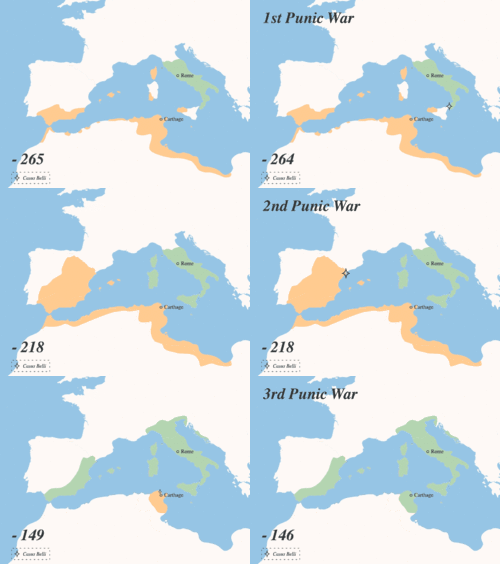
Over the course of the next century, three major conflicts between Rome and Carthage—the Punic Wars—would determine the course of Western civilization.
Image source: Punic Wars
1 AD
% completado
A new city of Carthage was built on the same land, and by the 1st century AD it had grown to the second largest city in the western half of the Roman Empire, with a peak population of 500,000.
100 AD - 400 AD
% completado
The entire province, Berber and Punic with a large Latin and multinational influx, then experienced a centuries-long renaissance under Roman rule.
Image source: Africa (Roman province)
450 AD
% completado
After a failed attempt to recapture the city in the 5th century, the Byzantines finally subdued the Vandals in the 6th century.
Image source: Vandal Kingdom
609 AD
% completado
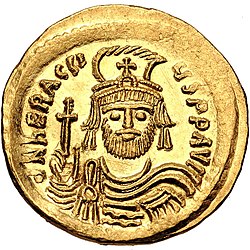
In the early 7th century, it was the Exarch of Carthage Heraclius who overthrew Emperor Phocas, rising to become Byzantine emperor.
Image source: Heraclius
698 AD
% completado
The Byzantine Exarchate was not able to withstand the Arab conquerors of the 7th century. Roman Carthage was destroyed—its walls torn down, its water supply cut off, and its harbours made unusable—following its conquest at the close of the century.
Image source: Exarchate of Africa
1950 AD
% completado
Carthage was little more than an agricultural village for nine hundred years until the middle of the 20th century; since then it has grown rapidly as an upscale coastal suburb, with a population of 15,922 in 2004 and an estimated 21,276 in January 2013.
Feb 1985
% completado
In February 1985, Ugo Vetere, mayor of Rome, and Chedly Klibi, mayor of Carthage, signed a symbolic treaty 'officially' ending the conflict between their cities, extended for more than 2,100 years by the lack of a peace treaty.
Or browse the full history timeline directory, with more than 2,000 topics.
This History of Carthage timeline was generated with the help of AI, using information found on the internet.
We work hard to keep these timelines accurate, but mistakes do get through. If you spot one, email us at [email protected] and we'll fix it for future visitors.
Generate yours with AI or build it from scratch, for free.
Export your timeline, add your own events, edit or remove AI-generated events, and much more
No credit card required.
Cancel anytime.
Cancel anytime.
You can create an unlimited number of timelines with up to 10 events on each one, customize how they look, export them to PDF, PNG, PowerPoint, CSV, and Excel, and share them with a link. Paid plans raise the event limit and add features like spreadsheet imports and collaborators.
Yes. You can cancel your subscription from your account page at any time, and you will not be charged again. Your subscription stays active for the rest of the period you already paid for.
Yes. We will email you a reminder before the annual renewal, and we will also email you a receipt.
Yes. You can email us within 15 days of any payment, and we will issue you a full refund.
Check out our pricing docs or send us an email anytime: [email protected].