-
Use Cases
-
Resources
-
Pricing
Babylon was an ancient Mesopotamian city-state located along the Euphrates River in present-day Iraq. It rose to prominence under King Hammurabi (c. 1792–1750 BCE), famous for his legal code, and later became the capital of a powerful Neo-Babylonian Empire under rulers like Nebuchadnezzar II, who built the legendary Hanging Gardens and Ishtar Gate. Babylon fell to Cyrus the Great of Persia in 539 BCE and gradually declined under subsequent rule. More Less
2300 BC
% complete
The so-called Weidner Chronicle (also known as ABC 19) states that Sargon of Akkad, c. 23rd century BC in the short chronology, had built Babylon 'in front of Akkad'.
Image source: Babylon
2286 BC
% complete
Ctesias, quoted by Diodorus Siculus and in George Syncellus's Chronographia, claimed to have access to manuscripts from Babylonian archives, which date the founding of Babylon to 2286 BC, under the reign of its first king, Belus.
2243 BC
% complete
A similar figure is found in the writings of Berossus, who, according to Pliny, stated that astronomical observations commenced at Babylon 490 years before the Greek era of Phoroneus, indicating 2243 BC.
2231 BC
% complete
Stephanus of Byzantium wrote that Babylon was built 1002 years before the date given by Hellanicus of Lesbos for the siege of Troy (1229 BC), which would date Babylon's foundation to 2231 BC. All of these ancient dates place Babylon's foundation in the 23rd century BC.
2217 BC - 2193 BC
% complete
The earliest known mention of Babylon as a small town appears on a clay tablet from the reign of Shar-Kali-Sharri (2217–2193 BC) of the Akkadian Empire, marking the city's first appearance in the historical record.
1950 BC
% complete
After around 1950 BC, Amorite kingdoms appeared in Uruk and Larsa in the south. The older and more powerful states of Elam, Isin, and Larsa overshadowed Babylon until it became the capital of Hammurabi's short-lived empire about a century later.
1900 BC - 1800 BC
% complete
According to a Babylonian king list, Amorite rule in Babylon began (c. 19th or 18th century BC) with a chieftain named Sumu-abum, who declared independence from the neighboring city-state of Kazallu.
1792 BC - 1750 BC
% complete
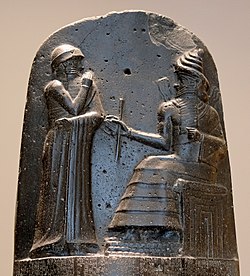
The Amorite king Hammurabi founded the Old Babylonian Empire in the 18th century BC. Hammurabi (r. 1792–1750 BC) is famous for codifying the laws of Babylonia into the Code of Hammurabi. It has been estimated that Babylon was the largest city in the world c. 1770 – c. 1670 BC.
Image source: Hammurabi
1595 BC
% complete
In 1595 BC, the city is thought to have been sacked by Mursili I, ruler of the Hittite Empire, sometime during the 31-year reign of Samsu-Ditana, last ruler of the First Dynasty of Babylon. The Telepinu Proclamation records that he marched to Babylon, destroyed it, defeated the Hurrian troops, and brought captives and possessions of Babylon to Hattusa.
1595 BC - 1160 BC
% complete
Thereafter, the Kassite dynasty took power in the city of Babylon, renaming it Karduniash, ushering in a dynasty that lasted for 435 years, until 1160 BC. Kassite Babylon eventually became subject to the Middle Assyrian Empire (1365–1053 BC) to the north, and Elam to the east, with both powers vying for control of the city.
Image source: Kassite dynasty
1155 BC
% complete
By 1155 BC, after continued attacks and annexing of territory by the Assyrians and Elamites, the Kassites were deposed in Babylon. Its ineffectual native kings were unable to prevent new waves of foreign West Semitic settlers, including the Arameans and Suteans in the 11th century BC, and finally the Chaldeans in the 9th century BC.
1100 BC - 1000 BC
% complete
The Arameans briefly ruled in Babylon during the late 11th century BC, part of a broader wave of West Semitic settlement in Babylonia.
Image source: Arameans
700 BC - 600 BC
% complete
Its rulers established two important empires in antiquity: the 19th–16th century BC Old Babylonian Empire, and the 7th–6th century BC Neo-Babylonian Empire, during which Babylon again became the largest city in the world c. 612 – c. 320 BC.
Image source: Neo-Babylonian Empire
539 BC - 331 BC
% complete
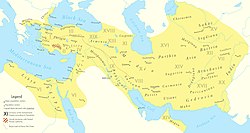
The city became the administrative capital of the Achaemenid Empire and remained prominent for over two centuries.
Image source: Achaemenid Empire
331 BC
% complete
After revolts against Persian rule were quickly repressed, Babylon remained under Persian rule for two centuries, until Alexander the Great's entry into the city in 331 BC.
200 BC - 650
% complete
Under the Parthian and Sassanid Empires, Babylon (like Assyria) became a province of these Persian Empires for nine centuries, until after AD 650.
Image source: Parthian Empire
650 - 700
% complete
In the mid-7th century, Mesopotamia was conquered and settled by the expanding Muslim empire, and a period of Islamization followed.
Image source: Muslim conquest of Persia
900 - 1000
% complete
Ibn Hawqal (10th century) and Arab scholar al-Qazwini (13th century) describe Babylon (Babil) as a small village.
Image source: Ibn Hawqal
1100 - 1200
% complete
Benjamin of Tudela, a 12th-century traveller, mentions Babylon, but it is not clear if he went there. The last known habitation of the town dates from the 11th century AD, when it was referred to as the 'small village of Babel'.
Image source: Benjamin of Tudela
1600 - 1700
% complete
Pietro della Valle travelled to the village of Babil in Babylon in the 17th century and noted the existence of both baked and dried mudbricks cemented with bitumen.
Image source: Pietro Della Valle
1750 - 1800
% complete
The eighteenth century saw an increasing flow of travellers to Babylon, including Carsten Niebuhr and Pierre-Joseph de Beauchamp, as well as measurements of its latitude.
Image source: Carsten Niebuhr
1792
% complete
Beauchamp's memoir, published in English translation in 1792, provoked the British East India Company to direct its agents in Baghdad and Basra to acquire Mesopotamian relics for shipment to London.
Image source: Pierre-Joseph de Beauchamp
1811 - 1817
% complete
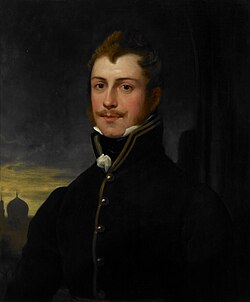
Claudius Rich, working for the British East India Company in Baghdad, excavated Babylon in 1811–12 and again in 1817.
Image source: Claudius Rich
1827 - 1829
% complete
Captain Robert Mignan explored the site briefly in 1827. In 1829, he completed a map of Babylon which includes the location of several villages.
1849 - 1850
% complete
William Loftus visited there in 1849. Austen Henry Layard made some soundings during a brief visit in 1850 before abandoning the site.
1852 - 1854
% complete
Fulgence Fresnel, Julius Oppert and Felix Thomas heavily excavated Babylon from 1852 to 1854. Henry Rawlinson and George Smith also worked there briefly in 1854.
Image source: Julius Oppert
May 1855
% complete
Much of their work was lost in the Qurnah Disaster, when a transport ship and four rafts sank on the Tigris river in May 1855. Recovery efforts loaded the equivalent of 80 crates on a ship for Le Havre in May 1856, but subsequent efforts, including a Japanese expedition in 1971–72, have been largely unsuccessful.
Image source: Qurnah disaster
1879 - 1882
% complete
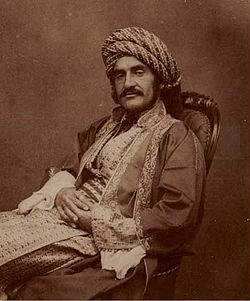
Work began in 1879, continuing until 1882, and was prompted by widespread looting of the site. Many tablets had appeared on the market in 1876 before Rassam's excavation began.
Image source: Hormuzd Rassam
1899 - 1917
% complete
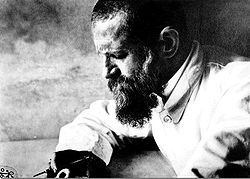
The work was conducted daily from 1899 until 1917. A major problem for Koldewey was the large scale mining of baked bricks, which began in the 19th century and which were mainly sourced from the time of Nebuchadnezzar II. The German archaeologists fled before oncoming British troops in 1917, and many objects went missing in the following years.
Image source: Robert Koldewey
1956 - 1962
% complete
Lenzen in 1956 and Hansjörg Schmid in 1962 worked on the Hellenistic, Parthian, Sasanian, and Arabic levels of the site.
1974 - 1977
% complete
A topographical survey at the site was conducted in 1974, followed in 1977 by a review of the stratigraphical position of the main monuments and reconsideration of ancient water levels, by the Turin Centre for Archaeological Research and Excavations in the Middle East and Asia, and the Iraqi-Italian Institute of Archaeological Sciences.
1987 - 1989
% complete
Additional work in 1987–1989 concentrated on the area surrounding the Ishara and Ninurta temples in the Shu-Anna city-quarter of Babylon.
1899 - 1917
% complete
By 1905, there were several villages in Babylon, one of which was Qwaresh, with about 200 households, located within the ancient inner city walls. The village grew due to the need for laborers during the German Oriental Society excavations between 1899 and 1917.
1938
% complete
A number of Iraqi excavations have occurred at Babylon, the earliest in 1938. The site of Babylon has been a cultural asset to Iraq since the creation of the modern Iraqi state in 1921.
Feb 1978
% complete
In February 1978, the Ba'athist government of Iraq under Saddam Hussein began the 'Archaeological Restoration of Babylon Project': reconstructing features of the ancient city atop its ruins. In 1982, the government minted a set of seven coins displaying iconic features of Babylon.
1979 - 1981
% complete
From 1979 to 1981 excavation and restoration work was conducted at the Ninmah Temple, Istar Temple, and the Southern Palace.
Sep 1987 - 2002
% complete
The Babylon International Festival was held in September 1987 and annually thereafter until 2002, except in 1990 and 1991, to showcase the restoration work at the site.
Image source: Babylon
2003
% complete
In 2003, Saddam Hussein intended to have a cable car line constructed over Babylon, but plans were halted by the 2003 invasion of Iraq.
Image source: 2003 invasion of Iraq
Sep 2003 - 2004
% complete
Following the 2003 invasion of Iraq, the area around Babylon came under the control of US troops, before being handed over to Polish forces in September 2003. Poland resolved in 2004 to place the city under Iraq's control, and commissioned the Report Concerning the Condition of the Preservation of the Babylon Archaeological Site, presented at a meeting in December 2004.
2005
% complete
In 2005, the site was handed over to the Iraqi Ministry of Culture.
Apr 2006
% complete
In April 2006, Colonel John Coleman, former Chief of Staff of the I Marine Expeditionary Force, offered to apologize for the damage caused by military personnel under his command. An April 2006 article stated that UN officials and Iraqi leaders have plans to restore Babylon, making it into a cultural center.
May 2009
% complete
In May 2009, the provincial government of Babil reopened the site to tourists. Over 35,000 people visited in 2017.
Jul 2019
% complete
In July 2019, the site of Babylon was inscribed as a UNESCO World Heritage Site, recognizing its outstanding universal value.
Or browse the full history timeline directory, with more than 2,000 topics.
This History of Babylon timeline was generated with the help of AI, using information found on the internet.
We work hard to keep these timelines accurate, but mistakes do get through. If you spot one, email us at [email protected] and we'll fix it for future visitors.
Generate yours with AI or build it from scratch, for free.
Export your timeline, add your own events, edit or remove AI-generated events, and much more
No credit card required.
Cancel anytime.
Cancel anytime.
You can create an unlimited number of timelines with up to 10 events on each one, customize how they look, export them to PDF, PNG, PowerPoint, CSV, and Excel, and share them with a link. Paid plans raise the event limit and add features like spreadsheet imports and collaborators.
Yes. You can cancel your subscription from your account page at any time, and you will not be charged again. Your subscription stays active for the rest of the period you already paid for.
Yes. We will email you a reminder before the annual renewal, and we will also email you a receipt.
Yes. You can email us within 15 days of any payment, and we will issue you a full refund.
Check out our pricing docs or send us an email anytime: [email protected].