-
Use Cases
-
Resources
-
Pricing
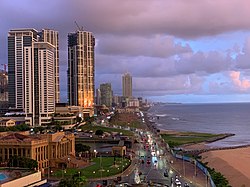
Colombo is the commercial capital and largest city of Sri Lanka. Its history spans over two millennia, beginning as an ancient seaport known to Greek, Roman, Arab, Persian, and Chinese traders. The city was colonized successively by the Portuguese (1505), the Dutch (1656), and the British (1796) due to its strategic harbor. Under British rule, Colombo became the administrative and economic center of Ceylon. After Sri Lanka gained independence in 1948, Colombo remained the country's commercial hub, evolving into a modern metropolis while preserving landmarks like Fort, Pettah, and colonial-era architecture. More Less
1200 - 1299
% complete
The author of Sidatsangarava, the oldest Sinhala grammar, written in the 13th century, wrote about a category of words that exclusively belonged to early Sinhala, documenting the ancient linguistic heritage of the region around Colombo.
Image source: Sinhala script
1300 - 1399
% complete
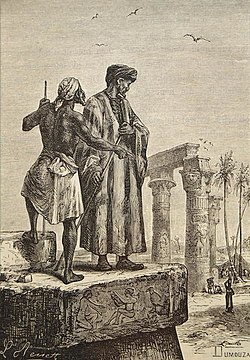
Traveller Ibn Battuta, who visited the island in the 14th century, referred to it as Kalanpu, providing one of the earliest recorded foreign accounts of the settlement that would become Colombo.
Image source: Ibn Battuta
1505
% complete
Portuguese explorers led by Dom Lourenço de Almeida first arrived in Sri Lanka in 1505. They introduced the name 'Colombo', believed to be derived from the classical Sinhala name Kolon thota, meaning 'port on the river Kelani'.
Image source: Francisco de Almeida
1505
% complete
During their initial visit the Portuguese made a treaty with the King of Kotte, Parakramabahu VIII (1484–1518), which enabled them to trade in the island's crop of cinnamon, found along with the coastal areas including Colombo.
Image source: Parakramabahu VIII
1517
% complete
Within a short time of arriving, the Portuguese expelled the Muslim inhabitants of Colombo and began to build a fort in 1517, establishing a fortified colonial presence on the site.
Image source: Colombo
1593
% complete
Following the fall of the Kingdom of Kotte in 1593, the Portuguese were able to establish complete control over the coastal area, with Colombo serving as their capital for the territories they held.
Image source: Kingdom of Kotte
1638
% complete
In 1638 the Dutch signed a treaty with King Rajasinha II of Kandy which assured the king assistance in his war against the Portuguese in exchange for a monopoly of the island's major trade goods.
Image source: Rajasinha II
1639
% complete
The Portuguese resisted the Dutch and the Kandyans but were gradually defeated in their strongholds beginning in 1639, marking the decline of Portuguese power on the island.
Image source: Dutch–Portuguese War
1656 - 1796
% complete
Although figures like Rijcklof van Goens initially restored the captured area back to the Sinhalese kings, the Dutch later refused to turn them over and gained control over the island's richest cinnamon lands including Colombo, which then served as the capital of the Dutch maritime provinces until 1796.
Image source: Dutch Ceylon
1656
% complete
The Dutch captured Colombo in 1656 after an epic siege, at the end of which a mere 93 Portuguese survivors were given safe conduct out of the fort, ending Portuguese rule over the city.
Image source: Sinhalese–Portuguese conflicts
1796
% complete
The British captured Colombo in 1796, but it remained only a British military outpost for nearly two decades while the interior kingdom of Kandy remained independent.
Image source: British Ceylon
1815
% complete
When Sri Lanka was ceded to the British Empire in 1815 following the Kandyan Convention, Colombo was made the capital of the newly created crown colony of British Ceylon, controlling the entire island.
Image source: Kandyan Convention
1833
% complete
In 1833, the Government Agent of the Western Province was charged with the administration of the city, formalising colonial administrative oversight of Colombo.
Image source: Western Province, Sri Lanka
1865
% complete
Centuries of colonial rule had meant a decline of indigenous administration of Colombo and in 1865 the British conceived a Municipal Council as a means of training the local population in self-governance. St Benedict's College was also founded that year.
Image source: Colombo Municipal Council
Jan 16, 1866
% complete
The Legislative Council of Ceylon constituted the Colombo Municipal Council in 1865 and the Council met for the first time on 16 January 1866. In 1866 the city also had a population of around 80,000.
1835
% complete
Royal College Colombo was established in 1835 during British colonial rule. Most of the prominent schools in the city date back to the 1800s when they were founded during this era.
Image source: Royal College, Colombo
1913
% complete
The first step in the creation of a university in Colombo was taken in 1913 with the establishment of University College Colombo, which prepared students for the external examinations of the University of London.
1950
% complete
In the post-independence era several secular schools were established: Thurstan College (1950), Isipathana College (1952), Mahanama College (1954), D. S. Senanayake College (1967), and Sirimavo Bandaranaike Vidyalaya (1973).
Image source: Thurstan College
1864
% complete
The colonial styled Galle Face Hotel, known as Asia's Emerald on the Green since 1864, opened adjacent to Galle Face Green and remains one of Colombo's most iconic landmarks.
Image source: Galle Face Hotel
Jan 1, 1877
% complete
The National Museum of Colombo, established on 1 January 1877 during the tenure of the British Colonial Governor Sir William Henry Gregory, is located in the Cinnamon Gardens area and became the country's premier museum.
Image source: Colombo National Museum
1980 - 1997
% complete
Before the twin towers were completed in 1997, the adjacent Bank of Ceylon tower was the tallest structure and the most prominent city landmark of Colombo's skyline.
Image source: Bank of Ceylon
1996
% complete
The country emerged as champions of the 1996 Cricket World Cup, a triumph celebrated across the island and especially in Colombo, and later became runners up in 2007 and 2011.
Image source: 1996 Cricket World Cup
1998
% complete
The Colombo Marathon is an internationally recognised marathon established in 1998, attracting runners from around the world through the streets of the commercial capital.
Image source: Colombo Marathon
Dec 2011
% complete
The Nelum Pokuna Mahinda Rajapaksa Theatre is a world-class theatre that opened in December 2011 in Colombo, adding a major cultural venue to the city.
Image source: Nelum Pokuna Mahinda Rajapaksa Theatre
1948
% complete
This era of colonialism ended peacefully in 1948 when Ceylon gained independence from Britain. Colombo retained its status as the capital of the newly independent nation.
Image source: Sri Lankan independence movement
1967
% complete
Colombo's first international airport, which commenced operating in 1935 at Ratmalana, was replaced by Bandaranaike Airport in 1967 as the country's main international gateway.
Image source: Bandaranaike International Airport
1978
% complete
In 1978, when administrative functions were moved to Sri Jayawardenepura Kotte, Colombo was designated as the commercial capital of Sri Lanka, retaining its role as the nation's economic centre.
Image source: Sri Jayawardenepura Kotte
1983 - 2009
% complete
In addition, in the period from the 1980s to 2009, there have been a number of major terrorist attacks in Colombo during the Sri Lankan Civil War, profoundly affecting life in the city.
Image source: Sri Lankan Civil War
2008
% complete
The Port of Colombo handled 3.75 million twenty-foot equivalent units in 2008, up 10.6% on 2007 (which itself was up 9.7% on 2006), bucking the global economic trend.
Image source: Port of Colombo
2010 - 2019
% complete
Colombo is part of the 21st Century Maritime Silk Road that runs from the Chinese coast to the Upper Adriatic region with its rail connections to Central and Eastern Europe, underscoring its enduring role as a trade hub.
Image source: Maritime Silk Road
Oct 2013
% complete
Expressways constructed in the Colombo metropolitan area include the Colombo–Katunayake Expressway, which was opened in October 2013, along with the Outer Circular Highway improving connectivity around the city.
Image source: Expressways of Sri Lanka
2020 - 2029
% complete
The per capita income of the Colombo Metro area stood at US$8623 and purchasing power per capita of $25,117, making it one of the most prosperous regions in South Asia.
Image source: Colombo District
2025
% complete
In 2025, the National People's Power won the local elections and Vraîe Cally Balthazaar became mayor. She is the second woman to hold the position, after her predecessor Rosy Senanayake (2018–2023), and leads Colombo under the NPP-JVP alliance, marking the city's first left-wing governance since N.M. Perera.
Or browse the full history timeline directory, with more than 2,000 topics.
This History of Colombo timeline was generated with the help of AI, using information found on the internet.
We work hard to keep these timelines accurate, but mistakes do get through. If you spot one, email us at [email protected] and we'll fix it for future visitors.
Generate yours with AI or build it from scratch, for free.
Export your timeline, add your own events, edit or remove AI-generated events, and much more
No credit card required.
Cancel anytime.
Cancel anytime.
You can create an unlimited number of timelines with up to 10 events on each one, customize how they look, export them to PDF, PNG, PowerPoint, CSV, and Excel, and share them with a link. Paid plans raise the event limit and add features like spreadsheet imports and collaborators.
Yes. You can cancel your subscription from your account page at any time, and you will not be charged again. Your subscription stays active for the rest of the period you already paid for.
Yes. We will email you a reminder before the annual renewal, and we will also email you a receipt.
Yes. You can email us within 15 days of any payment, and we will issue you a full refund.
Check out our pricing docs or send us an email anytime: [email protected].