-
Use Cases
-
Resources
-
Pricing
420 CE - 589 CE
The mythical origin of meihua zhuang, or plum blossom makeup, is associated with the Southern dynasties. The floral fashion later became popular among women during the Tang and Song dynasties.
500 CE
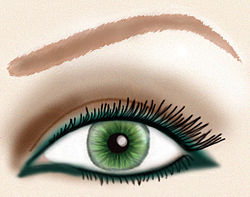
A specific type of kohl known as Ithmid kohl has been used for more than 15 centuries in the region, forming part of a long tradition of eye cosmetics.
Image source: Kohl (cosmetics)
618 CE - 907 CE
Plum blossom makeup became popular among ladies during the Tang dynasty, extending the floral cosmetic tradition associated with meihua zhuang.
900 CE
Women of the Sakalava and Vezo peoples in Madagascar began wearing masonjoany, a decorative paste made from ground wood. It was used as sunscreen and insect repellent as well as facial decoration, with flowers, leaves, and stars painted in white and yellow pastes.
960 CE - 1279 CE
The meihua zhuang tradition also remained popular during the Song dynasty, when floral facial decoration continued as a fashionable cosmetic practice.
1200 CE - 1299 CE
Thirteenth-century Italian women wore red lipstick as a visible indication of high social standing.
1500 - 1899
Cosmetics continued to be used over the following centuries, although attitudes toward them changed repeatedly. In many periods of Western history, their use was openly frowned upon.
1508
The cosmetologist associated with Countess Caterina Sforza was among the early modern figures experimenting with makeup production in Europe. Sforza herself was also associated with recipes and experimentation involving cosmetics.
1700 - 1899
Before the nineteenth century, limited lighting technology and restricted access to reflective devices made it more difficult for people to regularly perceive and assess their appearance.
1800 - 1899
Nineteenth-century ideals favored women who appeared delicate, feminine, and pale. Some women discreetly used rouge on their cheeks and drops of belladonna to dilate their eyes and make them appear larger.
1837 - 1901
During the nineteenth century, Queen Victoria publicly declared makeup improper and vulgar, considering it acceptable mainly for actors. Despite this view, famous actresses including Sarah Bernhardt and Lillie Langtry used makeup.
Image source: History of cosmetics
1850 - 1899
Technological developments in the latter half of the nineteenth century, including improved mirrors, commercial photography, marketing, and electricity in homes and public spaces, heightened awareness of appearance and increased demand for cosmetic products.
1866
Henry Tetlow used zinc oxide as a face powder in 1866, representing a notable development involving a less toxic cosmetic ingredient.
1868
The beginning of the modern Japanese cosmetic industry followed the Meiji Restoration in 1868.
1870 - 1899
Companies such as Rimmel, Guerlain, and Hudnut distributed cosmetic products to a broader public, helping establish cosmetics as commercial consumer goods.
1888
An unknown inventor from Philadelphia created a cosmetic deodorant in 1888. It was trademarked under the name Mum.
Image source: Deodorant
1907
Eugène Schueller, founder of L'Oréal, invented modern synthetic hair dye in 1907.
Image source: L'Oréal
1909
Max Factor opened a professional makeup studio in Los Angeles for stage and screen actors, linking professional cosmetics with the expanding entertainment industry.
1910
Colored makeup was introduced in Paris with the arrival of the Russian Ballet. Ocher and crimson were among the most typical shades.
1910
Around 1910, makeup became fashionable in the United States and Europe under the influence of ballet and theater stars such as Mathilde Kschessinska and Sarah Bernhardt.
1915
In 1915, a Kansas legislature proposed making it a misdemeanor for women under forty-four to wear cosmetics to create a false impression. During the same period, the Daily Mirror promoted pencil eyeliner to elongate the eye and an eyelash curler to accentuate lashes.
Image source: Eye liner
1915
Maurice Levy invented the metal container for lipstick in 1915, enabling lipstick to be produced and distributed on a mass scale.
Image source: Lipstick
1919
The first patent for nail polish was granted in 1919, marking a formal milestone in the development of modern nail cosmetics.
Image source: Nail polish
1936
Eugène Schueller, who had previously invented modern synthetic hair dye, also invented sunscreen in 1936.
Image source: Sunscreen
1939 - 1945
During the Second World War, cosmetics were in short supply from 1939 to 1945.
Image source: Cosmetics
1952
Roll-on deodorant was launched in 1952, providing a new application format for cosmetic deodorant products.
1954
George E. Johnson started the Johnson Product Company in 1954 and introduced a safe hair-straightening system that could be purchased in stores and used at home.
1965
Aerosol deodorant was launched in 1965, adding spray application to the expanding range of cosmetic deodorant products.
1968
At the 1968 feminist Miss America protest, demonstrators symbolically threw feminine products into a Freedom Trash Can. Cosmetics were among the items described by protesters as instruments of female torture and symbols of enforced femininity.
Image source: Miss America protest
1920
Face-lifts were being performed as early as 1920, establishing an early form of cosmetic surgery intended to alter signs of aging.
1960 - 1969
Although face-lifts had been performed decades earlier, cosmetic surgery became more widely used in the 1960s to reduce visible signs of aging. During the twentieth century, cosmetic surgery mainly revolved around women.
Image source: Plastic surgery
1962
Silicone implants were introduced in 1962, becoming a significant development in cosmetic surgery.
Image source: Breast implant
1982
In 1982, the United States Supreme Court granted physicians the legal right to advertise their procedures, affecting the promotion of cosmetic medical services.
1998
The American Society for Aesthetic Plastic Surgery reported that more than two million Americans underwent cosmetic procedures, both surgical and nonsurgical, in 1998. Liposuction was the most popular procedure.
2010
The Japanese cosmetics market had a 2010 size of 2,286 billion yen based on the value of shipments by brand manufacturers.
2012
In 2012, Russia was described as the world's fifth-largest cosmetics market. Its perfumery and cosmetics market had shown 21 percent growth since 2004 and reached US$13.5 billion.
2020
In 2020, the cosmetics market amassed $6.8 billion while experiencing a $2.6 billion loss attributed to COVID-19.
2020
The contemporary cosmetics market has a different dynamic from that of the twentieth century, reflecting changes in consumer behavior, product categories, and global market structures.
2021
In 2021, skincare products accounted for 34.17 percent of imported cosmetics, while perfumes and haircare products were also major imported goods.
Or browse the full history timeline directory, with more than 2,500 topics.
This History of Cosmetics timeline was generated with the help of AI, using information found on the internet.
We work hard to keep these timelines accurate, but mistakes do get through. If you spot one, email us at [email protected] and we'll fix it for future visitors.
Generate yours with AI or build it from scratch, for free.
Export your timeline, add your own events, edit or remove AI-generated events, and much more
No credit card required.
Cancel anytime.
Cancel anytime.
You can create an unlimited number of timelines with up to 10 events on each one, customize how they look, export them to PDF, PNG, PowerPoint, CSV, and Excel, and share them with a link. Paid plans raise the event limit and add features like spreadsheet imports and collaborators.
Yes. You can cancel your subscription from your account page at any time, and you will not be charged again. Your subscription stays active for the rest of the period you already paid for.
Yes. We will email you a reminder before the annual renewal, and we will also email you a receipt.
Yes. You can email us within 15 days of any payment, and we will issue you a full refund.
Check out our pricing docs or send us an email anytime: [email protected].