
-
Use Cases
-
Resources
-
Pricing
2800 BC
Evidence indicates that humans produced soap-like materials in ancient Babylon around 2800 BC. These early substances were made from fats and alkaline materials and represent some of the earliest known forms of soap production.
Image source: SOAP
2500 BC
A Sumerian clay tablet dating to around 2500 BC contains a formula for making a soap-like substance. The record demonstrates that early Mesopotamian societies had developed and documented methods for combining fats with alkaline substances.
1550 BC
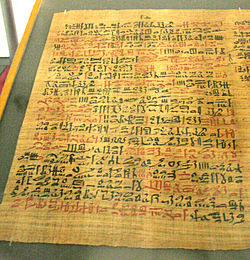
The Ebers papyrus indicates that ancient Egyptians used a soap-like product as medicine. It describes combining animal fats or vegetable oils with trona, a soda ash substance, to create the material.
Image source: Ebers Papyrus
1 AD
Knowledge of how to produce true soap emerged sometime between the early proto-soaps and the first century AD. This development involved more effective combinations of fats or oils with alkaline substances.
1 AD
The ancient Romans did not use soap until at least the first century AD. Its adoption occurred after soap-making knowledge had developed beyond earlier proto-soap materials.
1 AD
Pliny the Elder recorded that soap was 'an invention of the Gauls.' His account provides an important first-century description of soap and associates its development with peoples of ancient Gaul.
Image source: Pliny the Elder
2 AD
Aretaeus of Cappadocia wrote that among the Celts, whom he called Gauls, alkaline substances were made into balls called soap. His second-century account is one of the earliest literary descriptions of soap in use.
Image source: Aretaeus of Cappadocia
2 AD
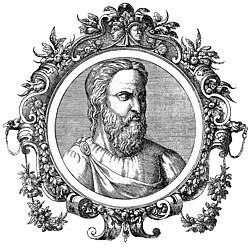
The physician Galen described soap-making with lye and prescribed washing to carry impurities away from the body and clothes. His writing connected soap and washing with medical hygiene.
Image source: Galen
500 - 599
Soapmakers in Naples, then under the control of the Eastern Roman Empire, belonged to a guild by the late sixth century. The guild indicates that soap production had become an organized craft.
700 - 799
By the eighth century, soap-making was well known in Italy and Spain. These regions became important centers in the transmission and development of European soap production.
800 - 899
In ninth-century Europe, soap was produced from animal fats. These soaps were effective cleansers but were known for having an unpleasant smell.
800
The lands of medieval Spain were leading soap producers by about 800. Production benefited from access to oils, alkaline materials, and established Mediterranean commercial networks.
1100
A twelfth-century document describes the process of producing soap. The record shows that soap-making techniques had become sufficiently established to be documented in medieval Europe or the Mediterranean world.
1200
Soapmaking began in the Kingdom of England about 1200. This marked the establishment of a durable English soap industry that later expanded with new manufacturing methods.
1200 - 1299
By the thirteenth century, soap manufacture in West Asia and North Africa had become a major cottage industry. Important production centers included Nablus, Fes, Damascus, and Aleppo.
1400 - 1499
By the fifteenth century, soap manufacture in Christendom frequently took place on an industrial scale. Major sources included Antwerp, Castile, Marseille, Naples, and Venice.
1525
By 1525, soap production in Marseille was concentrated in at least two factories. Marseille's industry increasingly eclipsed the other Provençal centers.
1550
By the second half of the sixteenth century, semi-industrial professional soap manufacture in France was concentrated in Provence. Toulon, Hyères, and Marseille supplied soap to the rest of France.
1600
From the seventeenth century, finer soaps were produced in Europe using vegetable oils such as olive oil rather than animal fats. This change improved quality and helped distinguish premium soaps from older products.
1634
In 1634, Charles I granted the newly formed Society of Soapmakers a monopoly over soap production. Supporters presented testimonials claiming that New White Soap washed whiter and sweeter than Old Soap.
1665 - 1714
During the Restoration era, England imposed a tax on soap. The tax helped keep soap a luxury that was used regularly mainly by wealthy households until the nineteenth century.
1780
In 1780, James Keir established chemical works at Tipton to manufacture alkali from sulfates of potash and soda. He later added a soap manufactory, linking chemical production with industrial soapmaking.
1780 - 1799
Industrial manufactured bar soaps became available in the late eighteenth century. Advertising campaigns in Europe and America promoted public awareness of the relationship between cleanliness and health.
1790
In 1790, Nicolas Leblanc discovered a method for making alkali from common salt. The process provided an important industrial source of alkaline material used in soap manufacture.
1807
Andrew Pears began making Pears soap in London in 1807. The product was a high-quality transparent soap and became one of the best-known branded soaps.
1837
Robert Spear Hudson began manufacturing soap powder in 1837. He initially produced it by grinding soap with a mortar and pestle, an early step toward convenient powdered detergents and cleansers.
1853
The English soap tax was repealed in 1853. The repeal boosted the soap trade and deregulated production, helping make soap more accessible to a broader population.
1865
In 1865, William Sheppard patented a liquid version of soap. Liquid soap represented a significant change from traditional solid bars and later became common in household and public hygiene.
Image source: Soap
1865
Thomas J. Barratt, Andrew Pears's son-in-law, became Pears's brand manager in 1865. He is regarded as the first person to hold a role of this kind, helping establish modern branded-product marketing.
1882
In 1882, Thomas J. Barratt recruited English actress and socialite Lillie Langtry as the poster girl for Pears soap. Her campaign made her the first celebrity known to endorse a commercial product.
Image source: Lillie Langtry
1886
William Hesketh Lever and his brother James bought a small soap works in Warrington in 1886. Their business became Lever Brothers and eventually developed into Unilever, one of the world's largest soap businesses.
Image source: Lever Brothers
1898
In 1898, B. J. Johnson developed a soap derived from palm and olive oils. The product reflected the continued expansion of vegetable-oil soapmaking in modern industry.
Or browse the full history timeline directory, with more than 2,500 topics.
This History of Soap timeline was generated with the help of AI, using information found on the internet.
We work hard to keep these timelines accurate, but mistakes do get through. If you spot one, email us at [email protected] and we'll fix it for future visitors.
Generate yours with AI or build it from scratch, for free.
Export your timeline, add your own events, edit or remove AI-generated events, and much more
No credit card required.
Cancel anytime.
Cancel anytime.
You can create an unlimited number of timelines with up to 10 events on each one, customize how they look, export them to PDF, PNG, PowerPoint, CSV, and Excel, and share them with a link. Paid plans raise the event limit and add features like spreadsheet imports and collaborators.
Yes. You can cancel your subscription from your account page at any time, and you will not be charged again. Your subscription stays active for the rest of the period you already paid for.
Yes. We will email you a reminder before the annual renewal, and we will also email you a receipt.
Yes. You can email us within 15 days of any payment, and we will issue you a full refund.
Check out our pricing docs or send us an email anytime: [email protected].