-
Resources
-
Pricing
The history of crossword puzzles traces their development from early word games to a popular international pastime found in newspapers, books, apps, and online platforms. More Less
Build a timeline like this one in minutes, for free. Start Yours →
1800 - 1899
Cipher crosswords were invented in Germany during the 19th century. These puzzles used coded or numerical systems to determine entries, representing an early branch of crossword-like wordplay.
1800 - 1899
During the 19th century, English crossword-like puzzles were elementary exercises apparently derived from word squares, in which words read alike vertically and horizontally. They appeared in children's puzzle books and various periodicals.
1862
The phrase “cross word puzzle” was first written in 1862 by the American publication Our Young Folks, providing an early documented use of terminology associated with the modern puzzle genre.
1873
Crossword-like formats, including Double Diamond Puzzles, appeared in St. Nicholas, a magazine published from 1873. These designs helped popularize interlocking word arrangements before the modern crossword was established.
Sep 14, 1890
The Italian magazine Il Secolo Illustrato della Domenica published another crossword-like puzzle on September 14, 1890, demonstrating that interlocking word puzzles were developing in more than one country.
Dec 21, 1913
Arthur Wynne, a Liverpool-born journalist, published a “word-cross” puzzle in the New York World on December 21, 1913. Its grid, clues, and interlocking entries embodied most of the features of the modern crossword.
Feb 1922
According to Tony Augarde's Oxford Guide to Word Games, the first crossword in Britain appeared in Pearson's Magazine in February 1922. This predates the better-known British newspaper crossword tradition.
Image source: Crossword
1926
Henry Dudeney created the first known crossnumber puzzle, which was published in The Strand Magazine in 1926. Crossnumber puzzles adapted the interlocking format for numerical answers.
1933
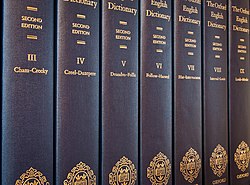
The term “crossword” first appeared in the Oxford English Dictionary in 1933, reflecting the puzzle's established place in English-language vocabulary.
Image source: Oxford English Dictionary
1913
After Arthur Wynne's first puzzle, crossword puzzles became a regular weekly feature in the New York World. The format soon began spreading to other newspapers.
Image source: New York World
1916
The Pittsburgh Press was publishing crossword puzzles at least as early as 1916, illustrating the rapid adoption of the new newspaper feature beyond New York.
1917
The Boston Globe was publishing crossword puzzles by 1917, further establishing the puzzle as a recurring feature in American newspapers.
Oct 1922 - 1923
A Clare Briggs comic strip in October 1922 depicted an enthusiast solving a crossword, while a 1923 Boston Globe humorous squib portrayed a reader urgently trying to retrieve a newspaper for its puzzle. These examples reflected the growing cultural visibility of crosswords.
1924
Simon & Schuster published the first book of crossword puzzles in 1924 after a suggestion from co-founder Richard Simon's aunt. The publication helped move crosswords from newspapers into mass-market books.
1924
Simon & Schuster promoted its 1924 book with an attached pencil. The unusual presentation became an instant hit and helped make crossword puzzles one of the major crazes of 1924.
1924
A 1924 New York Times editorial criticized crosswords as a “sinful waste” devoted to fitting words into prearranged patterns. The criticism showed that the puzzle's rapid popularity also provoked skepticism.
Nov 2, 1924
The Sunday Express published the first crossword in a British newspaper on November 2, 1924. It was a Wynne puzzle adapted for the United Kingdom.
1925
In 1925, Time reported that nine Manhattan dailies and fourteen other major newspapers carried crosswords, while commentators debated whether the craze would end or remain permanent. The New York Times also discussed criticism from The New Republic without declaring the puzzles beneficial or harmful.
1942 - 1969
Margaret Petherbridge Farrar served as the New York Times' first crossword editor from 1942 to 1969, shaping the paper's early crossword standards and editorial identity.
Feb 15, 1942
The New York Times published its first crossword puzzle on February 15, 1942. The paper was motivated in part by the idea that a puzzle could provide readers with a welcome distraction from the harsh news of World War II.
1944
In 1944, Allied security officers were disturbed when a series of Daily Telegraph crosswords contained words that were secret code names for military operations planned as part of Operation Overlord.
1957
Krysset, published by Bonnier, was founded in 1957 and became the oldest extant crossword magazine published in Swedish.
1969 - 1993
Will Weng and Eugene T. Maleska edited The New York Times crossword from 1969 through 1993. During their period, women constructors accounted for 35 percent of the puzzles.
1977 - 2006
From 1977 to 2006, The Atlantic regularly featured a cryptic crossword called “Puzzler,” constructed by the husband-and-wife team Emily Cox and Henry Rathvon.
Image source: The Atlantic
1993
Will Shortz became The New York Times' fourth crossword editor in 1993 and has edited the paper's crossword since then.
2006 - 2009
From 2006 to 2009, The Atlantic's cryptic crossword Puzzler appeared only online, continuing the Cox-Rathvon feature in a digital format.
2007
The original Simon & Schuster Crossword Puzzle Book Series ended in 2007 after reaching 258 volumes. The publisher had maintained the series since its founding in 1924.
Image source: Simon & Schuster
2008
Beginning in 2008, Simon & Schuster continued its crossword publishing tradition with the Mega series. The books appear three times per year and each features 300 puzzles.
2010
In 2010, Emily Cox and Henry Rathvon's cryptic crossword efforts began appearing monthly in The Wall Street Journal after their long association with The Atlantic.
Dec 2023
Emily Cox and Henry Rathvon retired at the end of 2023 after decades of constructing cryptic crosswords. The Wall Street Journal continued to offer a cryptic crossword each month.
1958
Harold T. Bers, an advertising executive and frequent contributor to The New York Times crossword, invented the themed crossword in 1958. The format organized several answers around a shared concept or mechanism.
1968
Composer and lyricist Stephen Sondheim introduced the cryptic crossword to the United States in New York magazine in 1968. Although influential, the format never became widespread nationally.
1976
Software designed to aid crossword construction had been written by at least 1976. Such tools later enabled constructors to manage grids, word lists, and intersecting entries more efficiently.
1980 - 1989
Crossword Magic became a popular crossword-construction program for the Apple II during the 1980s, providing an early consumer software tool for designing and solving grids.
1996
In Spanish crosswords, the digraphs ch and ll occupy two squares. Some older crosswords, produced before the 1996 spelling reform, placed each digraph in a single square.
1998
In 1998, Jakarta publisher Elex Media Komputindo, part of the Gramedia Group, published Teka-Teki Silang Komputer, or Computerized Crossword Puzzle, in diskette form.
Apr 26, 2005
Sarah Keller's April 26, 2005 New York Times crossword, edited by Will Shortz, featured five themed entries ending in different parts of a tree: SQUARE ROOT, TABLE LEAF, WARDROBE TRUNK, BRAIN STEM, and BANK BRANCH.
May 14, 2007
Roger Squires published his 66,666th crossword on May 14, 2007. The achievement represented approximately two million clues and was recognized by Guinness World Records as the record for the most prolific crossword compiler.
Oct 7, 2011
The October 7, 2011 New York Times crossword commemorated Apple CEO Steve Jobs, who had died on October 5. The puzzle used its clues and entries to acknowledge his life and influence.
Jul 27, 2012
Joe Krozel's July 27, 2012 New York Times crossword contained only 17 shaded squares in a 15-by-15 American crossword, leaving 208 white spaces.
Jun 29, 2013
Joe Krozel's June 29, 2013 New York Times crossword used only 50 words, the lowest word count recorded for a published weekday-size 15-by-15 puzzle.
2015 - 2017
A. N. Prahlada Rao was recorded in the Limca Book of Records in 2015 for creating the highest number of crosswords in an Indian regional language. He continued to hold the title through 2016 and 2017.
2016
In 2016, A. N. Prahlada Rao was recorded in the Limca Book of Records for constructing the highest number of crosswords in Indian regional languages.
Sep 1, 2016
Ben Tausig's September 1, 2016 New York Times puzzle contained four squares where solvers could enter either M or F and still produce correct answers across and down.
2019
A. N. Prahlada Rao's crossword-construction achievements were mentioned in the Kalam Book of World Records in 2019.
2024
In 2024, Régis Petit published the largest known crossword grids designed without black squares in French, English, Italian, Spanish, Latin, Serbian, Croatian, Hungarian, Hebrew, and German. The grids included 12-by-12, 11-by-11, 10-by-10, and 9-by-9 formats.
1993 - 2018
During Will Shortz's editorship, the share of New York Times puzzles constructed by women declined compared with the 1969–1993 period. Women constructors accounted for 15 percent in both 2014 and 2015, 17 percent in 2016, 13 percent in 2017, and 16 percent in 2018.
2006
The 2006 documentary Wordplay focused on enthusiasts of The New York Times crossword and increased public interest in crossword solving and competitive puzzle culture.
Sep 2015
Since September 2015, The Wall Street Journal's Friday crossword has featured a contest metapuzzle. A reader who submits the correct answer is selected at random to receive a WSJ mug.
2018
In spring 2018, Patti Varol and Amy Reynaldo organized and edited Women of Letters, a pack of 18 crossword puzzles constructed by women.
2018
Inspired by Women of Letters, Laura Braunstein and Tracy Bennett launched The Inkubator, a subscription service for crosswords constructed by cis women, trans women, and woman-aligned constructors. Its initial Kickstarter campaign raised more than $30,000.
Jan 17, 2019
The Inkubator began publishing puzzles on January 17, 2019. The twice-monthly service emphasized work by women and woman-aligned constructors.
2022
Inkubator Crosswords: 100 Audacious Puzzles by Women and Nonbinary Creators was published in 2022, collecting 100 puzzles associated with the project's inclusive construction community.
Feb 8, 2023
On February 8, 2023, The Inkubator announced to subscribers that 2023 would be its final year operating as a subscription service.
Build a timeline like this one in minutes, for free. Start Yours →
Or browse the full history timeline directory, with more than 2,500 topics.
This History of Crossword Puzzles timeline was generated with the help of AI, using information found on the internet.
We work hard to keep these timelines accurate, but mistakes do get through. If you spot one, email us at [email protected] and we'll fix it for future visitors.
Generate yours with AI or build it from scratch, for free.
Export your timeline, add your own events, edit or remove AI-generated events, and much more
No credit card required.
15-day money-back guarantee.
You can create an unlimited number of timelines with up to 10 events on each one, customize how they look, export them to PDF, PNG, PowerPoint, CSV, and Excel, and share them with a link. Timelines made with Timeline Maker AI keep every event the generator created, and you can add up to 5 events of your own. Paid plans remove the event limit, add spreadsheet imports and hide Preceden's branding, and the higher-priced plan also adds collaborators, a custom logo and a custom domain.
Yes. You can cancel your subscription from your account page at any time, and you will not be charged again. Your subscription stays active for the rest of the period you already paid for.
Yes. We email you a reminder 15 days before your annual renewal, and we email you a receipt after every payment.
Yes. You can email us within 15 days of any payment, and we will issue you a full refund.
Check out our pricing docs or send us an email anytime: [email protected].