-
Use Cases
-
Resources
-
Pricing
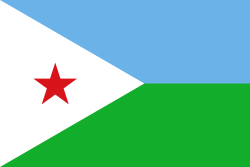
Djibouti's history spans ancient civilizations linked to the Land of Punt, Arab and Ottoman influences, French colonial rule beginning in the 1880s, and independence on June 27, 1977. Strategically located at the Bab-el-Mandeb Strait near the Red Sea, Djibouti has become a vital port and international military base location in the Horn of Africa. More Less
700 AD
% complete
Zeila's two-mihrab Masjid al-Qiblatayn dates to the 7th century and is the oldest mosque in the city, reflecting the early spread of Islam along the Horn of Africa coast.
Image source: Zeila
880
% complete
In the late 9th century, Al-Yaqubi wrote that Muslims were living along the northern Horn seaboard. This suggests that the Adal Sultanate with Zeila as its headquarters dates back to at least the 9th or 10th century.
1285
% complete
Founded in 1285 by the Walashma dynasty, the Ifat Sultanate was centered in Zeila. Its Sultan Umar Walashma (or his son Ali, according to another source) is recorded as having conquered the Sultanate of Shewa in 1285.
1332
% complete
Ifat was finally defeated by Emperor Amda Seyon I of Ethiopia in 1332, and withdrew from Shewa, marking a major shift in power in the Horn of Africa.
Image source: Sultanate of Ifat
1997
% complete
As of 1997, 118 stelae were reported in the area, attesting to the long history of monument-building cultures in the region.
Image source: History of Djibouti
1839 - 1842
% complete
It was Rochet d'Hericourt's exploration into Shoa (1839–42) that marked the beginning of French interest in the Djiboutian coast of the Red Sea.
1862
% complete
Further exploration by Henri Lambert, French Consular Agent at Aden, and Captain Fleuriot de Langle led to a treaty of friendship and assistance between France and the sultans of Raheita, Tadjoura, and Gobaad, from whom the French purchased the anchorage of Obock in 1862.
1869
% complete
Growing French interest in the area took place against a backdrop of British activity in Egypt and the opening of the Suez Canal in 1869, which made the Red Sea coast strategically vital.
Image source: Suez Canal
1883 - 1887
% complete
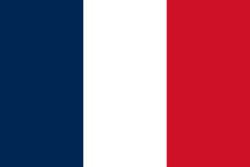
Between 1883 and 1887, France signed various treaties with the then ruling Somali and Afar Sultans, which allowed it to expand the protectorate to include the Gulf of Tadjoura. In the late 19th century, the colony of French Somaliland was established following these treaties.
Apr 14, 1884
% complete
On 14 April 1884 the Commander of the patrol sloop L'Inferent reported on the Egyptian occupation in the Gulf of Tadjoura.
Image source: French Somaliland
1889
% complete
In 1889, a Russian by the name of Nikolay Ivanovitch Achinov (b. 1856) arrived with settlers, infantry and an Orthodox priest to Sagallo on the Gulf of Tadjoura.
Image source: Sagallo
1894
% complete
In 1894, he established a permanent French administration in the city of Djibouti and named the region Côte française des Somalis (French Somaliland), a name which continued until 1967.
1896
% complete
The administrative capital was moved from Obock to the city of Djibouti in 1896, consolidating French control over the colony.
Image source: Obock
1897
% complete
The territory's border with Ethiopia, marked out in 1897 by France and Emperor Menelik II of Ethiopia, was later reaffirmed by agreements with Emperor Haile Selassie I of Ethiopia in 1945 and 1954.
1897 - Jun 1917
% complete
The Franco-Ethiopian railway, linking Djibouti to the heart of Ethiopia, began in 1897 and reached Addis Ababa in June 1917, increasing the volume of trade passing through the port.
Image source: Ethio-Djibouti Railways
Jun 1940
% complete
In June 1940, during the early stages of World War II, France fell and the colony was then ruled by the pro-Axis Vichy (French) government while the Italians occupied some areas of French Somaliland.
Image source: French Somaliland in World War II
Jun 18, 1940
% complete
The Italians did undertake some offensive actions beginning on 18 June 1940, occupying nearly one third of French Somaliland in a few days.
1941
% complete
In 1941, the Italians were defeated and the Vichy forces in French Somaliland were isolated, leaving the colony cut off during the war.
1942
% complete
In 1942, about 4,000 British troops occupied the city of Djibouti, ending the isolation of the former Vichy-held colony.
1944
% complete
A local battalion from French Somaliland participated in the Liberation of Paris in 1944, contributing to the freeing of the French capital from German occupation.
Image source: Liberation of Paris
1958
% complete
In 1958, on the eve of neighboring Somalia's independence in 1960, a referendum was held in Djibouti to decide whether to be an independent country or to remain with France. The referendum rejected independence.
Image source: 1958 French constitutional referendum
1960 - 1966
% complete
In 1960, with the fall of the ruling Dini administration, Ali Aref Bourhan, a Harbist politician, assumed the seat of Vice President of the Government Council of French Somaliland, representing the UNI party. He would hold that position until 1966.
Image source: Ali Aref Bourhan
Mar 19, 1967
% complete
On 19 March 1967, a second plebiscite was held to determine the fate of the territory, again rejecting independence. Shortly after, the former Côte française des Somalis (French Somaliland) was renamed Territoire français des Afars et des Issas.
Image source: 1967 French Somaliland independence referendum
1975
% complete
In 1975 the African People's League for Independence (LPAI) and FLCS met in Kampala, Uganda, and after several meetings they finally opted for the independence path, causing tensions with Somalia.
Mar 24, 1975
% complete
On 24 March 1975 the Front de Libération de la Côte des Somalis kidnapped the French Ambassador to Somalia, Jean Guery, to be exchanged against two activists of FLCS members who were both serving life terms in mainland France.
1976
% complete
In 1976, members of the Front de Libération de la Côte des Somalis, which sought Djibouti's independence from France, clashed with the Gendarmerie Nationale Intervention Group over a bus hijacking en route to Loyada.
Image source: Front for the Liberation of the Somali Coast
May 8, 1977
% complete
A third independence referendum was held in the French Territory of the Afars and the Issas on 8 May 1977. The previous referendums in 1958 and 1967 had rejected independence, but this time voters approved secession from France.
Image source: French Territory of the Afars and the Issas
Jun 27, 1977
% complete
Djibouti gained its independence from France on June 27, 1977, becoming a sovereign nation after nearly a century of colonial rule.
Image source: Djibouti
1981
% complete
In 1981, Aptidon turned the country into a one party state by declaring that his party, the Rassemblement Populaire pour le Progrès (RPP), was the sole legal political organization in the country.
1991 - Dec 1994
% complete
A civil war broke out in 1991 between the government and a predominantly Afar rebel group, the Front for the Restoration of Unity and Democracy (FRUD). The FRUD signed a peace accord with the government in December 1994, ending the conflict.
1999
% complete
Two FRUD members were made cabinet members, and in the presidential elections of 1999 the FRUD campaigned in support of the RPP. That same year, Aptidon resigned as president at the age of 83, after being elected to a fifth term in 1997.
Image source: Hassan Gouled Aptidon
May 12, 2001
% complete
On 12 May 2001, President Ismail Omar Guelleh presided over the signing of what is termed the final peace accord, officially ending the decade-long civil war with the armed FRUD faction led by Ahmed Dini Ahmed. The accord completed the peace process begun on 7 February 2000 in Paris.
Image source: Djiboutian Civil War
Apr 8, 2005
% complete
In the presidential election held 8 April 2005, Ismail Omar Guelleh was re-elected to a second 6-year term at the head of a multi-party coalition that included the FRUD and other major parties.
Image source: 2005 Djiboutian presidential election
Mar 2006
% complete
In March 2006, Djibouti held its first regional elections and began implementing a decentralization plan, devolving some administrative powers away from the central government.
2008
% complete
In the 2008 elections, the opposition Union for a Presidential Majority (UMP) party boycotted the election, leaving all 65 seats to the ruling RPP.
Image source: 2008 Djiboutian parliamentary election
2011
% complete
In 2011, Japan opened a local naval base staffed by 180 personnel to assist in marine defense, making Djibouti a hub for international military presence near the strategic Bab-el-Mandeb strait.
Image source: Japan Self-Defense Force Base Djibouti
2011
% complete
President Ismail Omar Guelleh was re-elected in the 2011 presidential election, extending his rule over the small but strategically important East African nation.
Image source: 2011 Djiboutian presidential election
Apr 2021
% complete
In April 2021, Ismael Guelleh, the second President of Djibouti since independence from France in 1977, was re-elected for his fifth term.
Or browse the full history timeline directory, with more than 2,000 topics.
This History of Djibouti timeline was generated with the help of AI, using information found on the internet.
We work hard to keep these timelines accurate, but mistakes do get through. If you spot one, email us at [email protected] and we'll fix it for future visitors.
Generate yours with AI or build it from scratch, for free.
Export your timeline, add your own events, edit or remove AI-generated events, and much more
No credit card required.
Cancel anytime.
Cancel anytime.
You can create an unlimited number of timelines with up to 10 events on each one, customize how they look, export them to PDF, PNG, PowerPoint, CSV, and Excel, and share them with a link. Paid plans raise the event limit and add features like spreadsheet imports and collaborators.
Yes. You can cancel your subscription from your account page at any time, and you will not be charged again. Your subscription stays active for the rest of the period you already paid for.
Yes. We will email you a reminder before the annual renewal, and we will also email you a receipt.
Yes. You can email us within 15 days of any payment, and we will issue you a full refund.
Check out our pricing docs or send us an email anytime: [email protected].