-
Use Cases
-
Resources
-
Pricing
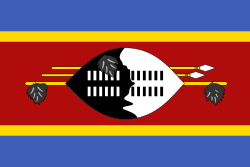
Eswatini (formerly Swaziland) is a small landlocked kingdom in southern Africa. The Swazi nation formed in the early 19th century under King Sobhuza I and was consolidated by King Mswati II. It became a British protectorate in 1906, gained independence on 6 September 1968 under King Sobhuza II, who later abolished the constitution in 1973. Renamed Eswatini in 2018, it remains Africa's last absolute monarchy. More Less
1750
% completado
Nguni-speaking Ngwane clans, led by chiefs from the Dlamini lineage, migrated northward from what is now KwaZulu-Natal, settling in the territory between the Pongola and Lebombo rivers and laying the foundation for the Swazi nation.
Image source: History of Eswatini
1815 - 1836
% completado
Under King Sobhuza I (Somhlolo), the Ngwane people absorbed neighboring clans through diplomacy, marriage alliances, and warfare during the turbulent Mfecane period, forging a unified Swazi kingdom.
1840 - 1868
% completado
King Mswati II greatly expanded the Swazi kingdom through military conquest and diplomacy, and the nation became known as kaNgwane or Swaziland after him. His reign marked the height of precolonial Swazi power.
1868
% completado
The death of Mswati II left a succession crisis and weakened central authority. Successive regencies and disputes over land grants to Europeans opened the door to increasing foreign encroachment on Swazi territory.
1845
% completado
Voortrekker farmers began settling on Swazi lands in the 1840s, leading to growing tensions over land and cattle as Mswati II sought to balance relations with Boers, the British, and the Zulu kingdom.
1880 - 1890
% completado
During the reigns of Mbandzeni and his predecessors, hundreds of land, mineral, and trading concessions were granted to European speculators, effectively alienating vast portions of Swazi territory and resources.
1890
% completado
Britain and the South African Republic established a joint provisional government to administer Swaziland, reflecting competing imperial interests and further eroding Swazi sovereignty over their own affairs.
1894
% completado
A convention transferred full administrative control of Swaziland to the South African Republic (Transvaal), though Swazi kings retained nominal authority; Boer officials increasingly governed local affairs.
Oct 11, 1899
% completado
The outbreak of war between Britain and the Boer republics brought conflict to Swaziland's borders, with Boer commandos operating in the region and Swazis navigating between the warring parties.
Image source: Second Boer War
Dec 1899
% completado
King Bhunu (Ngwane V) died suddenly at age 23, leaving the infant Sobhuza II as heir. Queen Regent Labotsibeni governed ably for decades, defending Swazi interests against colonial pressures.
1902
% completado
Following Britain's victory in the Anglo-Boer War, Swaziland was placed under British administration as a protectorate, beginning six decades of formal colonial rule.
Image source: History of Eswatini
1907
% completado
The 1907 proclamation made Swaziland a British High Commission Territory alongside Basutoland and Bechuanaland. A resident commissioner administered the territory, while about one-third of land was reserved for Swazi occupation.
1921
% completado
Sobhuza II was formally installed as paramount chief, beginning one of the longest reigns of any monarch in history. He would lead Swaziland through colonialism to independence and beyond.
Image source: Sobhuza II
1926
% completado
The Swazi nation's legal challenge to recover two-thirds of its land alienated under concessions failed when the Judicial Committee of the Privy Council ruled against them, deepening grievances over dispossession.
1941
% completado
Through the Proclamation 44 of 1950 and earlier purchases funded by the colonial government and Swazi contributions, significant tracts of land were bought back from European owners and returned to Swazi occupation.
1960 - 1963
% completado
As decolonization swept Africa, Britain introduced constitutional changes including a Legislative Council, prompting the formation of political parties such as the Swaziland Progressive Party and the Ngwane National Liberatory Congress.
1964
% completado
The royalist Imbokodvo National Movement, closely aligned with King Sobhuza II, swept all seats in the first general elections, marginalizing more radical nationalist parties and setting the stage for monarchical independence.
Apr 25, 1967
% completado
Swaziland achieved internal self-government under a new constitution establishing a Westminster-style parliamentary system, with the INM dominating the House of Assembly and preparing for full independence.
Sep 6, 1968
% completado
Swaziland became an independent sovereign state within the Commonwealth on September 6, 1968, retaining the British-style constitution and parliamentary democracy, with King Sobhuza II as head of state.
Apr 12, 1973
% completado
Citing tribalism and divisive party politics, Sobhuza II proclaimed a decree dissolving parliament, banning political parties, and assuming absolute power, restoring traditional Swazi governance structures.
Image source: Eswatini
1978
% completado
A new constitution introduced the Tinkhundla system of governance based on traditional constituencies, creating an elected parliament without political parties while keeping ultimate authority with the king.
Image source: Inkhundla
Aug 21, 1982
% completado
King Sobhuza II died after 82 years on the throne, having reigned longer than any monarch recorded in history. A regency council governed during a succession dispute before young Prince Makhosetive was designated heir.
Apr 25, 1986
% completado
Prince Makhosetive was crowned King Mswati III at age 18, continuing absolute monarchical rule and later consolidating power by reshaping the Liqoqo advisory council.
Image source: Mswati III
1992
% completado
Reforms created the current electoral framework in which voters choose candidates in primary elections, but only non-partisan individuals stand in final elections for the House of Assembly under the Tinkhundla system.
1995 - 1996
% completado
Trade unionists, students, and pro-democracy activists staged widespread strikes and demonstrations demanding multiparty democracy and constitutional reform, met periodically with government crackdowns.
Image source: Politics of Eswatini
1999
% completado
Eswatini emerged with one of the world's highest HIV prevalence rates, with over a quarter of adults infected at the peak, causing a severe demographic and economic toll and spurring major public health campaigns.
Image source: HIV/AIDS in Eswatini
2001 - 2003
% completado
King Mswati III appointed a commission to draft a national constitution amid calls for democratic reform, producing a document that retained royal supremacy while codifying rights and the Tinkhundla system.
Feb 2006
% completado
The Constitution of the Kingdom of Swaziland came into effect, guaranteeing certain civil liberties but maintaining the ban on political parties and the king's absolute authority, disappointing pro-democracy advocates.
Apr 19, 2018
% completado
On the 50th anniversary of independence, King Mswati III announced the country would be known officially as the Kingdom of eSwatini, replacing the colonial-era name Swaziland.
May 21, 2018
% completado
The United Nations officially recognized Eswatini as the country's new name, completing the transition announced by King Mswati III and aligning international usage with the indigenous name meaning 'land of the Swazis'.
Jun 2021 - Jul 2021
% completado
Mass protests demanding democratic reform broke out following alleged police killings of student activists. Security forces responded violently, dozens were killed, and the internet was shut down as unrest shook the kingdom.
Or browse the full history timeline directory, with more than 2,000 topics.
This History of Eswatini timeline was generated with the help of AI, using information found on the internet.
We work hard to keep these timelines accurate, but mistakes do get through. If you spot one, email us at [email protected] and we'll fix it for future visitors.
Generate yours with AI or build it from scratch, for free.
Export your timeline, add your own events, edit or remove AI-generated events, and much more
No credit card required.
Cancel anytime.
Cancel anytime.
You can create an unlimited number of timelines with up to 10 events on each one, customize how they look, export them to PDF, PNG, PowerPoint, CSV, and Excel, and share them with a link. Paid plans raise the event limit and add features like spreadsheet imports and collaborators.
Yes. You can cancel your subscription from your account page at any time, and you will not be charged again. Your subscription stays active for the rest of the period you already paid for.
Yes. We will email you a reminder before the annual renewal, and we will also email you a receipt.
Yes. You can email us within 15 days of any payment, and we will issue you a full refund.
Check out our pricing docs or send us an email anytime: [email protected].