-
Use Cases
-
Resources
-
Pricing
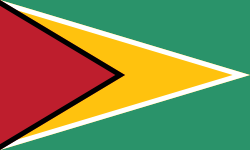
Guyana's history spans thousands of years, beginning with indigenous Arawak and Carib peoples. European colonization began with the Dutch in the 16th-17th centuries, followed by British control in the early 19th century. The country gained independence in 1966 and became a republic in 1970, developing into South America's only English-speaking nation. More Less
1616
% complete
The Dutch West India Company established a trading post on the Essequibo River, founding the colony of Essequibo, the first European settlement in the region that would become Guyana. The colonists developed plantations and traded with indigenous peoples.
Image source: Essequibo (colony)
1627
% complete
Abraham van Peere established the colony of Berbice along the Berbice River under Dutch control. It became a major sugar-producing colony reliant on enslaved African labor.
Image source: Berbice
1745
% complete
The Dutch founded the colony of Demerara, which rapidly grew into the most prosperous of the Guiana colonies thanks to its fertile coastal lands suited for sugar, coffee, and cotton plantations.
Image source: Demerara
Feb 1763 - 1764
% complete
Enslaved Africans led by Cuffy launched a massive uprising in the colony of Berbice, seizing control of much of the territory for nearly a year. Though ultimately suppressed with Dutch reinforcements, it became an iconic symbol of resistance in Guyanese history.
Image source: Berbice Rebellion
1796 - 1803
% complete
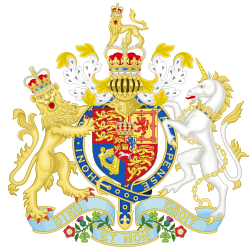
Britain seized the Dutch colonies of Essequibo, Demerara, and Berbice during the French Revolutionary Wars. British control was formalized by treaty in 1814, creating the unified colony of British Guiana in 1831.
Image source: British Guiana
Aug 18, 1823
% complete
More than 10,000 enslaved people rose up on East Coast Demerara plantations demanding freedom. The revolt was brutally suppressed, but reports of the atrocities galvanized the British abolitionist movement.
Image source: Demerara rebellion of 1823
Aug 1, 1834 - 1838
% complete
Slavery was abolished throughout the British Empire under the Slavery Abolition Act. Formerly enslaved people endured an 'apprenticeship' period until full emancipation in 1838, after which many left plantations to found independent villages.
Image source: Slavery Abolition Act 1833
May 5, 1838 - 1917
% complete
Indentured workers from India began arriving to work on sugar plantations after emancipation. Over the following decades, hundreds of thousands came, profoundly shaping Guyana's demographic and cultural makeup alongside Portuguese and Chinese immigrants.
Jan 1, 1950
% complete
Cheddi Jagan, Forbes Burnham, and others founded the PPP, the first mass political party in British Guiana, uniting Indo-Guyanese and Afro-Guyanese workers in the struggle for self-government.
Image source: People's Progressive Party/Civic
Apr 27, 1953
% complete
British Guiana held its first elections under universal adult suffrage. The PPP won decisively, and Cheddi Jagan became chief minister, alarming British authorities with his socialist policies.
Oct 9, 1953
% complete
Just months after the PPP's electoral victory, Britain suspended the constitution and sent troops, citing communist threats. The intervention deepened ethnic and ideological splits within the independence movement.
1957 - 1958
% complete
Forbes Burnham broke from Cheddi Jagan's PPP and formed the People's National Congress. The division largely followed ethnic lines between Afro-Guyanese and Indo-Guyanese communities, shaping decades of competitive politics.
Image source: People's National Congress Reform
Dec 14, 1964
% complete
In elections held under proportional representation, Forbes Burnham formed a coalition government and became premier of British Guiana, beginning his long dominance of Guyanese politics.
Image source: Forbes Burnham
May 26, 1966
% complete
British Guiana became the independent Co-operative Republic-in-waiting of Guyana, with Forbes Burnham as prime minister. Independence ended over 150 years of British colonial rule.
Image source: Guyana
Jan 2, 1969
% complete
Feb 23, 1970
% complete
Guyana cut ties with the British Crown and proclaimed itself the Co-operative Republic of Guyana, embracing a policy of state-led economic development and non-alignment.
Image source: Guyana
Nov 18, 1978
% complete
Over 900 members of the American Peoples Temple cult died in a mass murder-suicide at Jonestown, their commune in northwest Guyana. Congressman Leo Ryan and members of his delegation were killed during a visit preceding the tragedy.
Image source: Jonestown
Oct 6, 1980
% complete
A new constitution made Guyana's head of government an executive president. Burnham assumed the office after elections widely criticized as fraudulent, consolidating PNC rule.
Image source: Politics of Guyana
Aug 6, 1985
% complete
President Forbes Burnham died after heart surgery, ending his 21-year rule. Desmond Hoyte succeeded him and gradually moved Guyana toward economic liberalization and freer elections.
Oct 5, 1992
% complete
International observers oversaw Guyana's first free and fair elections since independence. Cheddi Jagan's PPP defeated the ruling PNC, returning Jagan to power 39 years after he first served as chief minister.
Image source: 1992 Guyanese general election
Mar 6, 1997
% complete
President Cheddi Jagan died while in office. His wife, Janet Jagan, succeeded him and later won the December 1997 election, becoming Guyana's first female president.
Image source: Cheddi Jagan
Dec 19, 2001
% complete
Bharrat Jagdeo won re-election as president, having first assumed office in 1999. His tenure oversaw strong economic growth driven by rice, sugar, gold, and timber exports, though also episodes of civil unrest.
Image source: Bharrat Jagdeo
Jan 26, 2008 - Feb 17, 2008
% complete
A wave of deadly attacks by criminal gangs shocked the nation, killing dozens of civilians in Lusignan, Bartica, and other communities during one of Guyana's most violent periods.
Dec 3, 2011
% complete
Donald Ramotar of the PPP won the presidency in closely contested elections, continuing PPP governance amid growing opposition momentum led by David Granger's coalition.
Image source: Donald Ramotar
May 11, 2015
% complete
David Granger's APNU+AFC coalition narrowly defeated the incumbent PPP, ending 23 years of PPP rule and marking Guyana's first change of governing party through the ballot since 1992.
Image source: 2015 Guyanese general election
May 20, 2015
% complete
ExxonMobil announced a significant oil discovery in the Stabroek Block offshore Guyana, heralding a transformation of the economy into one of the world's fastest-growing oil producers.
Image source: Petroleum industry in Guyana
Dec 21, 2018
% complete
Opposition leader Bharrat Jagdeo's motion passed by a single vote, triggering a prolonged constitutional crisis over elections that lasted until March 2020 polls were finally held.
Dec 2019
% complete
With production from the Liza field beginning in late 2019, Guyana recorded extraordinary GDP growth rates among the highest globally, funding infrastructure while raising debates about the resource curse.
Image source: Economy of Guyana
Aug 2, 2020
% complete
After a five-month recount marred by attempted fraud, Irfaan Ali of the PPP was sworn in as president following certification of the August 2020 election results.
Image source: Irfaan Ali
Or browse the full history timeline directory, with more than 2,000 topics.
This History of Guyana timeline was generated with the help of AI, using information found on the internet.
We work hard to keep these timelines accurate, but mistakes do get through. If you spot one, email us at [email protected] and we'll fix it for future visitors.
Generate yours with AI or build it from scratch, for free.
Export your timeline, add your own events, edit or remove AI-generated events, and much more
No credit card required.
Cancel anytime.
Cancel anytime.
You can create an unlimited number of timelines with up to 10 events on each one, customize how they look, export them to PDF, PNG, PowerPoint, CSV, and Excel, and share them with a link. Paid plans raise the event limit and add features like spreadsheet imports and collaborators.
Yes. You can cancel your subscription from your account page at any time, and you will not be charged again. Your subscription stays active for the rest of the period you already paid for.
Yes. We will email you a reminder before the annual renewal, and we will also email you a receipt.
Yes. You can email us within 15 days of any payment, and we will issue you a full refund.
Check out our pricing docs or send us an email anytime: [email protected].