-
Use Cases
-
Resources
-
Pricing
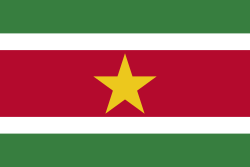
Suriname, located on the northern coast of South America, has a rich and complex history shaped by Indigenous peoples, European colonization, African slavery, and Asian immigration. First inhabited by Arawak, Carib, and Maroon peoples, the region became a contested colonial territory before falling under permanent Dutch control in the late 17th century. The plantation economy built on enslaved African labor defined Suriname for centuries. Following abolition in 1863, indentured laborers from India, Java, and China transformed the nation's demographics. Suriname gained full independence from the Netherlands on November 25, 1975, and today is known for its remarkable cultural diversity, dense rainforests, and multilingual society. More Less
1613
% complete
The first Europeans to come to Suriname were Spanish explorers and Dutch traders visiting South America's 'Wild Coast.' In 1613, a Dutch trading post near the village 'Parmurbo' existed on the Suriname River, while that same year the Spanish took over another Dutch trading post on the Corantijn River.
Image source: History of Suriname
1630
% complete
The first significant attempt to settle the area by Europeans came in 1630, when English settlers led by Captain Marshall attempted to found a colony at what became known as Marshall's Creek.
Image source: Surinam (English colony)
1640
% complete
In 1640, perhaps while the English were still at Marshall's Creek, the French built an outpost near the mouth of the Suriname River, reflecting competing European interests on the Wild Coast.
1650
% complete
In 1650, Lord Willoughby, the governor of Barbados, furnished out a vessel to settle a colony in Suriname. The colony developed sugar plantations worked by enslaved Africans.
Feb 26, 1667
% complete
The settlement was invaded by seven Dutch ships from the Zeeland region, led by Abraham Crijnssen, capturing the English colony and beginning Dutch control of Suriname.
Image source: HNLMS Abraham Crijnssen (1936)
Jul 31, 1667
% complete
On 31 July 1667, the English and Dutch signed the Treaty of Breda, respecting the status quo: the Dutch kept occupying Suriname while the English retained New Netherland, including New Amsterdam (modern-day New York).
Image source: Treaty of Breda (1667)
1674
% complete
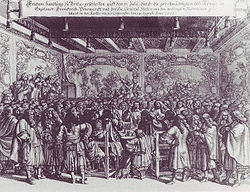
After the English had regained and again lost Suriname in 1667, the arrangement was made official in the Treaty of Westminster of 1674, confirming Suriname as a Dutch possession.
1683
% complete
In 1683 the Society of Suriname was set up, modelled on the ideas of Jean-Baptiste Colbert to profit from the management and defence of the Dutch Republic's colony. Shares were held by the city of Amsterdam, the Van Aerssen family, and the WIC.
Image source: Society of Suriname
1770
% complete
The Van Aerssen family only managed to sell its share in the Society of Suriname in 1770, after decades of financial difficulties associated with their colonial holdings.
1795
% complete
The Society came to an end in 1795 when this kind of trade and business was no longer seen as acceptable, ending its long administration of the colony.
1799
% complete
Suriname was occupied by the British in 1799, after the Netherlands were incorporated by France, beginning a period of British control over the colony.
1816
% complete
Following the British occupation begun in 1799, Suriname was returned to the Dutch in 1816, after the defeat of Napoleon, restoring Dutch colonial rule.
1663
% complete
By 1663, most of the work on the roughly 50 plantations was done by native Indians and about 3,000 African slaves, as the plantation economy expanded under English rule.
1713
% complete
By 1713, most of the work on the 200 plantations was done by approximately 13,000 African slaves, illustrating the dramatic growth of the slave-based plantation economy in Suriname.
1760 - 1790
% complete
In the 18th century, three Maroon peoples signed peace treaties, similar to the treaty ending the First Maroon War in Jamaica, whereby they were recognised as free people and received a yearly tribute providing goods they used to 'liberate' from the plantations.
Image source: Maroons
1861 - 1863
% complete
From 1861 to 1863, President Abraham Lincoln and his administration looked abroad for places to relocate freed slaves who wanted to leave the United States; Suriname was considered as one possible destination.
Image source: Abraham Lincoln
1863
% complete
The Dutch abolished slavery in their colonies only in 1863, although the British had already abolished it during their short rule of Suriname. The freed slaves were still required to continue plantation work on a contract basis until 1873.
Image source: Emancipation Day
1863
% complete
Alongside abolition in 1863, the Dutch government compensated each slave-owner for the loss of the working force of each slave with 300 Dutch guilders, equivalent to several thousand dollars per person today.
1864
% complete
Nothing came of the proposal to relocate freed American slaves to colonies abroad such as Suriname, and after 1864 the plan was dropped.
Image source: American Colonization Society
1873
% complete
The freed slaves, required since 1863 to continue plantation work on contract, were finally released in 1873. Afterwards, most freedmen largely abandoned the plantations where they had worked for generations in favour of the capital city, Paramaribo.
1873 - 1916
% complete
From 1873 to 1916, many labourers were imported from British India to work the plantations, creating the Indo-Surinamese community that would become a major part of Suriname's population.
Image source: Indo-Surinamese
1916
% complete
After 1916, many labourers were again imported from the Dutch East Indies (now Indonesia), especially Java, creating the Javanese Surinamese community.
Image source: Javanese Surinamese
1900
% complete
In the 20th century, the natural resources of Suriname — rubber, gold and bauxite — were exploited, transforming the colony's economy beyond its traditional plantation base.
Image source: Economy of Suriname
Nov 23, 1941
% complete
On 23 November 1941, under an agreement with the Dutch government-in-exile, the United States stationed troops in Suriname to protect the bauxite mines, vital to Allied aluminium production during World War II.
Image source: Suriname during World War II
1949
% complete
In 1949, the first full election was held in Suriname, marking an important step towards greater political participation under Dutch rule.
1954
% complete
In 1954, Suriname gained self-government, with the Netherlands retaining control of defence and foreign affairs, making it a constituent country of the Kingdom of the Netherlands.
Image source: Surinam (Dutch colony)
1973 - Nov 25, 1975
% complete
In 1973, the Dutch government started independence negotiations with the local government, led by the NPS (a largely Creole party), at the request of NPS members. Independence was granted on 25 November 1975.
Image source: Suriname
Nov 25, 1975
% complete
Suriname gained independence from the Netherlands on 25 November 1975. The Dutch instituted an aid programme worth US$1.5 billion to last until 1985 to support the new nation.
1980
% complete
In 1980, the government of Henck Arron was overthrown in a military coup led by Sergeant-Major Dési Bouterse, beginning a period of military rule in Suriname.
Image source: 1980 Surinamese coup d'état
Dec 8, 1982
% complete
Relations between Suriname and the Netherlands collapsed when 15 members of the political opposition were killed by the army on 8 December 1982, in Fort Zeelandia. The Dutch suspended aid in response.
1985
% complete
In 1985, the ban on opposition parties was lifted, and work began on devising a new constitution as Suriname moved back toward civilian rule.
1987
% complete
In 1987, Suriname got a new civilian constitution, and the next year Ramsewak Shankar was elected as president, restoring democratic governance.
Image source: Ramsewak Shankar
1990
% complete
President Ramsewak Shankar was ousted in a military coup organised by Dési Bouterse in 1990, interrupting Suriname's return to democracy.
1991
% complete
In 1991, the opposition New Front for Democracy and Development won a majority in parliamentary elections, returning Suriname to democratic civilian rule.
Aug 1992
% complete
The Surinamese civil war ended after a peace agreement between the government of Suriname and the Surinamese Liberation Army (SLA), commonly known as the Jungle Commando, led by Ronnie Brunswijk, reached in August 1992.
Image source: Surinamese Civil War
1996 - 2000
% complete
In 1996, Jules Wijdenbosch, an ally of Dési Bouterse, was elected as new president, serving until 2000 amid economic difficulties.
Image source: Jules Wijdenbosch
1999
% complete
Before his later conviction for the December murders, Dési Bouterse was convicted in absentia of drug trafficking by a court in the Netherlands in 1999.
Image source: Dési Bouterse
2000
% complete
In 2000, Ronald Venetiaan became president again after winning early elections called following the fall of the Wijdenbosch government.
Image source: Ronald Venetiaan
2005
% complete
In 2005, Venetiaan was re-elected, and his New Front coalition narrowly won the parliamentary election, continuing his presidency into a third term.
Jul 2010
% complete
In July 2010, the parliament elected Dési Bouterse as the new president, marking his return to power through democratic elections three decades after his coups.
2015
% complete
In 2015, Bouterse's National Democratic Party (NDP) narrowly won the parliamentary election, giving him a second five-year period in power.
Image source: National Democratic Party (Suriname)
2019
% complete
In 2019, Bouterse was sentenced to 20 years in prison over the execution of 15 political opponents in the December 1982 killings at Fort Zeelandia.
Image source: December murders
2020
% complete
In 2020, the COVID-19 crisis began in Suriname and oil prices fell, severely straining the country's struggling economy and public finances.
Image source: COVID-19 pandemic in Suriname
May 25, 2020
% complete
On 25 May 2020, a general election took place in Suriname, resulting in the defeat of Bouterse's NDP and setting the stage for a change of leadership.
Image source: 2020 Surinamese general election
Jul 2020
% complete
In July 2020, Chandrikapersad 'Chan' Santokhi (PRP) was elected as the new president, replacing Dési Bouterse and promising to fight corruption and restore the economy.
Image source: Chan Santokhi
Feb 2023
% complete
In February 2023, protests against rising living costs occurred in the capital Paramaribo, driven by economic hardship, inflation and austerity measures.
Dec 2024
% complete
In December 2024, Desi Bouterse, Suriname's fugitive former president who had been sentenced for the 1982 December murders, died whilst in hiding.
Jul 6, 2025
% complete
On 6 July 2025, Jennifer Geerlings-Simons of the National Democratic Party (NDP) was elected as Suriname's first female president by the parliament, a historic milestone for the nation.
Image source: Jennifer Geerlings-Simons
Or browse the full history timeline directory, with more than 2,000 topics.
This History of Suriname timeline was generated with the help of AI, using information found on the internet.
We work hard to keep these timelines accurate, but mistakes do get through. If you spot one, email us at [email protected] and we'll fix it for future visitors.
Generate yours with AI or build it from scratch, for free.
Export your timeline, add your own events, edit or remove AI-generated events, and much more
No credit card required.
Cancel anytime.
Cancel anytime.
You can create an unlimited number of timelines with up to 10 events on each one, customize how they look, export them to PDF, PNG, PowerPoint, CSV, and Excel, and share them with a link. Paid plans raise the event limit and add features like spreadsheet imports and collaborators.
Yes. You can cancel your subscription from your account page at any time, and you will not be charged again. Your subscription stays active for the rest of the period you already paid for.
Yes. We will email you a reminder before the annual renewal, and we will also email you a receipt.
Yes. You can email us within 15 days of any payment, and we will issue you a full refund.
Check out our pricing docs or send us an email anytime: [email protected].