-
Use Cases
-
Resources
-
Pricing
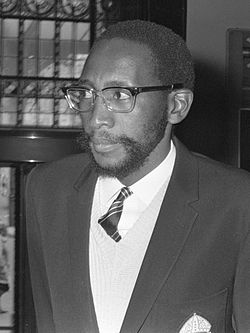
The history of Lesotho traces the emergence of the Basotho people, unified by King Moshoeshoe I in the early 1800s amid regional upheaval. The kingdom survived conflicts with neighboring peoples and Boer expansion, becoming a British protectorate known as Basutoland in 1868. Lesotho gained full independence in 1966 as a constitutional monarchy, later experiencing political instability, military rule, and democratic reforms while remaining one of Africa's few mountain kingdoms entirely surrounded by South Africa. More Less
1800 - 1825
% complete
There were several severe disruptions to the Basotho people in the early 19th century, including upheavals associated with famine and the expansionist campaigns of neighboring powers.
Image source: History of Lesotho
1818
% complete
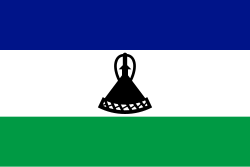
In 1818, Moshoeshoe I consolidated various Basotho groupings and became their king, laying the foundation for the emergence of a unified Basotho polity.
Image source: Moshoeshoe I
1818 - 1828
% complete
Under Moshoeshoe I, the Basotho joined other clans in their struggle against the Lifaqane, a period of widespread conflict and famine associated with the reign of Shaka Zulu from 1818 to 1828.
Image source: Mfecane
1822
% complete
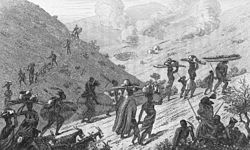
Present Lesotho, then called Basotholand, emerged as a single polity under King Moshoeshoe I in 1822, uniting scattered Basotho clans under his leadership.
1837 - 1855
% complete
Missionaries invited by Moshoeshoe I developed an orthography and printed works in the Sesotho language between 1837 and 1855, preserving the language in written form.
Image source: Sotho language
1870
% complete
Moshoeshoe I died in 1870 and was buried atop Thaba Bosiu, leaving behind a legacy as the founder of the Basotho nation.
1843
% complete
A treaty was signed with the Boers of Griqualand in 1843 as Moshoeshoe sought to manage relations with settler communities encroaching on Basotho lands.
1853
% complete
An agreement was made with the British in 1853 following a minor war, temporarily easing tensions over territory and influence in the region.
1856 - 1868
% complete
During Moshoeshoe's reign (1823–1870), a series of wars were fought from 1856 to 1868 with the Boers who had settled in traditional Basotho lands.
Image source: Free State–Basotho Wars
1858
% complete
Disputes with the Boers over land were revived in 1858 with Senekal's War, one of several armed conflicts between the Basotho and the Orange Free State.
1865
% complete
The disputes with the Boers escalated more seriously in 1865 with the Seqiti War, which saw heavy fighting over Basotho territory and resources.
1865
% complete
Further conflict led to an unsuccessful Boer attack on the mountain stronghold of Thaba Bosiu and the death of Boer commandant Louw Wepener during the assault.
Image source: Louw Wepener
1867
% complete
By 1867, much of Moshoeshoe's land and most of his fortresses had been taken by Boer forces, prompting him to appeal to Britain for protection.
Mar 12, 1868
% complete
On March 12, 1868, the British Cabinet agreed to place the territory under British protection following Moshoeshoe's appeal to Queen Victoria, and the Boers were ordered to leave.
Image source: Basutoland
Feb 1869
% complete
In February 1869, the British and the Boers agreed to the Convention of Aliwal North, defining the boundaries of the protectorate. By ceding western territories it effectively reduced Moshoeshoe's kingdom to half its previous size.
Image source: Sotho people
1871
% complete
In 1871 the protectorate was annexed to the Cape Colony, beginning a period of administration from Cape Town that would prove contentious.
1875 - 1904
% complete
The population of Basutoland grew from around 125,000 in 1875, to 310,000 in 1901, and 349,000 by 1904, reflecting natural increase despite political turmoil.
Image source: Demographics of Lesotho
1878
% complete
The British extended the Cape Peace Preservation Act of 1878 to cover Basutoland and attempted to disarm the natives, provoking widespread anger among the Basotho.
Image source: Basuto Gun War
1879
% complete
The Basotho resisted British rule, and in 1879 a southern chief, Moorosi, rose in revolt against colonial authority.
1880 - 1881
% complete
Much of the colony rose in revolt in the Gun War (1880-1881), inflicting significant casualties upon the colonial British forces sent to subdue it. A peace treaty of 1881 failed to quell sporadic fighting.
1884
% complete
Cape Town's inability to control the territory led to its return to crown control in 1884 as the Territory of Basutoland, administered directly by the British government.
1910
% complete
When the Union of South Africa was founded in 1910, Basutoland was still controlled by the British, and moves were made to transfer it to the Union.
Image source: Union of South Africa
1916
% complete
In 1916, Basutoland raised over £40,000 for the Allied war effort during the First World War.
Image source: Basutoland
Jul 1941 - Oct 1941
% complete
Mobilization for the African Auxiliary Pioneer Corps (AAPC) was launched in late July 1941, and by October 18,000 personnel had arrived in the Middle East to serve in World War II.
Image source: African Auxiliary Pioneer Corps
May 1, 1943
% complete
On May 1, 1943, the British troopship SS Erinpura was torpedoed and sunk, resulting in the loss of 694 men from AAPC's 1919th and 1927th Basuto Companies — the unit's worst loss of life during the war.
Image source: Erinpura
1948
% complete
From 1948, the South African National Party put its apartheid policies into place, indirectly terminating any support among Basutos or UK colonial authorities for incorporating the country into South Africa.
Image source: Apartheid
1959
% complete
After a 1955 request by the Basutoland Council to legislate its internal affairs, a new constitution in 1959 gave Basutoland its first elected legislature.
Apr 1965
% complete
In April 1965, general legislative elections with universal adult suffrage were held; the Basotho National Party (BNP) won 31 seats and the Basutoland Congress Party (BCP) won 25 of the 65 seats contested.
Oct 4, 1966
% complete
On October 4, 1966, the Kingdom of Lesotho attained full independence, governed by a constitutional monarchy with a bicameral Parliament consisting of a Senate and an elected National Assembly.
Jan 1970
% complete
Early results of the first post-independence elections in January 1970 indicated that the BNP might lose control, leading the ruling party to suspend the constitution and annul the results rather than cede power.
1973
% complete
In 1973, an appointed Interim National Assembly was established in an effort to stabilize governance after the suspended elections.
Jan 1986
% complete
Internal and external opposition combined to produce violence that led to a January 1986 military coup, forcing the BNP out of office after the BCP began an insurrection. A Military Council decree transferred executive and legislative powers to the King acting on the Council's advice.
Image source: 1986 Lesotho coup d'état
Feb 1990
% complete
In February 1990, King Moshoeshoe II was stripped of his executive and legislative powers and exiled by Lekhanya, who also purged the Council of Ministers.
1991
% complete
Before the planned transition to civilian rule, Lekhanya announced a National Constituent Assembly to restore democracy by June 1992, but he was ousted in 1991 by a mutiny of junior army officers, leaving Phisoane Ramaema as Chairman of the Military Council.
1993
% complete
In 1993, a new constitution was implemented, leaving the King without any executive authority and proscribing him from engaging in political affairs.
Jan 1994 - Mar 1994
% complete
In early 1994, political instability increased as first the army, followed by the police and prison services, engaged in mutinies.
Aug 1994
% complete
Conditions remained tumultuous, including an August 1994 self-coup by King Letsie III, who in collaboration with some members of the military staged a coup, suspended Parliament, and appointed a ruling council.
Image source: Letsie III
1995
% complete
Moshoeshoe II returned to Lesotho in 1992 as a regular citizen, until 1995 when King Letsie abdicated the throne in favor of his father.
Image source: Moshoeshoe II of Lesotho
May 1995
% complete
In 1995, there were isolated incidents of unrest, including a police strike in May to demand higher wages, though no serious challenges arose to Lesotho's constitutional order in 1995–96.
1996
% complete
After Moshoeshoe II died in a car accident in 1996, King Letsie III ascended to the throne again.
Jan 1997
% complete
In January 1997, armed soldiers put down a violent police mutiny and arrested the mutineers, restoring order within the security services.
1997
% complete
In 1997, tension within the BCP leadership caused a split in which Dr. Ntsu Mokhehle formed a new party, reshaping the country's political landscape ahead of upcoming elections.
Image source: Basutoland Congress Party
May 1998
% complete
Multiparty elections were again held in May 1998, and the Lesotho Congress for Democracy came to power in elections that were deemed fair by international observers, though opposition parties disputed the results.
Image source: 1998 Lesotho general election
Aug 1998
% complete
The protests culminated in a violent demonstration outside the royal palace in early August 1998 and an unprecedented level of violence, looting, casualties, and destruction of property in the capital.
Sep 22, 1998
% complete
A joint force consisting of South African and later Botswana troops entered Lesotho on September 22, 1998, to put down the mutiny and restore the democratically elected government.
Dec 1998
% complete
An Interim Political Authority (IPA), charged with reviewing the electoral structure, was created in December 1998 and devised a proportional electoral system to ensure opposition representation in the National Assembly.
May 1999
% complete
After stability returned to Lesotho, the SADC task force withdrew in May 1999, leaving only a small force, later joined by Zimbabwean troops, to provide training to the Lesotho Defence Force.
May 2002
% complete
Elections were held under the new proportional system in May 2002, and the Lesotho Congress for Democracy won again, gaining 54% of the vote.
Jun 2014
% complete
In June 2014, Prime Minister Thomas Thabane suspended parliament because of conflict within his coalition, leading to criticisms that he was undermining the government.
Image source: Tom Thabane
May 19, 2020
% complete
On May 19, 2020, Thomas Thabane formally stepped down as prime minister of Lesotho following months of pressure after he was named as a suspect in the murder of his ex-wife.
Jun 2022
% complete
In June 2022, in protests against neoliberal and fiscal austerity policies promoting cuts in public education resources, Lesotho students were killed on the campus of the National University of Lesotho in repression carried out by the Lesotho Mounted Police Service.
Image source: National University of Lesotho
Oct 28, 2022
% complete
On October 28, 2022, Sam Matekane was sworn in as Lesotho's new prime minister after forming a new coalition government following elections that year.
Image source: Sam Matekane
Or browse the full history timeline directory, with more than 2,000 topics.
This History of Lesotho timeline was generated with the help of AI, using information found on the internet.
We work hard to keep these timelines accurate, but mistakes do get through. If you spot one, email us at [email protected] and we'll fix it for future visitors.
Generate yours with AI or build it from scratch, for free.
Export your timeline, add your own events, edit or remove AI-generated events, and much more
No credit card required.
Cancel anytime.
Cancel anytime.
You can create an unlimited number of timelines with up to 10 events on each one, customize how they look, export them to PDF, PNG, PowerPoint, CSV, and Excel, and share them with a link. Paid plans raise the event limit and add features like spreadsheet imports and collaborators.
Yes. You can cancel your subscription from your account page at any time, and you will not be charged again. Your subscription stays active for the rest of the period you already paid for.
Yes. We will email you a reminder before the annual renewal, and we will also email you a receipt.
Yes. You can email us within 15 days of any payment, and we will issue you a full refund.
Check out our pricing docs or send us an email anytime: [email protected].