-
Use Cases
-
Resources
-
Pricing
The history of entomology traces humanity's study of insects from ancient civilizations' practical observations of pests and pollinators to the establishment of entomology as a formal scientific discipline. Key milestones include early naturalists like Jan Swammerdam and Maria Sibylla Merian, the founding of entomological societies in the 19th century, the development of insect taxonomy and classification, and modern advances in genetics, pest control, and insect conservation. More Less
77 AD
% complete
Pliny the Elder's encyclopedic Natural History included extensive accounts of insects, mixing accurate observation with folklore. It remained a major reference on insects throughout the Middle Ages.
Image source: Natural History (Pliny)
1634
% complete
English physician Thomas Mouffet published Theatrum Insectorum, one of the first comprehensive works devoted entirely to insects, describing many species with illustrations and helping establish entomology as a distinct field.
Image source: Thomas Muffet
1669
% complete
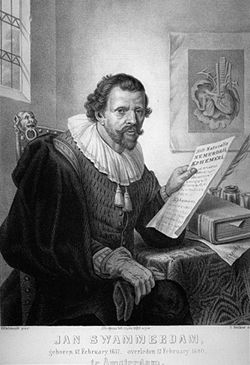
Dutch naturalist Jan Swammerdam used dissection and microscopy to show that insect development was a process of gradual growth rather than spontaneous transformation, refuting ideas of spontaneous generation in insects.
Image source: Jan Swammerdam
1669
% complete
Marcello Malpighi's pioneering microscopy revealed detailed insect internal anatomy, including the excretory structures now called Malpighian tubules, founding the study of insect physiology.
Image source: Marcello Malpighi
1705
% complete
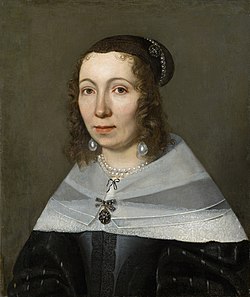
Maria Sibylla Merian traveled to Suriname and published stunning illustrations documenting insect metamorphosis and host plants, combining artistic skill with careful ecological observation.
Image source: Maria Sibylla Merian
1734 - 1742
% complete
French scientist René Réaumur published six volumes of Mémoires pour servir à l'histoire des insectes, a landmark observational work covering insect behavior, life cycles, and natural history.
Image source: René Antoine Ferchault de Réaumur
1815 - 1826
% complete
William Kirby and William Spence's four-volume Introduction to Entomology was the first major English-language treatise on the subject and inspired generations of British entomologists.
Image source: William Kirby (entomologist)
1879 - 1907
% complete
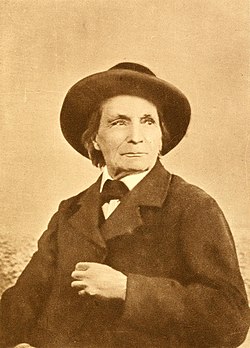
Jean-Henri Fabre's ten-volume series of essays on insect behavior in southern France captivated readers with vivid accounts of hunting wasps, dung beetles, and other insects, popularizing ethology.
Image source: Jean-Henri Fabre
1758
% complete
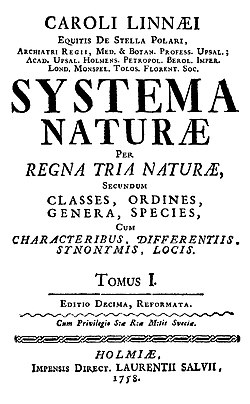
Carl Linnaeus's tenth edition of Systema Naturae applied his system of binomial nomenclature to insects, providing a standardized framework for naming and classifying species that transformed entomology.
Image source: Systema Naturae
1775
% complete
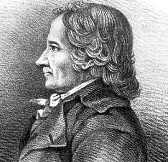
Fabricius, a student of Linnaeus, classified insects primarily by mouthpart structure rather than wing characters, publishing Systema Entomologiae and describing thousands of new species.
Image source: Johan Christian Fabricius
1796
% complete
Latreille, often called the father of entomology, developed a natural classification of arthropods, establishing many orders and families still recognized today.
Image source: Pierre André Latreille
1824 - 1840
% complete
John Curtis produced British Entomology, an illustrated sixteen-volume work depicting thousands of British insect species with remarkable plates, a milestone in faunistic entomology.
1833
% complete
Founded as the Entomological Society of London, later becoming the Royal Entomological Society, it became one of the world's leading organizations for advancing insect science through publications and meetings.
Image source: Royal Entomological Society
1859
% complete
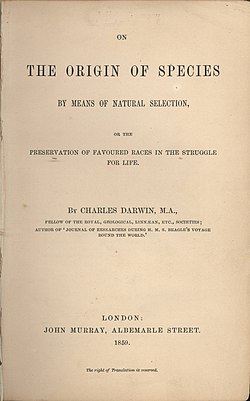
Darwin's theory of evolution by natural selection gave entomologists a powerful explanatory framework, influencing studies of insect adaptation, coevolution with plants, mimicry, and speciation.
Image source: On the Origin of Species
1862
% complete
Henry Walter Bates documented Batesian mimicry among Amazonian butterflies, where palatable species resemble unpalatable ones, providing early support for Darwinian natural selection.
Image source: Batesian mimicry
1878
% complete
Fritz Müller described how unpalatable butterfly species converge on shared warning patterns, so predators need only learn one signal, another classic example of evolution in action from insects.
Image source: Müllerian mimicry
1910 - 1919
% complete
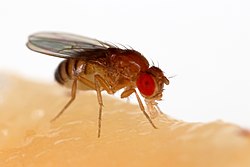
Beginning with Thomas Hunt Morgan's fly room at Columbia University, Drosophila genetics revolutionized biology, revealing principles of heredity, development, and behavior shared across animals.
Image source: Drosophila melanogaster
1940 - 1967
% complete
Karl von Frisch showed that honeybees communicate the direction and distance of food sources through their waggle dance, work honored with the 1973 Nobel Prize shared with Lorenz and Tinbergen.
Image source: Waggle dance
1959
% complete
Adolf Butenandt identified bombykol, the sex pheromone of the silkworm moth, opening the field of chemical ecology and leading to pheromone-based pest control methods such as mating disruption.
Image source: Pheromone
2000
% complete
Scientists published a nearly complete sequence of the fruit fly genome, providing a foundational reference for comparative genomics and functional studies of insect genes.
2006
% complete
The sequencing of the Apis mellifera genome advanced research on bee sociality, immunity, and pollination, aiding efforts to understand colony collapse disorder and protect pollinator populations.
Image source: Western honey bee
2015
% complete
Researchers used CRISPR-Cas9 to engineer gene drives in Anopheles mosquitoes, offering potential strategies to suppress malaria transmission and demonstrating a new frontier in applied entomology.
Image source: Gene drive
1854
% complete
New York appointed Asa Fitch as its state entomologist, the first such position in the United States, marking the beginning of official government entomology and pest management in America.
Image source: Asa Fitch
1888 - 1889
% complete
Charles Valentine Riley imported the vedalia ladybird beetle to California to combat the cottony cushion scale, achieving spectacular success and establishing biological control as a practical pest management strategy.
Image source: Novius cardinalis
1889
% complete
Economic entomologists organized to address agricultural pest problems; this association later merged into the Entomological Society of America in 1953, professionalizing applied insect science.
1897
% complete
Working in India, Ronald Ross demonstrated that malaria parasites develop in Anopheles mosquitoes, proving insect vector transmission and earning him the Nobel Prize in 1902.
Image source: Ronald Ross
1900 - 1901
% complete
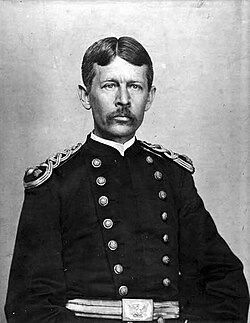
The Walter Reed Commission in Cuba confirmed Carlos Finlay's hypothesis that Aedes aegypti mosquitoes carry yellow fever, enabling mosquito control campaigns that protected workers building the Panama Canal.
Image source: Walter Reed
1939
% complete
Paul Hermann Müller demonstrated DDT's potent insecticidal properties, leading to widespread use against disease vectors and crop pests during World War II and after, for which he won the 1948 Nobel Prize.
Image source: DDT
1962
% complete
Rachel Carson's Silent Spring exposed the ecological damage caused by indiscriminate pesticide use, especially effects on birds and beneficial insects, launching the modern environmental movement and integrated pest management approaches.
Image source: Silent Spring
1972
% complete
Following growing concerns over pesticide resistance and environmental harm, integrated pest management combined biological, cultural, and chemical tactics, becoming the dominant paradigm in sustainable pest control.
Image source: Integrated pest management
Or browse the full history timeline directory, with more than 2,000 topics.
This History of Entomology timeline was generated with the help of AI, using information found on the internet.
We work hard to keep these timelines accurate, but mistakes do get through. If you spot one, email us at [email protected] and we'll fix it for future visitors.
Generate yours with AI or build it from scratch, for free.
Export your timeline, add your own events, edit or remove AI-generated events, and much more
No credit card required.
Cancel anytime.
Cancel anytime.
You can create an unlimited number of timelines with up to 10 events on each one, customize how they look, export them to PDF, PNG, PowerPoint, CSV, and Excel, and share them with a link. Paid plans raise the event limit and add features like spreadsheet imports and collaborators.
Yes. You can cancel your subscription from your account page at any time, and you will not be charged again. Your subscription stays active for the rest of the period you already paid for.
Yes. We will email you a reminder before the annual renewal, and we will also email you a receipt.
Yes. You can email us within 15 days of any payment, and we will issue you a full refund.
Check out our pricing docs or send us an email anytime: [email protected].