-
Use Cases
-
Resources
-
Pricing
1823 - 1899
% complete
Pavlov's father, Peter Dmitrievich Pavlov (1823–1899), was a village Russian Orthodox priest, a background that shaped the young Ivan's early upbringing in Ryazan.
Image source: Ivan Pavlov
1826 - 1890
% complete
Pavlov's mother, Varvara Ivanovna Uspenskaya (1826–1890), was a homemaker who cared for the large family of ten children in Ryazan.
Sep 26, 1849
% complete
Ivan Pavlov was born on 26 September 1849 in Ryazan, Russia, the first of ten children. He would go on to become a Russian and Soviet experimental neurologist and physiologist known for his discovery of classical conditioning through his experiments with dogs.
1870
% complete
In 1870, Pavlov enrolled in the physics and mathematics department at the University of Saint Petersburg to study natural science, beginning his formal scientific education.
Image source: Saint Petersburg State University
1875
% complete
In 1875, Pavlov received the degree of Candidate of Natural Sciences, completing his initial course of study at the University of Saint Petersburg.
1879
% complete
In 1879, Pavlov graduated from the Medical Military Academy with a gold medal for his research work, recognizing the excellence of his scientific investigations.
Image source: S. M. Kirov Military Medical Academy
1878
% complete
In 1878, Professor Sergey Botkin, a clinician, invited Pavlov to work in the physiological laboratory as the clinic's chief, an important early step in his research career.
Image source: Sergey Botkin
1883
% complete
In 1883, Pavlov presented his doctor's thesis on the subject of The centrifugal nerves of the heart, positing the idea of nerves and the basic principles of the trophic function of the nervous system.
1884 - 1886
% complete
Pavlov remained abroad for advanced scientific work from 1884 to 1886, further developing his expertise in physiology before returning to Russia.
1886
% complete
In 1886, Pavlov returned to Russia to look for a new position, seeking an institutional home for his growing physiological research program.
1890 - 1895
% complete
In 1890, Pavlov was appointed professor of Pharmacology at the Military Medical Academy and occupied the position for five years, until taking up the chair of physiology there in 1895.
1891
% complete
In 1891, Pavlov was invited to the Institute of Experimental Medicine in St. Petersburg, where he would establish and direct the Department of Physiology for decades.
1895
% complete
In 1895, Pavlov took up the chair of physiology at the Medical Military Academy while continuing to direct the Department of Physiology at the Institute of Experimental Medicine.
1897
% complete
After 12 years of research, Pavlov published The Work of the Digestive Glands in 1897, summarizing his experiments on digestion and the gastric function of dogs that earned him international acclaim.
Image source: Human digestive system
1901
% complete
The concept for which Pavlov is best known is the 'conditioned reflex', which he developed jointly with his assistant Ivan Tolochinov in 1901. Edwin B. Twitmyer at the University of Pennsylvania published similar research in 1902, a year before Pavlov published his.
Image source: Classical conditioning
1903
% complete
Tolochinov, whose own term for the phenomenon had been 'reflex at a distance', communicated the results at the Congress of Natural Sciences in Helsinki in 1903, spreading word of the conditioned reflex discovery.
1921
% complete
A 1921 article by Sergius Morgulis in the journal Science reported the effects of the Allied blockade on Russian scientists' access to scientific literature and resources, highlighting the difficult conditions facing Pavlov and colleagues.
May 1, 1881
% complete
Pavlov married Seraphima Vasilievna Karchevskaya on 1 May 1881. Sara, born in 1855, had met Pavlov in 1878 or 1879 when she went to St. Petersburg. In her later years she suffered from ill health and died in 1947.
1923
% complete
In 1923, Pavlov stated that he would not sacrifice even the hind leg of a frog to the type of social experiment that the Communist regime was conducting in Russia, voicing his opposition to Soviet policies.
1934
% complete
After the murder of Sergei Kirov in 1934, Pavlov wrote several letters to Vyacheslav Molotov criticizing the mass persecutions that followed, asking for reconsideration of cases pertaining to several people he knew personally.
Image source: Vyacheslav Molotov
1935
% complete
Their youngest son, Vsevolod, died of pancreatic cancer in 1935, only one year before his father's own death, a heavy personal blow to Pavlov.
1935
% complete
In 1935, a few months before his death, Pavlov read a draft of the 1936 'Stalin Constitution' and expressed his pleasure at the apparent dawn of a more free and democratic Soviet Union.
Image source: 1936 Constitution of the Soviet Union
1901 - 1904
% complete
Starting in 1901, Pavlov was nominated over four successive years for the Nobel Prize in Physiology or Medicine. He did not win until 1904 because earlier nominations were not specific to any single discovery but based on a variety of laboratory findings.
1904
% complete
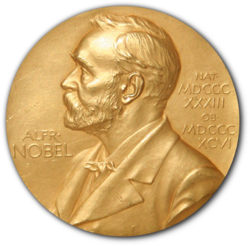
Pavlov was awarded the Nobel Prize in Physiology or Medicine in 1904 for his significant research on the physiology of digestion, becoming the first Russian Nobel laureate.
Image source: Nobel Prize in Physiology or Medicine
1907
% complete
In 1907, Pavlov was elected a Foreign Member of the Royal Society (ForMemRS). The same year he also became a foreign member of the Royal Netherlands Academy of Arts and Sciences.
Image source: Royal Society
1908
% complete
In 1908, Pavlov was elected an International Member of the United States National Academy of Sciences, further cementing his international scientific reputation.
Image source: National Academy of Sciences
1915
% complete
In 1915, Pavlov was awarded the Royal Society's Copley Medal, one of the most prestigious awards in science, honoring his contributions to physiology.
Image source: Copley Medal
1932
% complete
In 1932, Pavlov was elected an International Member of the American Philosophical Society, adding to his long list of international honors.
Image source: American Philosophical Society
1925
% complete
The Pavlov Institute of Physiology of the Russian Academy of Sciences was founded by Pavlov in 1925 and named after him following his death, ensuring the continuation of his research tradition.
1932
% complete
Pavlovian conditioning is a major theme in Aldous Huxley's dystopian novel Brave New World (1932) and later in Thomas Pynchon's Gravity's Rainbow (1973), demonstrating the cultural reach of Pavlov's ideas.
Image source: Brave New World
Feb 27, 1936
% complete
Pavlov died on 27 February 1936 of double pneumonia at the age of 86. His regular meetings, which lasted until his death, marked the end of a remarkable scientific career spanning more than half a century.
2002
% complete
A survey in the Review of General Psychology, published in 2002, ranked Pavlov as the 24th most cited psychologist of the 20th century, reflecting his enduring influence on psychology.
Image source: Review of General Psychology
2002
% complete
The asteroid 1007 Pawlowia and the lunar crater Pavlov were named after him, commemorating his scientific legacy in astronomy and space nomenclature.
Or browse the full history timeline directory, with more than 2,000 topics.
This Ivan Pavlov timeline was generated with the help of AI, using information found on the internet.
We work hard to keep these timelines accurate, but mistakes do get through. If you spot one, email us at [email protected] and we'll fix it for future visitors.
Generate yours with AI or build it from scratch, for free.
Export your timeline, add your own events, edit or remove AI-generated events, and much more
No credit card required.
Cancel anytime.
Cancel anytime.
You can create an unlimited number of timelines with up to 10 events on each one, customize how they look, export them to PDF, PNG, PowerPoint, CSV, and Excel, and share them with a link. Paid plans raise the event limit and add features like spreadsheet imports and collaborators.
Yes. You can cancel your subscription from your account page at any time, and you will not be charged again. Your subscription stays active for the rest of the period you already paid for.
Yes. We will email you a reminder before the annual renewal, and we will also email you a receipt.
Yes. You can email us within 15 days of any payment, and we will issue you a full refund.
Check out our pricing docs or send us an email anytime: [email protected].