-
Use Cases
-
Resources
-
Pricing
The history of microbiology traces humanity's discovery and understanding of microorganisms, beginning with early microscopic observations in the 17th century, advancing through the germ theory of disease, the golden age of bacteriology, the development of antibiotics and vaccines, and continuing into modern genomics and biotechnology. More Less
599 BC
% complete
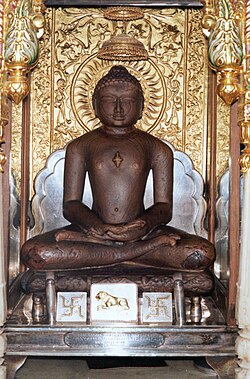
The existence of unseen microbiological life was postulated by Jainism, which is based on the teachings of Mahavira, as early as the 6th century BCE. This ancient Indian religion proposed that tiny, invisible organisms pervade the world, a remarkably prescient idea many centuries before microorganisms were actually observed.
Image source: Microbiology
599 BC - 527 BC
% complete
During his lifetime from 599 BC to 527 BC, Mahavira taught that beings invisible to the naked eye exist in air, water, and earth. These teachings formed the basis of the Jain assertion that microscopic life exists, making it one of the earliest recorded hypotheses about microorganisms.
Image source: Mahavira
37 BCE
% complete
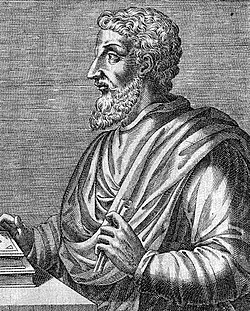
In ancient Rome, Marcus Terentius Varro predicted the existence of microorganisms, warning that minute creatures invisible to the eye could inhabit the air and cause disease. His writings represent one of the earliest Western speculations about unseen microbial life, long before microscopes made such organisms visible.
Image source: Marcus Terentius Varro
1546
% complete
In 1546, Girolamo Fracastoro proposed that epidemic diseases were caused by transferable seedlike entities that could transmit infection by direct or indirect contact, or by vehicle transmission. This early theory of contagion anticipated the germ theory of disease by more than three centuries.
Image source: Girolamo Fracastoro
1646
% complete
Athanasius Kircher wrote 'Concerning the wonderful structure of things in nature, investigated by Microscope' in 1646, stating 'who would believe that vinegar and milk abound with an innumerable multitude of worms.' He also noted that putrid material is full of innumerable creeping animalcules, providing early written testimony of microbial observations.
Image source: Athanasius Kircher
1658
% complete
Kircher published his Scrutinium Pestis (Examination of the Plague) in 1658, stating correctly that the disease was caused by microbes, though what he saw was most likely red or white blood cells rather than the plague agent itself. The work was an early attempt to link microorganisms to infectious disease.
1658
% complete
The Jesuit priest Athanasius Kircher was likely the first to see microbes, which he mentioned observing in milk and putrid material in 1658. While the identity of what he saw remains uncertain, his accounts predate the celebrated observations of van Leeuwenhoek by nearly two decades.
1665
% complete
While Van Leeuwenhoek is often cited as the first to observe microbes, Robert Hooke made his first recorded microscopic observation, of the fruiting bodies of moulds, in 1665. Using his compound microscope, Hooke documented the structures of fungi, contributing foundational observations to early microbiology.
Image source: Robert Hooke
1666
% complete
The first recorded microscope observation was of the fruiting bodies of moulds, by Robert Hooke in 1666. Building on his earlier work, Hooke's careful drawings and descriptions of fungal structures demonstrated the power of the microscope for revealing hidden forms of life.
Image source: Micrographia
1676
% complete
In 1676, Antonie van Leeuwenhoek, who lived most of his life in Delft, Netherlands, observed bacteria and other microorganisms using a single-lens microscope of his own design. His discovery of these 'animalcules' opened up an entirely unknown world of microscopic life and earned him recognition as a father of microbiology.
Image source: Antonie van Leeuwenhoek
1676
% complete
Following his 1676 observations, Antonie van Leeuwenhoek communicated his discoveries of bacteria and other microorganisms to the Royal Society in London. His detailed letters describing the movements and forms of these tiny creatures astonished scientists across Europe and established microscopy as a serious scientific tool.
1859 - 1861
% complete
Through elegant experiments using swan-necked flasks, Louis Pasteur demonstrated that microorganisms do not arise spontaneously from nonliving matter. His work in this period decisively refuted the doctrine of spontaneous generation and showed that microbes come only from existing microbes.
Image source: Louis Pasteur
1860
% complete
Building on his fermentation studies, Louis Pasteur established that specific microorganisms are responsible for specific diseases and processes. His championing of the germ theory of disease revolutionized medicine and public health, leading to practices such as sterilization and vaccination.
Image source: Germ theory of disease
1860
% complete
Scientific microbiology developed in the 19th century through the work of Louis Pasteur. His experiments disproving spontaneous generation and demonstrating the role of microbes in fermentation transformed microbiology into a rigorous experimental science.
1870
% complete
Medical microbiology developed in the 19th century through the work of Robert Koch. Koch pioneered methods for isolating and growing pure cultures of bacteria, establishing the causal links between specific microbes and specific diseases and founding modern medical bacteriology.
Image source: Robert Koch
1872
% complete
The field of bacteriology, later a subdiscipline of microbiology, was founded in the 19th century by Ferdinand Cohn. Through his rigorous morphological and physiological studies of bacteria, Cohn created a framework for identifying and classifying bacterial species that shaped the young science.
Image source: Bacteriology
1872
% complete
Ferdinand Cohn, a botanist whose studies on algae and photosynthetic bacteria led him to describe several bacteria including Bacillus and Beggiatoa, founded the field of bacteriology in the 19th century. His systematic classification of bacteria laid the groundwork for bacteriology as a subdiscipline of microbiology.
Image source: Ferdinand Cohn
1876
% complete
Robert Koch demonstrated that Bacillus anthracis causes anthrax, providing the first definitive proof that a specific bacterium causes a specific disease. This landmark achievement validated the germ theory of disease and set the standard for future investigations of infectious agents.
1882
% complete
Robert Koch announced his discovery of Mycobacterium tuberculosis, the bacterium responsible for tuberculosis, in 1882. His meticulous culturing and staining techniques proved the microbial cause of one of humanity's deadliest diseases and exemplified the power of medical microbiology.
Image source: Tuberculosis
1890
% complete
Robert Koch formalized a set of criteria, now known as Koch's postulates, for establishing that a particular microorganism causes a particular disease. These principles became a cornerstone of medical microbiology and remain influential in the study of infectious diseases.
Image source: Koch's postulates
1880
% complete
It was not until the late 19th century and the work of Martinus Beijerinck that the true breadth of microbiology was revealed. Beijerinck's studies of soil microorganisms and viruses expanded the field beyond pathogens, showing microbes' roles in nature and their remarkable diversity.
Image source: Martinus Beijerinck
1880
% complete
Martinus Beijerinck independently developed enrichment culture approaches to isolate microbes responsible for processes such as sulfur oxidation and nitrogen cycling. Together with Winogradsky, he demonstrated that microbiology encompasses far more than disease-causing organisms.
1880
% complete
Alongside Martinus Beijerinck, Sergei Winogradsky revealed the true breadth of microbiology in the late 19th century. His research on soil bacteria demonstrated that microbes drive major biogeochemical cycles, founding the discipline of microbial ecology.
Image source: Sergei Winogradsky
1880
% complete
Sergei Winogradsky pioneered the enrichment culture technique, which uses selective growth conditions to isolate microorganisms with specific metabolic capabilities from natural environments. This method became fundamental to environmental microbiology and enabled the discovery of countless previously unknown microbes.
1887
% complete
Sergei Winogradsky discovered bacteria that obtain energy from oxidizing inorganic compounds such as sulfur and iron, rather than from sunlight or organic matter. This discovery of chemoautotrophy revealed entirely new modes of microbial metabolism and reshaped understanding of life's possibilities.
1890
% complete
Sergei Winogradsky isolated anaerobic nitrogen-fixing bacteria and elucidated their role in converting atmospheric nitrogen into forms usable by living things. His work illuminated the central importance of microorganisms in sustaining the fertility of soils and the productivity of ecosystems.
Image source: Nitrogen fixation
1898
% complete
Martinus Beijerinck showed that the agent causing tobacco mosaic disease could pass through filters that trap bacteria, concluding it was a novel kind of infectious entity smaller than any known microbe. His concept of a 'contagium vivum fluidum' helped establish virology as a new branch of microbiology.
1917
% complete
French-Canadian microbiologist Felix d'Herelle co-discovered bacteriophages in 1917, viruses that infect and kill bacteria. He observed that these agents could clear bacterial infections, opening the possibility of phage therapy and revealing a new dimension of the microbial world.
Image source: Félix d'Hérelle
1917
% complete
Felix d'Herelle was one of the earliest applied microbiologists, actively pursuing practical uses of bacteriophages to treat bacterial diseases. His efforts to deploy phages therapeutically represented some of the first attempts to harness microorganisms and their viruses for human benefit.
1919
% complete
Following Felix d'Herelle's co-discovery of bacteriophages in 1917, early trials of phage therapy were conducted against dysentery and other bacterial infections. These pioneering applications marked the beginning of applied microbiology's effort to use bacterial viruses as tools against disease.
Image source: Phage therapy
Or browse the full history timeline directory, with more than 2,000 topics.
This History of Microbiology timeline was generated with the help of AI, using information found on the internet.
We work hard to keep these timelines accurate, but mistakes do get through. If you spot one, email us at [email protected] and we'll fix it for future visitors.
Generate yours with AI or build it from scratch, for free.
Export your timeline, add your own events, edit or remove AI-generated events, and much more
No credit card required.
Cancel anytime.
Cancel anytime.
You can create an unlimited number of timelines with up to 10 events on each one, customize how they look, export them to PDF, PNG, PowerPoint, CSV, and Excel, and share them with a link. Paid plans raise the event limit and add features like spreadsheet imports and collaborators.
Yes. You can cancel your subscription from your account page at any time, and you will not be charged again. Your subscription stays active for the rest of the period you already paid for.
Yes. We will email you a reminder before the annual renewal, and we will also email you a receipt.
Yes. You can email us within 15 days of any payment, and we will issue you a full refund.
Check out our pricing docs or send us an email anytime: [email protected].