-
Use Cases
-
Resources
-
Pricing
Rosalind Franklin (1920–1958) was a British chemist and X-ray crystallographer whose pioneering work produced critical evidence of the structure of DNA, as well as major contributions to understanding the structures of viruses and coal. Her famous 'Photo 51' was essential to the discovery of the DNA double helix, though her role was long underrecognized before her untimely death at age 37. More Less
Jul 25, 1920
% complete
Rosalind Elsie Franklin was born in Notting Hill, London, into a wealthy and influential Anglo-Jewish family. She was the second of five children and would go on to become one of the most important scientists of the twentieth century.
Image source: Rosalind Franklin
1932 - 1938
% complete
Franklin attended St Paul's Girls' School in London, one of the few schools at the time that taught chemistry and physics to girls. She excelled in science and decided to pursue a scientific career despite her family's expectations.
Image source: St Paul's Girls' School
1938
% complete
Franklin began studying natural sciences at Newnham College, Cambridge. She worked in the laboratory of physical chemist Ronald Norrish, a future Nobel laureate, though the experience was largely unfulfilling for her.
Image source: Newnham College, Cambridge
1941
% complete
Franklin graduated from Cambridge with a degree in chemistry. Women were not yet entitled to full membership of the university, and her degree was initially awarded as 'degree titular' rather than a full BA.
1945
% complete
Franklin received her PhD in physical chemistry from Cambridge for her thesis on the microstructure of coal, based on her wartime research. The work established her reputation as a rigorous experimental scientist.
1942 - 1945
% complete
During World War II, Franklin worked at the British Coal Utilisation Research Association, studying the porosity of coal. Her research helped classify coals and predict their performance as fuels and in gas masks.
1947 - 1950
% complete
Franklin spent three years at the State Chemical Laboratory in Paris under Jacques Mering, where she became an accomplished X-ray crystallographer. She later described her Paris years as the happiest of her life.
Image source: Rosalind Franklin
Jan 1951
% complete
Franklin joined John Randall's Medical Research Council biophysics unit at King's College London as a research associate, where she was tasked with setting up and improving the laboratory's X-ray crystallography work on DNA fibers.
Image source: King's College London
1953
% complete
As a condition of leaving King's College, Franklin agreed not to work on DNA and turned instead to virus structure. At Birkbeck, she built a productive research group with support from John Desmond Bernal.
Image source: Birkbeck, University of London
1955
% complete
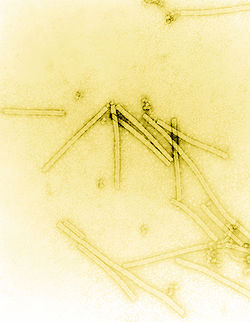
After leaving King's College, Franklin moved to Birkbeck College, where she led pioneering X-ray studies of the tobacco mosaic virus, establishing that its RNA was embedded within the virus particle.
Image source: Tobacco mosaic virus
1956
% complete
Franklin began X-ray crystallographic studies of the polio virus, securing funding from the National Foundation for Infantile Paralysis. Her group made significant progress on the virus's structure despite her declining health.
Image source: Poliovirus
1956
% complete
Franklin toured the United States, lecturing on her virus research and visiting laboratories. During the trip she experienced abdominal pain, and upon returning to London she was diagnosed with ovarian cancer.
1957
% complete
Franklin's group continued to make progress on virus structures, collaborating with international researchers. Her work on the tobacco mosaic virus laid the foundation for later Nobel Prize-winning research by Aaron Klug.
1957 - 1958
% complete
After initial cancer treatment, Franklin experienced a period of remission during which she returned to her laboratory, published further work on viruses, and continued mentoring her research students.
1951
% complete
Through careful control of humidity in her X-ray experiments, Franklin discovered that DNA existed in two forms, the dry crystalline A form and the wetter paracrystalline B form, a crucial insight for interpreting diffraction patterns.
Nov 1951
% complete
Franklin presented her preliminary X-ray data on DNA at a colloquium at King's College attended by James Watson, who took incomplete notes. The meeting marked the beginning of the complicated relationship between the London and Cambridge groups.
May 1952
% complete
Working with her PhD student Raymond Gosling, Franklin captured the famous X-ray diffraction image of DNA known as Photo 51. The image provided critical evidence of the helical structure of DNA.
Image source: Photo 51
Feb 1953
% complete
Maurice Wilkins showed Franklin's Photo 51 to James Watson without her knowledge, and Max Perutz passed a Medical Research Council report containing her precise measurements to Watson and Crick, providing key data for their model of DNA.
Apr 25, 1953
% complete
Watson and Crick published their model of the DNA double helix in Nature. The same issue included papers by Franklin and Gosling and by Wilkins and colleagues, whose experimental data underpinned the model but received far less recognition.
Image source: Molecular Structure of Nucleic Acids: A Structure for Deoxyribose Nucleic Acid
Apr 25, 1953
% complete
In the same issue of Nature as Watson and Crick's paper, Franklin and Raymond Gosling published 'Molecular Configuration in Sodium Thymonucleate,' presenting the experimental evidence for the helical structure of DNA.
1956
% complete
Franklin was diagnosed with ovarian cancer, likely linked to her extensive exposure to X-ray radiation. She underwent surgery and treatment while continuing to lead her research group as long as she could.
Apr 16, 1958
% complete
Rosalind Franklin died in London at the age of 37 from complications of ovarian cancer. Her scientific contributions were only beginning to receive the recognition they deserved at the time of her death.
1962
% complete
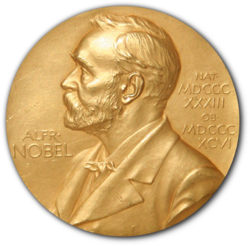
The Nobel Prize in Physiology or Medicine was awarded to James Watson, Francis Crick, and Maurice Wilkins for discoveries concerning the molecular structure of DNA. Franklin, who had died four years earlier, could not be included as Nobel Prizes are not awarded posthumously.
Image source: Nobel Prize in Physiology or Medicine
1968
% complete
James Watson's memoir 'The Double Helix' portrayed Franklin dismissively, calling her 'Rosy' and misrepresenting her role. The book provoked widespread criticism and prompted many scientists to defend Franklin's contributions and character.
Image source: The Double Helix
1975
% complete
Anne Sayre, a friend of Franklin, published 'Rosalind Franklin and DNA,' a biography that corrected the record and argued that Franklin's contributions to the discovery of DNA's structure had been unjustly minimized.
2003
% complete
The Royal Society established the Rosalind Franklin Award, given annually to an outstanding female scientist in the UK, Ireland, or a Commonwealth country, honoring Franklin's legacy and promoting women in science.
2004
% complete
The Chicago Medical School in Illinois was renamed Rosalind Franklin University of Medicine and Science, becoming the first medical school in the United States named after a woman scientist.
2018
% complete
The Rosalind Franklin Institute, a national research institute focused on developing new technologies such as advanced imaging and AI for life sciences, was founded in the United Kingdom in her honor.
2019
% complete
The European Space Agency and Roscosmos announced that their ExoMars rover would be named 'Rosalind Franklin,' honoring her role in discovering the structure of DNA in the search for life on Mars.
Image source: Rosalind Franklin (rover)
2020
% complete
On the centenary of her birth, Franklin's role in the discovery of DNA's double helix was widely celebrated, with scientists, institutions, and media increasingly acknowledging her as an equal contributor to one of biology's greatest discoveries.
Or browse the full history timeline directory, with more than 2,000 topics.
This Rosalind Franklin timeline was generated with the help of AI, using information found on the internet.
We work hard to keep these timelines accurate, but mistakes do get through. If you spot one, email us at [email protected] and we'll fix it for future visitors.
Generate yours with AI or build it from scratch, for free.
Export your timeline, add your own events, edit or remove AI-generated events, and much more
No credit card required.
Cancel anytime.
Cancel anytime.
You can create an unlimited number of timelines with up to 10 events on each one, customize how they look, export them to PDF, PNG, PowerPoint, CSV, and Excel, and share them with a link. Paid plans raise the event limit and add features like spreadsheet imports and collaborators.
Yes. You can cancel your subscription from your account page at any time, and you will not be charged again. Your subscription stays active for the rest of the period you already paid for.
Yes. We will email you a reminder before the annual renewal, and we will also email you a receipt.
Yes. You can email us within 15 days of any payment, and we will issue you a full refund.
Check out our pricing docs or send us an email anytime: [email protected].