
-
Use Cases
-
Resources
-
Pricing
350 BC
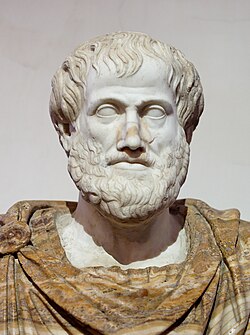
In the 4th century BC, Aristotle thought that the heart was the seat of intelligence, while the brain was merely a cooling mechanism for the blood. This cardiocentric view dominated thinking about mental function for centuries.
Image source: Aristotle
1000
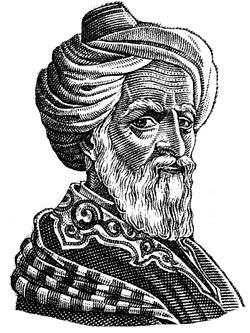
Circa 1000, Al-Zahrawi, living in Islamic Iberia, evaluated neurological patients and performed surgical treatments of head injuries, skull fractures, spinal injuries, hydrocephalus, subdural effusions and headache, advancing medieval neurosurgery.
Image source: Al-Zahrawi
1300 - 1400
Between the 13th and 14th centuries, the first anatomy textbooks in Europe, which included a description of the brain, were written by Mondino de Luzzi and Guido da Vigevano, laying groundwork for later anatomical study of the nervous system.
Image source: Mondino de Luzzi

1600 - 1700
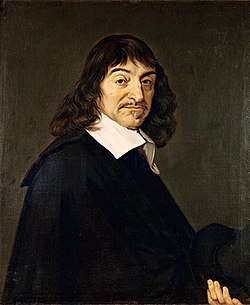
In the 17th century, René Descartes studied the physiology of the brain, proposing the theory of dualism to tackle the issue of the brain's relation to the mind. His ideas sparked enduring philosophical debate about mind and body.
Image source: René Descartes
1750 - 1800
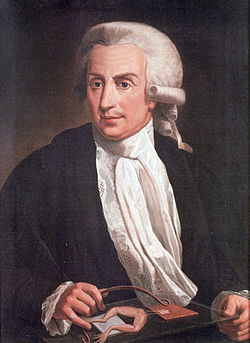
The role of electricity in nerves was first observed in dissected frogs by Luigi Galvani, Lucia Galeazzi Galvani and Giovanni Aldini in the second half of the 18th century, founding the field of electrophysiology.
Image source: Luigi Galvani
1811
In 1811, César Julien Jean Legallois defined a specific function of a brain region for the first time, an early milestone in the localization of function within the brain.
1811 - 1824
Between 1811 and 1824, Charles Bell and François Magendie discovered through dissection and vivisection that the ventral roots in the spine transmit motor impulses and the posterior roots receive sensory input, known as the Bell–Magendie law. Only in their work would the understanding of spinal function surpass that of Galen.
Image source: Bell–Magendie law

1843
In 1843, Carlo Matteucci and Emil du Bois-Reymond demonstrated that nerve fibers transmitted electrical signals, confirming bioelectricity as the basis of neural communication.
Image source: Emil du Bois-Reymond

1848
In 1848, John Martyn Harlow described that Phineas Gage had his frontal lobe pierced by an iron tamping rod in a blasting accident. Gage's survival and personality changes provided famous evidence linking frontal lobe damage to behavior.
Image source: Phineas Gage

1850
Hermann von Helmholtz measured nerve impulse conduction speeds to travel at a rate between 24 and 38 meters per second in 1850, showing that nervous transmission was measurable and finite rather than instantaneous.
Image source: Hermann von Helmholtz

This History of Neuroscience timeline was generated with the help of AI, using information found on the internet.
We work hard to keep these timelines accurate, but mistakes do get through. If you spot one, email us at [email protected] and we'll fix it for future visitors.
Generate yours with AI or build it from scratch, for free.


