-
Use Cases
-
Resources
-
Pricing
The history of marine biology traces humanity's study of ocean life from ancient Greek observations by Aristotle through the Age of Exploration, the groundbreaking HMS Challenger expedition (1872-1876), the rise of modern oceanographic research, and today's advanced technologies like submersibles, satellite tracking, and genomic analysis that continue to reveal the mysteries of life beneath the sea. More Less
1200 BC
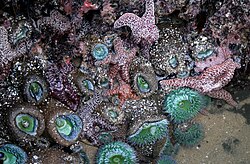
The history of marine biology can be traced as far back as 1200 BC, when the Phoenicians began making ocean voyages guided by celestial navigation. These early seafarers used the stars to chart their courses across open water, marking humanity's first sustained efforts to explore the oceans and laying an early foundation for the study of the sea.
Image source: Marine biology
1200 BC
Alongside the Phoenicians, the Greeks also began undertaking ocean voyages around 1200 BC using celestial navigation. By reading the positions of stars in the night sky, Greek sailors were able to navigate vast stretches of open sea, expanding human knowledge of the oceans and beginning a long tradition of maritime exploration.
570 BC - 475 BC
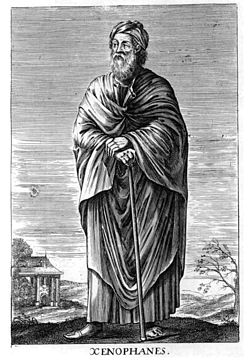
During the sixth century BC, the Greek philosopher Xenophanes (570–475 BC) made one of the earliest contributions to marine science by recognizing that certain fossil shells were actually the remains of shellfish. This insight showed an early understanding of marine life and its connection to the geological record.
Image source: Xenophanes
384 BC - 322 BC
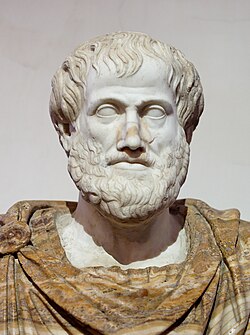
Later, during the fourth century BC, the Greek philosopher Aristotle (384–322 BC) initiated the tradition of natural philosophy and influenced the beginnings of marine biology through his early observations of marine life. His careful study of sea creatures helped establish observation as a method for understanding the natural world.
Image source: Aristotle
384 BC - 322 BC
Aristotle described the hectocotyl arm, a specialized arm used by cephalopods in sexual reproduction. Remarkably, this description was widely disbelieved for centuries and was not confirmed until its rediscovery in the 19th century, demonstrating how far ahead of his time Aristotle's observations of marine life truly were.
Image source: Hectocotylus

384 BC - 322 BC
Aristotle's classification of living things contained elements that remained in use as late as the 19th century. His systematic approach to grouping organisms, including many forms of marine life, provided an enduring framework for biological classification and influenced naturalists for more than two millennia.
300 AD - 1275 AD
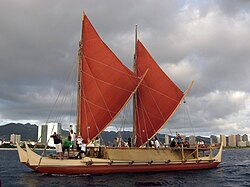
Throughout the period from 300 to 1275 AD, the Polynesians made remarkable efforts to explore and populate the great Polynesian triangle, bounded in the east by Easter Island, in the north by Hawaii, and in the southwest by New Zealand. Their extraordinary navigational feats across the Pacific demonstrated deep practical knowledge of the ocean.
Image source: Polynesian navigation
1470
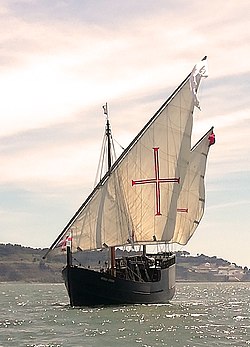
The era of Polynesian exploration gave way to the Age of Discovery in the late 15th century. This new age of European exploration launched unprecedented voyages across the world's oceans, opening the seas to systematic mapping, charting, and the collection of specimens from distant waters.
Image source: Age of Discovery
1490 - 1920
Between the late 15th century and the early 20th century, humans explored the oceans like never before. Explorers created new maps and charts of previously unknown waters and collected specimens of marine organisms to bring back to their home ports, dramatically expanding scientific knowledge of the seas.
1728
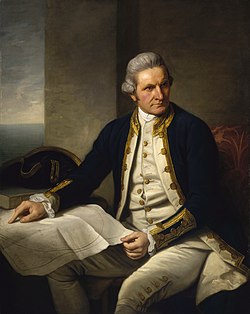
Captain James Cook (1728–1779) was born in 1728. He would become one of the individuals who contributed significantly to the pool of knowledge about the oceans, leading pioneering voyages of exploration that advanced both navigation and the natural sciences.
Image source: James Cook
This History of Marine Biology timeline was generated with the help of AI, using information found on the internet.
We work hard to keep these timelines accurate, but mistakes do get through. If you spot one, email us at [email protected] and we'll fix it for future visitors.
Generate yours with AI or build it from scratch, for free.