-
Use Cases
-
Resources
-
Pricing
Francis Crick (1916–2004) was a British molecular biologist best known for co-discovering the double helix structure of DNA alongside James Watson in 1953, for which he shared the 1962 Nobel Prize in Physiology or Medicine. His work laid the foundation for modern genetics and molecular biology, and he later turned to neuroscience, studying the nature of consciousness. More Less
Jun 8, 1916
% complete
Francis Harry Compton Crick was born on 8 June 1916 and raised in Weston Favell, then a small village near the English town of Northampton, where his father and uncle ran the family's boot and shoe factory.
Image source: Francis Crick
Jul 7, 1933
% complete
Crick shared the Walter Knox Prize for Chemistry on Mill Hill School's Foundation Day on Friday, 7 July 1933.
1937
% complete
Crick studied at University College London (UCL), a constituent college of the University of London, and earned a Bachelor of Science degree awarded by the University of London in 1937.
Image source: University College London

1946
% complete
In 1946 Crick read Erwin Schrödinger's book, What Is Life?, and was influenced by it, and Linus Pauling, to switch from physics to biology.
Image source: What Is Life
1947
% complete
In 1947, aged 31, Crick began studying biology and became part of an important migration of physical scientists into biological research.
1954
% complete
In 1954, at the age of 37, Crick completed his PhD thesis 'X-Ray Diffraction: Polypeptides and Proteins' and received his degree.
1944
% complete
In the 1944 Avery-MacLeod-McCarty experiment, Oswald Avery and his collaborators showed that a heritable phenotypic difference could be caused in bacteria by providing them with a particular DNA molecule.
Image source: Avery–MacLeod–McCarty experiment
1951
% complete
Franklin shared her chemical knowledge with Watson and Crick when she pointed out that their first model (from 1951, with the phosphates inside) was obviously wrong.
1951 - 1952
% complete
In 1951 and 1952, together with William Cochran and Vladimir Vand, Crick assisted in the development of a mathematical theory of X-ray diffraction by a helical molecule.
Image source: X-ray crystallography
Oct 1, 1951 - Dec 31, 1951
% complete
Late in 1951, Crick started working with James Watson at Cavendish Laboratory at the University of Cambridge, England. The laboratory was under the general direction of Sir Lawrence Bragg, who had won the Nobel Prize in 1915 at the age of 25.
Image source: Cavendish Laboratory
Nov 1951
% complete
Watson was present at a lecture given in November 1951 where Franklin presented the two forms of the DNA molecule, type A and type B, and discussed the position of the phosphate units on the external part of the molecule.
Image source: Rosalind Franklin
Nov 1951
% complete
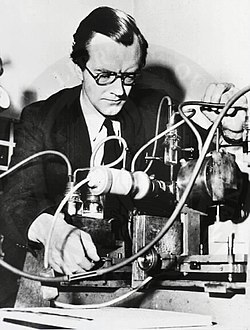
In November 1951, Wilkins came to Cambridge and shared data with Watson and Crick. Together with Franklin's seminar, discussions with Wilkins, and a research progress report, these were the three sources for Franklin's unpublished data.
Image source: Maurice Wilkins
1952
% complete
A visit by Erwin Chargaff to England in 1952 reinforced the salience of his important base-pairing fact for Watson and Crick; there had been another near-discovery of the base pairing rules earlier in 1952.
Image source: Erwin Chargaff
1952
% complete
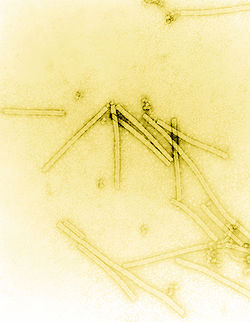
In 1952, Watson performed X-ray diffraction on tobacco mosaic virus and found results indicating that it had helical structure.
Image source: Tobacco mosaic virus
May 1952
% complete
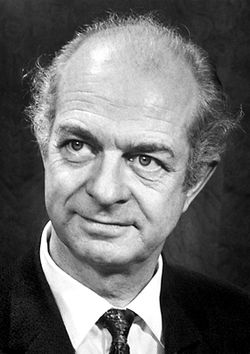
Many have speculated about what might have happened had Linus Pauling been able to travel to Britain as planned in May 1952.
Image source: Linus Pauling
Jan 1953
% complete
In January 1953, Watson was shown an X-ray photograph of B-DNA (called photograph 51), produced by Rosalind Franklin and Raymond Gosling, by Maurice Wilkins.
Image source: Photo 51
Feb 1953
% complete
In the middle of February 1953, Crick's thesis advisor Max Perutz gave Crick a copy of a report written for a Medical Research Council biophysics committee visit to King's in December 1952, containing data including some of Franklin's crystallographic calculations. This access made Crick confident that DNA was a double helix with antiparallel chains.
Image source: Max Perutz
Feb 28, 1953
% complete
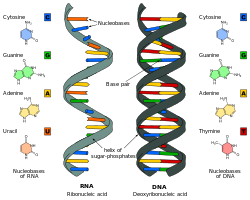
Using Photo 51 and other information, Watson and Crick together developed a model for a helical structure of DNA. The discovery was made on 28 February 1953.
Image source: Nucleic acid double helix
Mar 6, 1953
% complete
Franklin's two manuscripts on form A DNA reached Acta Crystallographica in Copenhagen on 6 March 1953, one day before Crick and Watson completed their model. In drafts she submitted in 1953 she argued for a double helical DNA backbone.
Mar 19, 1953
% complete
In a seven-page handwritten letter to his son at a British boarding school on 19 March 1953, Crick explained his discovery, beginning 'My Dear Michael, Jim Watson and I have probably made a most important discovery'.
Apr 1953
% complete
Sydney Brenner, Jack Dunitz, Dorothy Hodgkin, Leslie Orgel, and Beryl M Oughton were among the first people in April 1953 to see the model of the structure of DNA constructed by Crick and Watson.
Image source: Sydney Brenner
Apr 8, 1953
% complete
Sir Lawrence Bragg's original announcement of the discovery at a Solvay conference on proteins in Belgium on 8 April 1953 went unreported by the British press.
Image source: Lawrence Bragg
Apr 25, 1953
% complete
The first Watson/Crick paper appeared in Nature on 25 April 1953, laying the groundwork for understanding DNA structure and functions.
Image source: Nucleic acid
May 15, 1953
% complete
Sir Lawrence Bragg gave a talk at Guy's Hospital Medical School on Thursday 14 May 1953 which resulted in an article by Ritchie Calder in the News Chronicle of London on Friday 15 May 1953 entitled 'Why You Are You'. A New York Times article followed dated 16 May 1953, with a longer article on 12 June 1953.
May 30, 1953
% complete
The university's undergraduate newspaper Varsity ran its own short article on the discovery on Saturday 30 May 1953.
Image source: Varsity (Cambridge)
1949
% complete
Crick was in the right place, in the right frame of mind, at the right time (1949) to join Max Perutz's project at the University of Cambridge, where he began to work on the X-ray crystallography of proteins.
1953
% complete
In 1953, Watson and Crick published another article in Nature stating: 'it therefore seems likely that the precise sequence of the bases is the code that carries the genetical information'.
Image source: Genetic code
1956
% complete
In 1956, Crick wrote an informal paper about the genetic coding problem for the small group of scientists in Gamow's RNA group, and he and Watson speculated on the structure of small viruses.
1958
% complete
One of the most uninspiring acts of the University of Cambridge over the past century was to turn down Francis Crick when he applied to be the Professor of Genetics in 1958, a fact recorded in Soraya De Chadarevian's Designs For Life (2002).
Image source: University of Cambridge
1958
% complete
In his 1958 article, Crick speculated, as had others, that a triplet of nucleotides could code for an amino acid.
1959
% complete
Crick was elected a Fellow of the Royal Society (FRS) in 1959, and later also became a Fellow of the International Academy of Humanism and CSICOP.
Image source: Royal Society
1960
% complete
In 1960, Crick accepted an honorary fellowship at Churchill College, Cambridge, one factor being that the new college did not have a chapel. He had been a nonresident fellow of the Salk Institute since 1960.
Image source: Churchill College, Cambridge
Apr 15, 1960
% complete
An important step was the realisation by Crick and Sydney Brenner on 15 April 1960 during a conversation with François Jacob that messenger RNA was not the same thing as ribosomal RNA.
Image source: Messenger RNA
1962
% complete
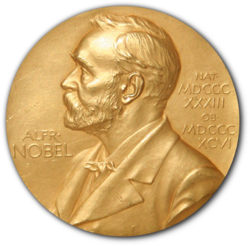
Together with James Watson and Maurice Wilkins, Crick was jointly awarded the 1962 Nobel Prize in Physiology or Medicine 'for their discoveries concerning the molecular structure of nucleic acids and its significance for information transfer in living material'. He was also elected to the American Academy of Arts and Sciences that year.
Image source: Nobel Prize in Physiology or Medicine
1963
% complete
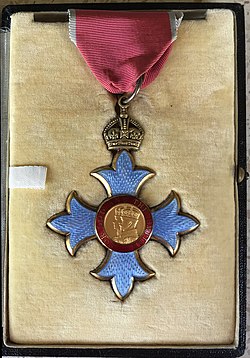
Crick refused an offer of a CBE in 1963, but was often referred to in error as 'Sir Francis Crick' and even on occasions as 'Lord Crick'.
Image source: Order of the British Empire
1964
% complete
1966
% complete
In 1966, Crick took the place of Leslie Orgel at a meeting where Orgel was to talk about the origin of life. That same year, his brother Anthony predeceased him.
Image source: Abiogenesis
1969
% complete
Crick was elected a member of the United States National Academy of Sciences in 1969.
Image source: National Academy of Sciences
Oct 1969
% complete
In October 1969, Crick participated in a celebration of the 100th year of the journal Nature, attempting predictions about the next 30 years of molecular biology, briefly mentioning the search for extraterrestrial life but holding little hope it would be found by 2000.
Image source: Nature (journal)
1972 - 1975
% complete
Crick received the Royal medal of the Royal Society in 1972 and the Copley Medal in 1975, and was elected to the American Philosophical Society in 1972.
Image source: Copley Medal
1976
% complete
In 1976, Crick addressed the origin of protein synthesis in a paper with Sydney Brenner, Aaron Klug, and George Pieczenik.
Image source: Ribosome
1987
% complete
In 1987, Crick received the Golden Plate Award of the US Academy of Achievement.
Image source: American Academy of Achievement
1976 - 1977
% complete
In 1976, Crick took a sabbatical year at the Salk Institute for Biological Studies in La Jolla, California, after which he moved to California permanently, leaving Cambridge after 30 years having refused the Mastership of Gonville and Caius.
Image source: Salk Institute for Biological Studies
1983
% complete
In 1983, based on studies of computer models of neural networks, Crick and Mitchison proposed that the function of REM sleep and dreaming is to remove certain modes of interactions in networks of cells in the mammalian cerebral cortex, calling this hypothetical process 'reverse learning' or 'unlearning'.
Image source: Rapid eye movement sleep
1990 - 2005
% complete
In the final phase of his career, Crick established a collaboration with Christof Koch that led to publication of a series of articles on consciousness spanning 1990 to 2005.
Image source: Christof Koch
1995
% complete
In 1995 Francis Crick signed the Ashley Montagu Resolution petitioning the International Court of Justice to help end genital mutation of children, including female genital mutilation, circumcision, and penile subincision.
1998
% complete
Crick asked in 1998 'and if some of the Bible is manifestly wrong, why should any of the rest of it be accepted automatically?'
2003
% complete
In 2003 Crick was one of 22 Nobel laureates who signed the Humanist Manifesto. That same year, the Francis Crick Medal and Lecture was established following an endowment by Sydney Brenner.
Jul 28, 2004
% complete
Crick died of colon cancer on the morning of 28 July 2004 at UCSD Thornton Hospital in La Jolla; he was cremated and his ashes were scattered into the Pacific Ocean. He remained editing a manuscript on his death bed, 'a scientist until the bitter end' according to Christof Koch.
Aug 3, 2004
% complete
A private memorial for family and colleagues was held on 3 August 2004.
Sep 27, 2004
% complete
A public memorial was held on 27 September 2004 at the Salk Institute, La Jolla; guest speakers included James Watson, Sydney Brenner, Alex Rich, Seymour Benzer, Aaron Klug, Christof Koch, Pat Churchland, Vilayanur Ramachandran, Tomaso Poggio, Leslie Orgel, Terry Sejnowski, his son Michael Crick, and his daughter Jacqueline Nichols.
Dec 13, 2005
% complete
A sculpture entitled Discovery, by artist Lucy Glendinning, was installed on 13 December 2005 in Abington Street, Northampton.
Image source: Northampton
Jun 20, 2007
% complete
Westminster City Council unveiled a green plaque to Francis Crick on the front façade of 56 St George's Square, Pimlico, London SW1 on 20 June 2007; Crick lived in the first floor flat together with Robert Dougall of BBC fame.
Image source: Pimlico
Apr 2011
% complete
At a meeting of the executive council of the Committee for Skeptical Inquiry in Denver, Colorado in April 2011, Crick was selected for inclusion in CSI's Pantheon of Skeptics.
Image source: Committee for Skeptical Inquiry
2012
% complete
Crick featured in the BBC Radio 4 series The New Elizabethans to mark the Diamond Jubilee of Elizabeth II in 2012.
Jul 7, 2012
% complete
A bronze bust was first displayed at the Francis Crick Memorial Conference (on Consciousness) at Churchill College, Cambridge on 7 July 2012; it was bought by Mill Hill School in May 2013 and displayed at the inaugural Crick Dinner on 8 June 2013.
Image source: Mill Hill School
Apr 10, 2013
% complete
Crick's 1953 handwritten letter to his son Michael was put up for auction at Christie's New York on 10 April 2013 with an estimate of $1 to $2 million, eventually selling for $6,059,750, the largest amount ever paid for a letter at auction.
Image source: Christie's
Jun 2013
% complete
Crick's Nobel Prize medal and diploma from the Nobel committee was sold at Heritage Auctions in June 2013 for $2,270,000.
Image source: Heritage Auctions
2016
% complete
Completed in 2016, the Francis Crick Institute is the largest centre for biomedical research and innovation in Europe.
Image source: Francis Crick Institute
Or browse the full history timeline directory, with more than 2,000 topics.
This Francis Crick timeline was generated with the help of AI, using information found on the internet.
We work hard to keep these timelines accurate, but mistakes do get through. If you spot one, email us at [email protected] and we'll fix it for future visitors.
Generate yours with AI or build it from scratch, for free.
Export your timeline, add your own events, edit or remove AI-generated events, and much more
No credit card required.
Cancel anytime.
Cancel anytime.
You can create an unlimited number of timelines with up to 10 events on each one, customize how they look, export them to PDF, PNG, PowerPoint, CSV, and Excel, and share them with a link. Paid plans raise the event limit and add features like spreadsheet imports and collaborators.
Yes. You can cancel your subscription from your account page at any time, and you will not be charged again. Your subscription stays active for the rest of the period you already paid for.
Yes. We will email you a reminder before the annual renewal, and we will also email you a receipt.
Yes. You can email us within 15 days of any payment, and we will issue you a full refund.
Check out our pricing docs or send us an email anytime: [email protected].