-
Use Cases
-
Resources
-
Pricing
Eritrea's history spans ancient civilizations along the Red Sea coast, including the Kingdom of Aksum, followed by Ottoman, Egyptian, and Ethiopian rule before Italian colonization in 1890. After World War II, it was federated with and then annexed by Ethiopia in 1962, triggering a thirty-year armed struggle for independence led by the EPLF. Eritrea achieved de facto independence in 1991 and formal independence in 1993 following a UN-supervised referendum, though subsequent border conflicts with Ethiopia and ongoing authoritarian rule have shaped its modern era. More Less
100 AD
% complete
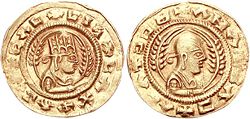
The Aksumite Empire rose with its center near modern Eritrea and Tigray, becoming a major trading power linking Rome and India. It adopted Christianity under King Ezana in the 4th century and left monuments such as towering obelisks.
Image source: Kingdom of Aksum
100 AD - 700 AD
% complete
Adulis, located near modern Zula on Eritrea's coast, served as the principal port of the Aksumite Empire, exporting ivory, gold, and incense to markets across the Mediterranean and Arabian worlds before its decline around the 7th century.
Image source: Adulis
1557 - 1865
% complete
The Ottoman Empire established control over Massawa and parts of the Eritrean coast, creating the province of Habesh. Ottoman rule lasted three centuries, introducing Islamic administration along the coastline while the highlands remained largely independent.
Image source: Habesh Eyalet
1865 - 1885
% complete
Khedivate Egypt took over Massawa and expanded into the Bogos region of the Eritrean highlands. Egyptian ambitions were curtailed after defeat by Ethiopian emperor Yohannes IV at the Battle of Gura in 1876.
Image source: Egyptian–Ethiopian War
Jan 1, 1890
% complete
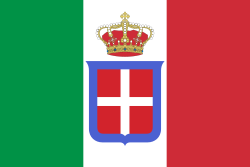
Italy formally consolidated its Red Sea possessions, naming the territory Eritrea after the ancient Greek name for the Red Sea. Asmara was designated the capital in 1897, beginning five decades of Italian colonial rule.
Image source: Italian Eritrea
Mar 1, 1896
% complete
Ethiopian forces decisively defeated an Italian army at Adwa, halting Italian attempts to conquer Ethiopia and fixing the borders that separated the colony of Eritrea from independent Ethiopia. The victory made Ethiopia a symbol of African resistance to colonization.
Image source: Battle of Adwa
Oct 3, 1935
% complete
Fascist Italy invaded Ethiopia using Eritrea as its main base of operations, with hundreds of thousands of troops massing along the border. The conquest briefly united Eritrea with Ethiopia and Italian Somaliland into Italian East Africa.
Image source: Second Italo-Ethiopian War
Feb 1941 - Apr 1941
% complete
During World War II, British and Commonwealth forces defeated the Italians in East Africa, occupying Eritrea after the fall of Keren and Asmara. Britain administered Eritrea as a protectorate until deciding its future status after the war.
Image source: East African campaign (World War II)
Dec 2, 1950
% complete
After years of debate over Eritrea's fate among the victorious powers, UN Resolution 390 decided that Eritrea would become an autonomous unit federated with Ethiopia under the Ethiopian crown, a compromise that satisfied neither independence advocates nor annexationists.
Image source: List of United Nations resolutions concerning Palestine
Sep 11, 1952 - Nov 14, 1962
% complete
Eritrea became a federal state under Ethiopian sovereignty, retaining its own constitution, flag, and elected assembly. However, Emperor Haile Selassie progressively eroded Eritrean autonomy, dissolving political parties and restricting freedoms until outright annexation.
Image source: Federation of Ethiopia and Eritrea
Sep 1, 1961
% complete
Hamid Idris Awate fired the first shots against Ethiopian police at Mount Adal, marking the start of the thirty-year Eritrean War of Independence led initially by the Eritrean Liberation Front.
Image source: Eritrean War of Independence
Nov 14, 1962
% complete
Haile Selassie dissolved the Eritrean parliament and formally annexed Eritrea as Ethiopia's fourteenth province. The move extinguished Eritrean autonomy and galvanized armed resistance movements seeking full independence.
Image source: Annexation
1970
% complete
A splinter group from the ELF formed the EPLF, a disciplined Marxist-leaning movement that grew to dominate the liberation struggle. Led by Isaias Afwerki, it eventually eclipsed the ELF and became the core of independent Eritrea's government.
Image source: Eritrean People's Liberation Front
1974
% complete
The overthrow of Haile Selassie and rise of the Marxist Derg under Mengistu Haile Mariam intensified the conflict in Eritrea, as massive Soviet-backed military offensives sought to crush the independence movement.
Image source: Ethiopian Revolution
1977 - 1991
% complete
The town of Nakfa, sheltering EPLF leadership and hospitals in underground complexes, withstood repeated bombardment throughout the war. Its survival made Nakfa the enduring symbol of Eritrean resilience, later lending its name to the national currency.
Image source: Eritrean nakfa
Feb 1977
% complete
EPLF fighters briefly captured the port city of Massawa from Ethiopian forces, demonstrating the growing strength of the liberation movement before being forced to withdraw during subsequent Ethiopian counteroffensives.
Image source: First Battle of Massawa
Jan 1982 - Jun 1982
% complete
Mengistu personally commanded one of the largest offensives in African history against EPLI positions in Nakfa, deploying some 120,000 troops. The campaign failed to destroy the EPLF, which retreated into fortified mountain positions and survived.
Image source: Red Star Campaign
May 21, 1991 - May 28, 1991
% complete
The Ethiopian People's Revolutionary Democratic Front captured Addis Ababa, toppling Mengistu Haile Mariam. The collapse of the Derg removed the central obstacle to Eritrean self-determination and opened the path to formal independence.
Image source: Fall of the Derg regime
May 24, 1991
% complete
EPLF forces liberated Massawa and then entered Asmara on May 24, 1991, effectively ending Ethiopian rule. The victory came after decades of war that cost hundreds of thousands of lives and devastated the country.
Image source: Eritrea
Apr 23, 1993 - Apr 25, 1993
% complete
In a UN-supervised referendum, 99.8 percent of Eritreans voted for independence from Ethiopia. The overwhelming result gave international legitimacy to the new state born from Africa's longest war of liberation.
Image source: 1993 Eritrean independence referendum
May 24, 1993
% complete
Eritrea declared formal independence with Isaias Afwerki as president and joined the United Nations shortly afterward. Celebrated every May 24, the date marks the culmination of the thirty-year struggle.
Image source: Independence Day (Eritrea)
May 23, 1997
% complete
A constituent assembly ratified a constitution guaranteeing multiparty democracy and civil liberties. However, it was never implemented, and planned elections were indefinitely postponed, leaving Eritrea without functioning constitutional government.
Image source: Constitution of Eritrea
May 1998 - Jun 2000
% complete
Trench warfare reminiscent of World War I claimed an estimated 70,000 to 100,000 lives. Major battles at Tsorona and the second battle of Massawa-era offensives devastated both nations before Ethiopia launched a decisive offensive in May 2000.
Image source: Eritrean–Ethiopian War
May 6, 1998
% complete
A dispute over the small border town of Badme escalated when Eritrean and Ethiopian forces clashed. What began as a local skirmish rapidly exploded into a full-scale interstate war between the two former allies.
Image source: Badme
Dec 12, 2000
% complete
Under UN auspices, Eritrea and Ethiopia signed a peace agreement establishing the Eritrea-Ethiopia Boundary Commission to delimit the border. Hostilities ended, though tensions persisted for nearly two more decades.
Sep 18, 2001
% complete
President Isaias Afwerki ordered the arrest of eleven senior officials known as the G-15 who had called for democratic reform, and shut down the private press. The crackdown cemented authoritarian rule and isolated Eritrea internationally.
Image source: G-15 (Eritrea)
Apr 13, 2002
% complete
The Hague-based commission ruled that Badme lay within Eritrean territory. Ethiopia refused to implement the decision, keeping the countries in a tense 'no peace, no war' standoff with closed borders and militarized front lines.
Image source: Eritrean–Ethiopian War
Dec 23, 2009
% complete
The UN Security Council imposed an arms embargo and targeted sanctions on Eritrea over its alleged support for al-Shabaab in Somalia and refusal to resolve the Djibouti border dispute. Some sanctions were lifted in 2018.
Image source: United Nations Security Council Resolution 1907
Jul 9, 2018
% complete
Ethiopian Prime Minister Abiy Ahmed and President Isaias Afwerki signed a joint declaration ending the state of war, restoring diplomatic ties, flights, and trade. Abiy's reforms earned him the 2019 Nobel Peace Prize, though full implementation remained uneven.
Image source: Eritrea–Ethiopia relations
Or browse the full history timeline directory, with more than 2,000 topics.
This History of Eritrea timeline was generated with the help of AI, using information found on the internet.
We work hard to keep these timelines accurate, but mistakes do get through. If you spot one, email us at [email protected] and we'll fix it for future visitors.
Generate yours with AI or build it from scratch, for free.
Export your timeline, add your own events, edit or remove AI-generated events, and much more
No credit card required.
Cancel anytime.
Cancel anytime.
You can create an unlimited number of timelines with up to 10 events on each one, customize how they look, export them to PDF, PNG, PowerPoint, CSV, and Excel, and share them with a link. Paid plans raise the event limit and add features like spreadsheet imports and collaborators.
Yes. You can cancel your subscription from your account page at any time, and you will not be charged again. Your subscription stays active for the rest of the period you already paid for.
Yes. We will email you a reminder before the annual renewal, and we will also email you a receipt.
Yes. You can email us within 15 days of any payment, and we will issue you a full refund.
Check out our pricing docs or send us an email anytime: [email protected].