-
Use Cases
-
Resources
-
Pricing
Fairy tales are a genre of folklore featuring magical elements, fantastical creatures, and moral lessons. Their history spans thousands of years, beginning with ancient oral storytelling traditions and evolving through written collections by authors like Charles Perrault, the Brothers Grimm, and Hans Christian Andersen. Over time, fairy tales have been adapted into literature, theater, film, and popular culture, remaining a vital part of childhood and storytelling worldwide. More Less
300 BC
% complete
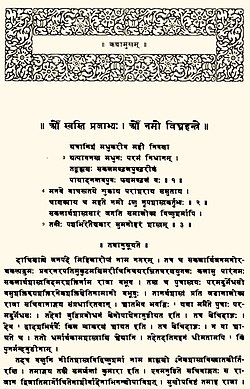
Fairy tales appear, now and again, in written literature throughout literate cultures, as in the Panchatantra of India from the 3rd century BC, though it is unknown to what extent these reflect the actual folk tales even of their own time.
Image source: Panchatantra
100 AD - 200 AD
% complete
Fairy tales appear in written literature as in The Golden Ass, which includes Cupid and Psyche (Roman, 100–200 AD), showing the fairy tale's presence in classical written literature.
Image source: The Golden Ass
1500 AD
% complete
What surviving texts show is that the fairy tale has ancient roots, older than the Arabian Nights collection of magical tales (compiled circa 1500 AD), such as Vikram and the Vampire, and Bel and the Dragon.
Image source: One Thousand and One Nights
2016 AD - 2020 AD
% complete
Research traced tales like Jack and the Beanstalk to the splitting of Eastern and Western Indo-European over 5000 years ago, while Beauty and the Beast and Rumpelstiltskin appear to have been created some 4000 years ago, and The Smith and the Devil dates from the Bronze Age, some 6000 years ago. Scholars continue debating whether tales spread from a single point of origin or stem from common human experience, and works like García Carcedo's Entre brujas y dragones (2020) carry the scholarship forward.
Image source: Fairy tale
1550 AD - 1553 AD
% complete
The tale resurfaced in Western literature in the 16th and 17th centuries with The Facetious Nights of Straparola by Giovanni Francesco Straparola (Italy, 1550 and 1553), which contains many fairy tales in its inset tales.
Image source: Giovanni Francesco Straparola
1634 AD - 1636 AD
% complete
The Neapolitan tales of Giambattista Basile (Naples, 1634–1636) were all fairy tales, contributing to the revival of the genre in Western literature.
Image source: Giambattista Basile
1761 AD
% complete
Carlo Gozzi made use of many fairy tale motifs among his Commedia dell'Arte scenarios, including one based on The Love For Three Oranges (1761).
Image source: Carlo Gozzi
1766 AD
% complete
Simultaneously, Pu Songling, in China, included many fairy tales in his collection, Strange Stories from a Chinese Studio (published posthumously, 1766), described by Yuken Fujita of Keio University as having 'a reputation as the most outstanding short story collection.'
Image source: Strange Tales from a Chinese Studio
1600 AD - 1700 AD
% complete
The literary fairy tale came into fashion during the 17th century, developed by aristocratic women as a parlour game; the name was coined when the précieuses took up writing literary stories.
1650 AD
% complete
In the mid-17th century, a vogue for magical tales emerged among the intellectuals who frequented the salons of Paris.
Image source: Fairy tale
1650 AD
% complete
Sometime in the middle of the 17th century, a passion for the conversational parlour game based on the plots of old folk tales swept through the salons, with conversations covering literature, mores, taste, and etiquette.
1690 AD - 1710 AD
% complete
The fairy tale itself became popular among the précieuses of upper-class France (1690–1710), and among the tales told in that time were the ones of La Fontaine.
1690 AD - 1697 AD
% complete
Madame d'Aulnoy invented the term Conte de fée, or fairy tale, in the late 17th century; the name was first ascribed to these tales by her, and the term comes from the translation of her Conte de fées.
Image source: Madame d'Aulnoy
1697 AD
% complete
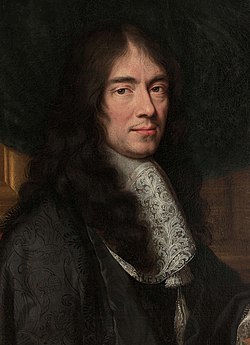
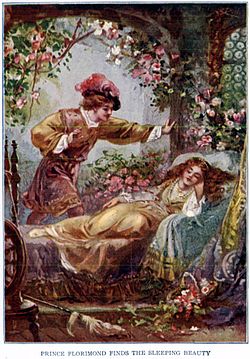
Among the tales told in that era were the Contes of Charles Perrault (1697), who fixed the forms of Sleeping Beauty and Cinderella.
Image source: Charles Perrault
1700 AD - 1800 AD
% complete
Many 18th-century folklorists attempted to recover the 'pure' folktale, uncontaminated by literary versions, reflecting changing sociopolitical conditions that Jack Zipes says led to the trivialization of these stories by the upper classes.
Image source: Folklore studies
1700 AD - 1800 AD
% complete
The salon tales as they were originally written and published have been preserved in a monumental work called Le Cabinet des Fées, an enormous collection of stories from the 17th and 18th centuries.
1800 AD - 1900 AD
% complete
Considerations over whether to keep Sleeping Beauty reflected a belief common among folklorists of the 19th century: that the folk tradition preserved fairy tales in forms from pre-history except when 'contaminated' by literary forms, leading people to tell inauthentic tales.
Image source: Sleeping Beauty
1812 AD - 1815 AD
% complete
The first collectors to attempt to preserve not only the plot and characters of the tale, but also the style in which they were told, was the Brothers Grimm, collecting German fairy tales; their first edition (1812 and 1815) remains a treasure for folklorists.
Image source: Grimms' Fairy Tales
1819 AD - 1857 AD
% complete
Although their first edition remains a treasure for folklorists, the Brothers Grimm rewrote the tales in later editions to make them more acceptable, which ensured their sales and the later popularity of their work.
1845 AD
% complete
Among those influenced by the Grimm tradition were the Norwegians Peter Christen Asbjørnsen and Jørgen Moe, whose collections were first published in 1845.
Image source: Peter Christen Asbjørnsen
1866 AD
% complete
The Russian Alexander Afanasyev, influenced by earlier collectors, first published his collection of Russian folk and fairy tales in 1866.
Image source: Alexander Afanasyev
1874 AD
% complete
The Romanian Petre Ispirescu first published his collection of Romanian fairy tales in 1874, part of the wave of national collectors inspired by the Grimms.
Image source: Petre Ispirescu
1890 AD
% complete
The English Joseph Jacobs first published his collection of English fairy tales in 1890, joining the international movement of folklore collectors.
Image source: Joseph Jacobs
1890 AD
% complete
Jeremiah Curtin, an American who collected Irish tales, first published his work in 1890, extending the collecting tradition across the Atlantic.
Image source: Jeremiah Curtin
1908 AD
% complete
Collectors encouraged other collectors of fairy tales, as when Yei Theodora Ozaki created a collection, Japanese Fairy Tales (1908), after encouragement from Lang.
Image source: Yei Theodora Ozaki
1959 AD - 1997 AD
% complete
Ten volumes of tales (with extensive commentary) were collected by the author during 1959-1962 and 1972-1997 (volumes 1 to 7 in German, volumes 8 to 10 in English), mostly in Namibia.
1800 AD - 2000 AD
% complete
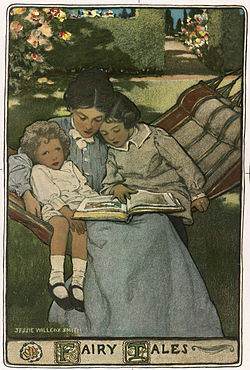
Literary fairy tales appeared in works intended for adults, but in the 19th and 20th centuries the fairy tale became associated with children's literature.
Image source: Children's literature
1854 AD
% complete
The moralizing strain in the Victorian era altered the classical tales to teach lessons, as when George Cruikshank rewrote Cinderella in 1854 to contain temperance themes.
Image source: George Cruikshank
1937 AD
% complete
Walt Disney's first feature-length film Snow White and the Seven Dwarfs, released in 1937, was a ground-breaking film for fairy tales and, indeed, fantasy in general.
Image source: Snow White and the Seven Dwarfs (1937 film)
1950 AD - 1991 AD
% complete
Disney and his creative successors returned to traditional and literary fairy tales numerous times with films such as Cinderella (1950), Sleeping Beauty (1959), The Little Mermaid (1989) and Beauty and the Beast (1991).
Image source: Walt Disney
2012 AD
% complete
In a 2012 lecture, Jack Zipes reads fairy tales as examples of what he calls 'childism', offering a critical modern perspective on the genre.
2014 AD - 2017 AD
% complete
Live-action adaptations of classic fairy tales flourished, including Maleficent (2014), Cinderella (2015) and Beauty and the Beast (2017).
Image source: Maleficent (film)
Or browse the full history timeline directory, with more than 2,000 topics.
This History of Fairy Tales timeline was generated with the help of AI, using information found on the internet.
We work hard to keep these timelines accurate, but mistakes do get through. If you spot one, email us at [email protected] and we'll fix it for future visitors.
Generate yours with AI or build it from scratch, for free.
Export your timeline, add your own events, edit or remove AI-generated events, and much more
No credit card required.
Cancel anytime.
Cancel anytime.
You can create an unlimited number of timelines with up to 10 events on each one, customize how they look, export them to PDF, PNG, PowerPoint, CSV, and Excel, and share them with a link. Paid plans raise the event limit and add features like spreadsheet imports and collaborators.
Yes. You can cancel your subscription from your account page at any time, and you will not be charged again. Your subscription stays active for the rest of the period you already paid for.
Yes. We will email you a reminder before the annual renewal, and we will also email you a receipt.
Yes. You can email us within 15 days of any payment, and we will issue you a full refund.
Check out our pricing docs or send us an email anytime: [email protected].