-
Use Cases
-
Resources
-
Pricing
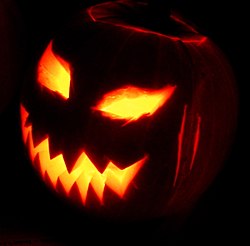
Halloween is a holiday celebrated annually on October 31st, with roots tracing back over 2,000 years to the ancient Celtic festival of Samhain. Over centuries, it evolved through Roman and Christian influences—particularly All Saints' Day and All Souls' Day—before Irish and Scottish immigrants brought their traditions to America in the 19th century. Today, Halloween is a major cultural event marked by costumes, trick-or-treating, carved pumpkins, haunted attractions, and festive gatherings. More Less
May 13, 609
% complete
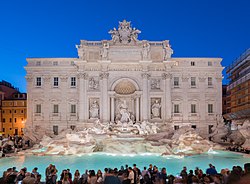
On 13 May 609, Pope Boniface IV re-dedicated the Pantheon in Rome to 'St Mary and all martyrs', establishing a major feast honoring all Christian martyrs.
Image source: Pope Boniface IV
Jan 1, 1100 - Dec 31, 1199
% complete
All Souls' Day, a feast commemorating all deceased Christians, became widespread across Western Christianity during the 12th century.
Image source: All Souls' Day
Jan 1, 1150 - Dec 31, 1200
% complete
By the end of the 12th century, All Hallows' Eve and related feasts had become holy days of obligation requiring church attendance in Western Christianity, involving traditions such as ringing church bells for souls in Purgatory.
Image source: Allhallowtide
Jan 1, 1400
% complete
The custom of souling, where the poor would go door to door asking for food in exchange for prayers for the dead, dates back at least as far as the 15th century and was found in parts of England, Wales, Flanders, Bavaria and Austria.
Image source: Soul cake
Jan 1, 1400 - Dec 31, 1499
% complete
In Salerno, Italy, until the 15th century, families left a meal out for the ghosts of relatives before leaving for church services during Allhallowtide.
Image source: Halloween
Jan 1, 1500
% complete
From at least the 16th century, the Halloween festival included mumming and guising in Ireland, Scotland, the Isle of Man and Wales, with people dressing in costume going house to house.
Image source: Trick-or-treating
1593
% complete
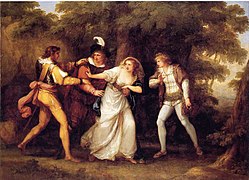
Shakespeare mentions the custom of souling in his comedy The Two Gentlemen of Verona (1593), providing literary evidence of the practice in Elizabethan England.
Image source: The Two Gentlemen of Verona
1600 - 2000
% complete
In recent centuries, divination games have been 'a common feature of the household festivities' in Ireland and Britain, particularly during the 17th–20th centuries, often involving apples, nuts, and other seasonal items.
Image source: Divination
1605
% complete
After 1605, Allhallowtide was eclipsed in England by Guy Fawkes Night (5 November), which appropriated some of its customs such as bonfires and begging for food.
Image source: Guy Fawkes Night
1700
% complete
From at least the 18th century, 'imitating malignant spirits' led to playing pranks in Ireland and the Scottish Highlands, a precursor to modern trick-or-treating.
Image source: Trick-or-treating
1750 - 1899
% complete
In 18th- and 19th-century rural Lancashire, Catholic families gathered on hills on the night of All Hallows' Eve; one person held a bunch of burning straw on a pitchfork while the rest knelt around him praying for souls of relatives and friends until the flames went out.
1780
% complete
Scottish poet John Mayne made note of pranks at Halloween—'What fearfu' pranks ensue!'—as well as the supernatural associated with the night, including 'bogles' (ghosts), influencing Robert Burns' later poem 'Halloween'.
1785
% complete
Robert Burns published his poem 'Halloween' in 1785, influenced by John Mayne's earlier work, helping document and popularize Scottish Halloween customs.
Image source: Halloween (poem)
1800 - 1899
% complete
In 19th-century Brittany, libations of milk were poured on the graves of kinfolk, or food would be left overnight on the dinner table for returning souls; a custom also found in Tyrol and parts of Italy.
Image source: Brittany
1800 - 1899
% complete
In 19th-century Spain at Allhallowtide, there was a procession in the city of San Sebastián to the city cemetery, an event that drew beggars appealing to tender recollections of one's deceased relations and friends for sympathy.
Image source: San Sebastián
1800 - 1899
% complete
During the 19th century in Ireland, candles would be lit and prayers formally offered for the souls of the dead, a widespread custom also seen in Flanders, Bavaria, and Tyrol.
1800 - 1899
% complete
In 19th-century Bavaria, food was laid on graves to feed the souls of the dead during Allhallowtide observances.
1800 - 1899
% complete
In 19th-century Italy, churches staged 'theatrical re-enactments of scenes from the lives of the saints' on All Hallows' Day, with participants represented by realistic wax figures.
Image source: All Saints' Day
1823
% complete
In 1823, the graveyard of Holy Spirit Hospital in Rome presented a scene in which bodies of those who recently died were arrayed around a wax statue of an angel who pointed upward towards heaven.
Image source: Rome
1880 - 1920
% complete
In the late 19th and early 20th century, young people in Glamorgan and Orkney cross-dressed as part of Halloween festivities.
Image source: Glamorgan
1890
% complete
In Ireland and Scotland, the masks worn by guisers are known as 'false faces', a term recorded in Ayr, Scotland in 1890 by a Scot describing guisers: 'I had mind it was Halloween...'
Image source: Ayr
1895
% complete
It is recorded in Scotland at Halloween in 1895 that masqueraders in disguise carrying lanterns made out of scooped-out turnips visited homes to be rewarded with cakes, fruit, and money.
Image source: Jack-o'-lantern
1770 - 1830
% complete
Almanacs of the late 18th and early 19th century give no indication that Halloween was widely celebrated in North America before mass immigration from Ireland and Scotland.
1800 - 1899
% complete
Celebrated in Ireland and Scotland for centuries, Irish and Scottish immigrants brought many Halloween customs to North America in the 19th century. It was not until after this mass immigration that Halloween became a major holiday in America.
Image source: Irish diaspora
1837
% complete
The American tradition of carving pumpkins is recorded in 1837 and was originally associated with harvest time in general, only becoming specifically associated with Halloween in the mid-to-late 19th century.
1900 - 1939
% complete
Costuming became popular for Halloween parties in the US in the early 20th century, as often for adults as for children, coinciding with trick-or-treating becoming popular in Canada and the US in the 1920s and 1930s.
Image source: Halloween costume
1911
% complete
Author Nicholas Rogers cites an early example of guising in North America in 1911, when a newspaper in Kingston, Ontario, Canada, reported children going 'guising' around the neighborhood.
Image source: Kingston, Ontario
1917
% complete
The earliest known use in print of the term 'trick or treat' appears in 1917, in The Sault Daily Star of Sault Ste. Marie, Canada.
1919
% complete
American historian Ruth Edna Kelley of Massachusetts wrote the first book-length history of Halloween in the US: The Book of Hallowe'en (1919), which references souling in the chapter 'Hallowe'en in America'.
Image source: Ruth Edna Kelley
1930 - 1939
% complete
Trick-or-treating does not seem to have become a widespread practice in North America until the 1930s, with the first US appearances of the term in 1934 and the first use in a national publication occurring in 1939.
1950
% complete
Started as a local event in a Northeast Philadelphia neighborhood in 1950 and expanded nationally in 1952, the UNICEF program involves distributing small boxes to trick-or-treaters so they can solicit small-change donations from houses they visit.
Image source: Trick-or-Treat for UNICEF
2006
% complete
In Canada, in 2006, UNICEF decided to discontinue their Halloween collection boxes, citing safety and administrative concerns; after consultation with schools, they instead redesigned the program.
1915
% complete
The first recorded purpose-built haunted attraction was the Orton and Spooner Ghost House, which opened in 1915 in Liphook, England.
Image source: Liphook
1957
% complete
Sponsored by the Children's Health Home Junior Auxiliary, the San Mateo Haunted House opened in 1957, one of the early charity-run haunted attractions in the United States.
1958
% complete
The San Bernardino Assistance League Haunted House opened in 1958, continuing the trend of community organizations producing haunted houses as fundraisers.
Image source: San Bernardino, California
1962 - 1963
% complete
Home haunts began appearing across the United States during 1962 and 1963, as amateur enthusiasts transformed their own homes into spooky Halloween attractions.
Image source: Haunted attraction (simulated)
1964
% complete
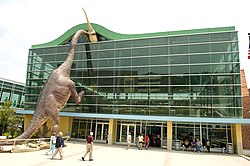
In 1964, the San Manteo Haunted House opened, as well as the Children's Museum Haunted House in Indianapolis, expanding the range of institutional haunted attractions.
Image source: The Children's Museum of Indianapolis
Aug 12, 1969
% complete
The haunted house as an American cultural icon can be attributed to the opening of The Haunted Mansion in Disneyland on 12 August 1969, which cemented the haunted house in popular culture.
Image source: The Haunted Mansion
1970 - 1982
% complete
The first Halloween haunted house run by a nonprofit organization was produced in 1970 by the Sycamore-Deer Park Jaycees in Clifton, Ohio. It was last produced in 1982.
Image source: Clifton, Ohio
1972
% complete
Evangelical Christians adopted a form of haunted attractions by opening one of the first 'hell houses' in 1972, presenting morality-themed horror experiences intended to convey religious messages.
1973
% complete
Knott's Berry Farm began hosting its own Halloween night attraction, Knott's Scary Farm, which opened in 1973 and pioneered the theme park Halloween event format.
Image source: Knott's Scary Farm
1976
% complete
The March of Dimes copyrighted a 'Mini haunted house for the March of Dimes' in 1976 and began fundraising through their local chapters by conducting haunted houses soon after.
Image source: March of Dimes
May 11, 1984
% complete
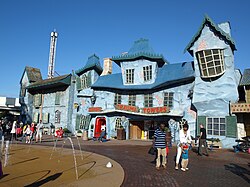
On the evening of 11 May 1984, in Jackson Township, New Jersey, the Haunted Castle at Six Flags Great Adventure caught fire, a tragedy that led to stricter safety regulations for haunted attractions.
Image source: Haunted Castle (Six Flags Great Adventure)
1986
% complete
Six Flags Fright Fest began in 1986, expanding the commercial theme park Halloween event model started by Knott's Scary Farm.
1991
% complete
Universal Studios Florida began Halloween Horror Nights in 1991, which grew into one of the most prominent annual Halloween events featuring elaborate haunted mazes and scare zones.
Image source: Universal's Halloween Horror Nights
1931 - 1968
% complete
The modern imagery of Halloween comes from many sources, including Gothic and horror literature such as Frankenstein and Dracula, and classic horror films like Frankenstein (1931) and Night of the Living Dead (1968).
Image source: Frankenstein (1931 film)
1974
% complete
The yearly New York's Village Halloween Parade was begun in 1974, with its roots in New York's queer culture; it is the world's largest Halloween parade and America's only major nighttime parade, attracting more than 60,000 costumed participants and two million spectators.
Image source: New York's Village Halloween Parade
2018
% complete
According to a 2018 report from the National Retail Federation, 30 million Americans would spend an estimated $480 million on Halloween costumes for their pets in 2018, up from an estimated $200 million in 2010.
Image source: National Retail Federation
2023
% complete
According to the National Retail Federation, Americans were projected to spend $12.2 billion on Halloween in 2023, up from $10.6 billion in 2022, with $3.9 billion spent on home decorations, up from $2.7 billion in 2019.
2025
% complete
The National Retail Federation projects Halloween spending to increase to $13.1 billion in 2025, with decorations accounting for $4.2 billion, costumes $4.3 billion, greeting cards $700 million, and candy $3.9 billion.
Or browse the full history timeline directory, with more than 2,000 topics.
This History of Halloween timeline was generated with the help of AI, using information found on the internet.
We work hard to keep these timelines accurate, but mistakes do get through. If you spot one, email us at [email protected] and we'll fix it for future visitors.
Generate yours with AI or build it from scratch, for free.
Export your timeline, add your own events, edit or remove AI-generated events, and much more
No credit card required.
Cancel anytime.
Cancel anytime.
You can create an unlimited number of timelines with up to 10 events on each one, customize how they look, export them to PDF, PNG, PowerPoint, CSV, and Excel, and share them with a link. Paid plans raise the event limit and add features like spreadsheet imports and collaborators.
Yes. You can cancel your subscription from your account page at any time, and you will not be charged again. Your subscription stays active for the rest of the period you already paid for.
Yes. We will email you a reminder before the annual renewal, and we will also email you a receipt.
Yes. You can email us within 15 days of any payment, and we will issue you a full refund.
Check out our pricing docs or send us an email anytime: [email protected].