-
Use Cases
-
Resources
-
Pricing
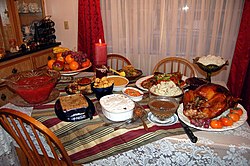
Thanksgiving is an American holiday rooted in a 1621 harvest celebration shared by Plymouth colonists and the Wampanoag people. Over centuries it evolved through regional traditions, presidential proclamations, and federal legislation into a national day of gratitude celebrated on the fourth Thursday of November. More Less
1536
% complete
Before 1536, there were 95 Church holidays, plus every Sunday, when people were required to attend church and forego work. These numerous holy days shaped the religious calendar of medieval Europe.
Image source: Thanksgiving
1536
% complete
The 1536 reforms in the Church of England reduced the number of holidays in the liturgical calendar to 27. The Puritan party wished to eliminate all Church holidays apart from the weekly Lord's Day, including Christmas and Easter.
1588
% complete
Days of Thanksgiving were called following the victory over the Spanish Armada in 1588, establishing a tradition of special days of thanksgiving for national deliverances in England.
1604 - 1613
% complete
Days of Fasting were called on account of plagues in 1604 and 1622, drought in 1611, and floods in 1613, complementing the tradition of Days of Thanksgiving for blessings.
1605
% complete
Days of Thanksgiving were called following the deliverance of Queen Anne in 1605, continuing the English tradition of special thanksgiving days marking national events.
1606
% complete
An unusual annual Day of Thanksgiving began in 1606 following the failure of the Gunpowder Plot in 1605 and developed into Guy Fawkes Day on November 5.
Image source: Guy Fawkes Night
1609 - 1620
% complete
Many of the Pilgrims who migrated to the Plymouth Plantation resided in Leiden from 1609 to 1620, and had recorded their births, marriages, and deaths at the Pieterskerk.
Image source: Leiden
1617
% complete
Now called 3 Oktoberfeest, Leiden's autumn thanksgiving celebration in 1617 was the occasion for sectarian disturbance that appears to have accelerated the Pilgrims' plans to emigrate to America.
Sep 8, 1565
% complete
Historians Robyn Gioia and Michael Gannon argue that the earliest Thanksgiving service in what is now the United States was celebrated by the Spanish community on September 8, 1565, in current Saint Augustine, Florida.
1598
% complete
Other claims to an early Thanksgiving include an earlier religious service by Spanish explorers at San Elizario in Texas in 1598, another contender for the first Thanksgiving in what is now the United States.
1619
% complete
An annual thanksgiving holiday tradition in North American colonies is documented for the first time in 1619, in what is now called the Commonwealth of Virginia.
1619
% complete
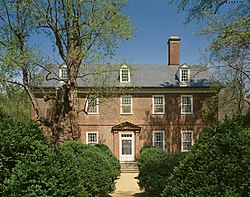
The charter declared that the day of the ships' arrival in Virginia shall be yearly and perpetually kept holy as a day of thanksgiving to Almighty God. Since the mid 20th century it has been commemorated annually at present-day Berkeley Plantation.
Image source: Berkeley Plantation
Dec 4, 1619
% complete
Thirty-eight English settlers aboard the ship Margaret arrived by way of the James River at Berkeley Hundred in Charles City County, Virginia on December 4, 1619.
1621
% complete
A multi-day festival in 1621 in Plymouth Colony was prompted by a good harvest, though it was not at the time described as a thanksgiving. It was largely forgotten for hundreds of years and did not contribute to the development of the American holiday.
1623
% complete
Later in New England, religious thanksgiving services were declared by civil leaders such as Governor Bradford, who planned the Plymouth colony's thanksgiving celebration and feast in 1623.
1631
% complete
Several celebrations were held in early New England history identified as the 'First Thanksgiving', including Pilgrim festivals in Plymouth in 1621 and 1623, and a Puritan holiday in Boston in 1631.
1578
% complete
According to some historians, the first celebration of Thanksgiving in North America occurred during the 1578 voyage of Martin Frobisher from England in search of the Northwest Passage.
1600 - 1700
% complete
Antecedents for Thanksgiving in Canada are also sometimes traced to the French settlers who came to New France in the 17th century, who celebrated their successful harvests.
1700
% complete
As settlers arrived in Nova Scotia from New England after 1700, late autumn Thanksgiving celebrations became commonplace in the Canadian province.
Image source: Thanksgiving (Canada)
Apr 15, 1872
% complete
The first official Canadian Thanksgiving occurred on April 15, 1872, when the nation was celebrating the Prince of Wales' recovery from a serious illness.
1899
% complete
By the end of the 19th century, Thanksgiving Day in Canada was normally celebrated on November 6. In the late 19th century, the militia staged 'sham battles' for public entertainment on Thanksgiving Day.
1957
% complete
To prevent Thanksgiving from clashing with Remembrance Day, in 1957 the Canadian Parliament proclaimed Thanksgiving to be observed on its present date on the second Monday of October.
1971
% complete
Since 1971, when the American Uniform Monday Holiday Act took effect, the American observance of Columbus Day has coincided with the Canadian observance of Thanksgiving.
Image source: Columbus Day
1682
% complete
Thanksgiving proclamations were made mostly by church leaders in New England up until 1682, and then by both state and church leaders until after the American Revolution.
1841
% complete
The 1621 Plymouth celebration was retroactively termed 'the first Thanksgiving' in a footnote added to an 1841 book by Alexander Young, and the Pilgrim story was then later incorporated into celebrations of the holiday.
1863
% complete
From the time of the Founding Fathers until Abraham Lincoln made Thanksgiving a national holiday in 1863 through a presidential proclamation, the date of observance varied from state to state.
Oct 31, 1939
% complete
On October 31, 1939, President Franklin D. Roosevelt moved the date of Thanksgiving, creating a period of 'double Thanksgiving' celebrated on different dates in different states.
Image source: Franklin D. Roosevelt
Dec 26, 1941
% complete
On December 26, 1941, Roosevelt signed a joint resolution of Congress changing the official national Thanksgiving Day to the fourth Thursday in November starting in 1942, formalizing federal legislation passed in 1941.
Nov 5, 1963
% complete
President John F. Kennedy issued Proclamation 3560 on November 5, 1963, stating that over three centuries ago, forefathers in Virginia and Massachusetts set aside a time of thanksgiving, honoring both claimant traditions.
Image source: John F. Kennedy
1821
% complete
Thanksgiving is celebrated in Liberia in large part due to the nation's founding as a colony of the American Colonization Society in 1821 by former slaves and free people of color from the United States.
1883
% complete
In 1883, the Legislature of Liberia enacted a statute declaring Thanksgiving Day as a national holiday, reflecting the country's historical ties to the United States.
1901 - 1969
% complete
As an American colony from 1901 to 1946, the Philippines observed Thanksgiving as a special public holiday on the same day as the United States. After the Japanese defeat in 1945, the tradition continued until 1969.
Aug 17, 1949
% complete
In Brazil, National Thanksgiving Day (Dia de Ação de Graças) was instituted by President Gaspar Dutra through Law 781 of August 17, 1949, at the suggestion of Ambassador Joaquim Nabuco, inspired by commemorations he saw in 1909.
1966
% complete
In 1966, Law 5110 established that the Thanksgiving celebration in Brazil would take place on the fourth Thursday of November, aligning with the American date.
1973 - 1986
% complete
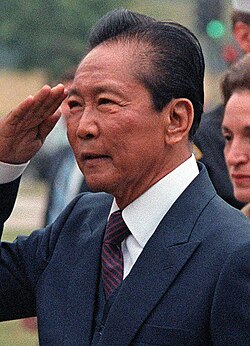
In 1973, President Ferdinand Marcos issued Proclamation 1180, changing the Philippine Thanksgiving date to September 21 as a celebration of his imposition of martial law. This continued until Marcos' ouster in 1986.
Image source: Ferdinand Marcos
Or browse the full history timeline directory, with more than 2,000 topics.
This History of Thanksgiving timeline was generated with the help of AI, using information found on the internet.
We work hard to keep these timelines accurate, but mistakes do get through. If you spot one, email us at [email protected] and we'll fix it for future visitors.
Generate yours with AI or build it from scratch, for free.
Export your timeline, add your own events, edit or remove AI-generated events, and much more
No credit card required.
Cancel anytime.
Cancel anytime.
You can create an unlimited number of timelines with up to 10 events on each one, customize how they look, export them to PDF, PNG, PowerPoint, CSV, and Excel, and share them with a link. Paid plans raise the event limit and add features like spreadsheet imports and collaborators.
Yes. You can cancel your subscription from your account page at any time, and you will not be charged again. Your subscription stays active for the rest of the period you already paid for.
Yes. We will email you a reminder before the annual renewal, and we will also email you a receipt.
Yes. You can email us within 15 days of any payment, and we will issue you a full refund.
Check out our pricing docs or send us an email anytime: [email protected].