-
Use Cases
-
Resources
-
Pricing
Tattoos have been part of human culture for thousands of years, serving as symbols of identity, spirituality, status, and art. This timeline traces tattooing from its earliest evidence in prehistoric times through ancient civilizations, indigenous traditions, stigmatization, and its modern revival as a mainstream form of self-expression. More Less
3500 BCE - 1600 BCE
% complete
Turkey bone tattooing tools were discovered at an ancient Fernvale, Tennessee site, dated back to 3500–1600 BCE, providing early evidence of tattooing practices in North America.
Image source: History of tattooing
2563 BCE - 1972 BCE
% complete
In the Americas, the earliest evidence of tattooing is found on a man from the Chinchorro culture in present-day Chile, who bears a delicate, mustache-like dotted line above his upper lip.
Image source: Chinchorro culture
2000 BC - 1650 BC
% complete
Some tattoo tool sites are older than the Austronesian expansion, being dated to around 1650 to 2000 BCE, suggesting there was a preexisting tattooing tradition in the region.
1500 BC
% complete
Tattoo chisels were dated to before 1500 BCE and are remarkably similar to the comb-type tattoo chisels found throughout Polynesia.
1500 BC
% complete
Austronesian tattooing tools involving perpendicular hafting of points and use of a mallet (hand-tapping) were already in use by Pre-Austronesians in Taiwan and coastal South China prior to at least 1500 BCE.
1000 BC - 500 BC
% complete
Ancient clay human figurines found in archaeological sites in the Batanes Islands, around 2500 to 3000 years old, have simplified stamped-circle patterns believed to represent tattoos and possibly branding.
Image source: Batanes

1200
% complete
Ancient tattoos can be found among mummified remains of various Igorot peoples in cave and hanging coffin burials in northern Luzon, with the oldest surviving examples going back to the 13th century.
Image source: Igorot people
1900
% complete
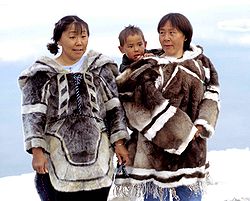
European missionaries colonized the Inuit in the beginning of the 20th century and associated tattooing as an evil practice, 'demonizing' anyone who valued tattoos.
Image source: Inuit
1900
% complete
In the western Balkans, isolated from outside influences, tattooing continued until the early 20th century in Albania (Albanian traditional tattooing) and Bosnia (Sicanje), regions that in antiquity were part of Illyria.
Image source: Sicanje
1980
% complete
From the late 20th century onward, there has been a resurgence of tā moko taking on European styles amongst Maori, reviving a once-suppressed cultural tradition.
Image source: Tā moko
3370 BCE - 3100 BCE
% complete
Direct evidence for tattooing human skin extends only to the 4th millennium BCE, between 3370 and 3100 BCE, making it one of the oldest known forms of body art practiced by humans.
3351 BCE - 3017 BCE
% complete
In 2018, the world's oldest figurative tattoos were identified on two well-preserved Egyptian mummies, a man and a woman dated between 3351 and 3017 BCE, bearing figural patterns of horned animals.
2000 BCE
% complete
According to the American Research Center in Egypt, tattooed human remains and iconographic evidence indicate that ancient Egyptians practiced tattooing from at least 2000 BCE.
600 BC
% complete
Greek written records, particularly from Herodotus, suggest that the Greeks learned tattooing from the Persians during the sixth century BCE.
500 BC
% complete
Based on writings of ancient authors such as Herodotus, Cicero, and Strabo, ethnographic studies have concluded that tattooing among the peoples of the Balkan peninsula was known since ancient times.
350
% complete
Tattoos can conceivably be identified on the wall of a late 4th-century tomb chamber from Arpi, in which a painting shows tattoos on the arms of a 'priestess' riding a quadriga.
Image source: Arpi
400 - 900
% complete
The Romans of Late Antiquity also tattooed soldiers and arms manufacturers, a practice that continued into the ninth century.
2015
% complete
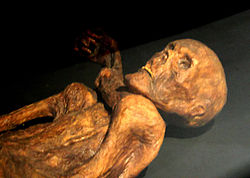
A 2015 scientific re-assessment confirmed Ötzi the Iceman as the earliest known individual with tattoos, whose mummified body preserved in the Alps bears numerous small markings.
Image source: Ötzi
921
% complete
In his encounter with a group of pagan Scandinavian Rus' merchants in the early 10th century, Ahmad ibn Fadlan describes what he witnesses among them, including their appearance covered in markings.
Image source: Ahmad ibn Fadlan
1515
% complete
A Spanish expedition led by Gonzalo de Badajoz in 1515 across what is today Panama ran into a village where prisoners from other tribes had been marked with tattoos.
1521
% complete
When Ferdinand Magellan's expedition first encountered the Visayans of the Philippine islands in 1521, he repeatedly described them as 'painted all over', referring to their extensive tattoos.
Image source: Visayans
1566 - 1567
% complete
In 1566, French sailors abducted an Inuk woman and her child in modern-day Labrador and brought them to Antwerp, where they were put on display at a local tavern at least until 1567.
1577
% complete
In 1577, English privateer Martin Frobisher captured two Inuit and brought them back to England for public display.
Image source: Martin Frobisher
1585 - 1586
% complete
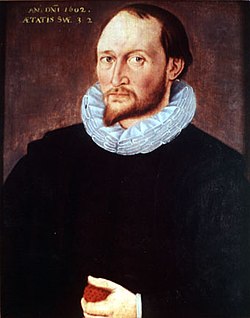
In 1585–1586, Thomas Harriot, part of the Grenville Expedition, was responsible for making observations about Indigenous People of North America, including their tattooing practices.
Image source: Thomas Harriot
1612
% complete
British and other pilgrims to the Holy Lands throughout the 17th century were tattooed with the Jerusalem cross to commemorate their voyages, including William Lithgow in 1612.
Image source: William Lithgow (traveller and author)
1623
% complete
In 1623, Gabriel Sagard was a missionary who described seeing men and women with tattoos on their skin among the Indigenous peoples he encountered.
Image source: Gabriel Sagard
1652
% complete
The Jesuit Relations of 1652 describes tattooing among the Petun and the Neutrals, including using needles or thorns to perforate the skin and applying powdered charcoal to imprint an indelible image.
Image source: The Jesuit Relations
1690 - 1692
% complete
Jeoly was bought from a Mindanaoan slave trader in 1690 by a 'Mister Moody', passed to explorer William Dampier, displayed in England, examined at Oxford University, and died of smallpox in the summer of 1692. His preserved tattooed skin was later lost.
Image source: Tattoo
1712 - 1717
% complete
From 1712 to 1717, Jesuit missionary Joseph François Lafitau recorded how Indigenous people applied tattoos to their skin and developed healing strategies, such as tattooing the jawline to treat toothaches.
Image source: Joseph-François Lafitau
1766 - 1779
% complete
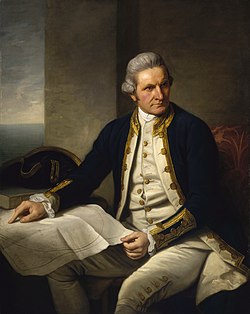
Between 1766 and 1779, Captain James Cook made three voyages to the South Pacific. In July 1769 aboard the Endeavour in Tahiti, Cook first recorded the word 'tattoo', from Tahitian tatau, referring to permanent skin marking.
Image source: James Cook
1603 - 1868
% complete
Between 1603 and 1868, Japanese tattooing was only practiced by the ukiyo (floating world) subculture, and by the early 17th century criminals were widely tattooed as a visible mark of punishment.
1700 - 1800
% complete
Tattoos became widespread in the Ottoman Empire, likely through influence from Arabs, gaining popularity by the 18th century in Istanbul; 16th-century Ottoman scholars had described the tattoo as very common among the Arabs.
1800 - 1898
% complete
By the 19th century tattooing had spread to British society but remained associated with sailors and the lower classes; it then spread among upper classes across Europe, and Harmsworth Magazine estimated in 1898 that as many as one in five members of the gentry were tattooed.
1846
% complete
The first recorded tattoo artist in the United States was Martin Hildebrandt, who in 1846 was tattooing sailors and soldiers with patriotic tattoos of flags and battles.
Image source: Martin Hildebrandt
1868
% complete
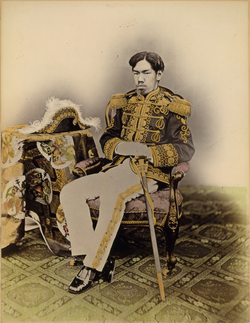
The Government of Meiji Japan, formed in 1868, banned the art of tattooing altogether, viewing it as barbaric and lacking respectability.
Image source: Meiji Restoration
Dec 8, 1891
% complete
In 1891, New York City tattooer Samuel O'Reilly patented the first electric tattoo machine, a modification of Thomas Edison's electric pen, revolutionizing the speed and ease of tattooing.
Image source: Samuel O'Reilly
1909
% complete
The U.S. military issued regulations on tattoos in 1909, which concerned the subject matter of the tattoos allowed to be pictured on servicemen; a 1908 article reported that 75% of sailors in the U.S. Navy were tattooed.
1936
% complete
In 1936, it was estimated that 1 in 10 Americans had a tattoo of some form, reflecting the growing presence of tattooing in American culture.
1969
% complete
In 1969, the House of Lords debated a bill to ban the tattooing of minors, on grounds it had become 'trendy' with the young but was associated with crime.
Image source: House of Lords
1970 - 1980
% complete
It took two decades and creators like Lyle Tuttle and Ed Hardy in 1970, Freddy Negrete and Jack Rudy in 1980, and celebrity patrons like Janis Joplin, Peter Fonda, and Cher for tattooing to be brought back into society's good graces.
Image source: Lyle Tuttle
1988
% complete
In 1988, scholar Arnold Rubin created a collection of works regarding the history of tattoo cultures, publishing them as 'Marks of Civilization'.
1997
% complete
'Bodies of Subversion: A Secret History of Women and Tattoo', by Margot Mifflin, became the first history of women's tattoo art when it was released in 1997.
2010
% complete
In 2010, the process of tattooing was held to be a purely expressive activity protected by the First Amendment by the Ninth Circuit Court of Appeals.
Image source: First Amendment to the United States Constitution
2010
% complete
In 2010, 25% of Australians under age 30 had tattoos, showing how mainstream tattooing had become among younger generations.
2011
% complete
Mattel released a tattooed Barbie doll in 2011, which was widely accepted, although it did attract some controversy.
Image source: Barbie
2012
% complete
In 2012, tattooed women outnumbered men for the first time in American history – according to a Harris poll, 23% of women in America had tattoos that year, compared to 19% of men.
2013
% complete
In 2013, Miss Kansas, Theresa Vail, became the first Miss America contestant to show off tattoos during the swimsuit competition.
Image source: Theresa Vail
2015
% complete
Author and sociology professor Beverly Yuen Thompson wrote 'Covered In Ink: Tattoos, Women, and the Politics of the Body' (published in 2015, research conducted between 2007 and 2010) on the history of tattooing and its normalization for specific gender roles in the USA.
Or browse the full history timeline directory, with more than 2,000 topics.
This History of Tattoos timeline was generated with the help of AI, using information found on the internet.
We work hard to keep these timelines accurate, but mistakes do get through. If you spot one, email us at [email protected] and we'll fix it for future visitors.
Generate yours with AI or build it from scratch, for free.
Export your timeline, add your own events, edit or remove AI-generated events, and much more
No credit card required.
Cancel anytime.
Cancel anytime.
You can create an unlimited number of timelines with up to 10 events on each one, customize how they look, export them to PDF, PNG, PowerPoint, CSV, and Excel, and share them with a link. Paid plans raise the event limit and add features like spreadsheet imports and collaborators.
Yes. You can cancel your subscription from your account page at any time, and you will not be charged again. Your subscription stays active for the rest of the period you already paid for.
Yes. We will email you a reminder before the annual renewal, and we will also email you a receipt.
Yes. You can email us within 15 days of any payment, and we will issue you a full refund.
Check out our pricing docs or send us an email anytime: [email protected].