-
Use Cases
-
Resources
-
Pricing
The history of zoos spans thousands of years, beginning with ancient Egyptian and Chinese collections of exotic animals kept by rulers as symbols of power. Medieval and Renaissance menageries evolved into public zoological gardens in the 18th and 19th centuries, such as the London Zoo (1828) and Berlin Zoo (1844). Over time, zoos shifted from entertainment-focused exhibits toward scientific study, education, animal welfare, and wildlife conservation, becoming vital institutions for protecting endangered species. More Less
1100 BCE
% complete
King Ashur-bel-kala of the Middle Assyrian Empire created zoological and botanical gardens in the 11th century BC, an early example of royal animal collections.
Image source: Ashur-bel-kala
400 BCE
% complete
By the 4th century BC, zoos existed in most of the Greek city states; Alexander the Great is known to have sent animals that he found on his military expeditions back to Greece.
Image source: Alexander the Great
200 BCE
% complete
In the 2nd century BC, the Chinese Empress Tanki had a 'house of deer' built, and King Wen of Zhou kept a 1,500-acre (610 ha) zoo called Ling-Yu, or the Garden of Intelligence.
Image source: Zoo
1204
% complete
The most prominent collection in medieval England was in the Tower of London, created as early as 1204 by King John I.
Image source: Tower of London
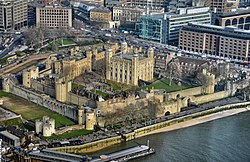
1235
% complete
Henry III received a wedding gift in 1235 of three leopards from Frederick II, Holy Roman Emperor, and in 1264 the animals were moved to the Bulwark, renamed the Lion Tower.
1520
% complete
A great Aztec animal and plant garden was described by several Spanish conquerors, including Hernán Cortés in 1520.
Image source: Hernán Cortés
1558 - 1603
% complete
The Tower of London menagerie was opened to the public during the reign of Elizabeth I in the 16th century. During the 18th century, admission cost three half-pence, or the supply of a cat or dog for feeding to the lions.
1752
% complete
The Tiergarten Schönbrunn was constructed by Adrian van Stekhoven in 1752 at the order of Emperor Francis I, to serve as an imperial menagerie as part of Schönbrunn Palace.
Image source: Schönbrunn Zoo
1765
% complete
The Schönbrunn menagerie was initially reserved for the viewing pleasure of the imperial family and the court, but was made accessible to the public in 1765.
1775
% complete
In 1775, a zoo was founded in Madrid, part of the wave of European royal collections evolving toward public institutions.
1795
% complete
In 1795, the zoo inside the Jardin des Plantes in Paris was founded by Jacques-Henri Bernardin, with animals from the royal menagerie at Versailles, primarily for scientific research and education.
Image source: Ménagerie du Jardin des plantes
1806
% complete
The Kazan Zoo, the first zoo in Russia, was founded in 1806 by Professor Karl Fuchs of Kazan Federal University.
Image source: Kazan Zoo
1826
% complete
The Zoological Society of London was founded in 1826 by Stamford Raffles and established the London Zoo in Regent's Park two years later in 1828.
Image source: Zoological Society of London
1828
% complete
The London Zoo opened in 1828, initially known as the 'Gardens and Menagerie of the Zoological Society of London', intended as a collection for scientific study and described as a menagerie or 'zoological forest'.
1847
% complete
Originally intended to be used as a collection for scientific study, the London Zoo was opened to the public in 1847. The abbreviation 'zoo' first appeared in print around this time, used for the Clifton Zoo.
1853 - 2019
% complete
In 1853, the London Zoo opened the world's first public aquarium. It closed in 2019 and some fish moved to Whipsnade Zoo. Other aquariums followed in Paris (1859), Boston (1859), Hamburg (1864), Berlin (1869), Brighton (1872), Washington (1873), San Francisco (1873), and New York (1896).
1907
% complete
In 1907, entrepreneur Carl Hagenbeck founded the Tierpark Hagenbeck in Eimsbüttel, now a quarter of Hamburg. His zoo was a radical departure from the layout of the zoo established in 1828, using moats instead of cages.
Image source: Tierpark Hagenbeck
1831
% complete
Dublin Zoo was opened in 1831 by members of the medical profession interested in studying animals while they were alive and more particularly getting hold of them when they were dead.
Image source: Dublin Zoo
1841
% complete
In the German states, leading roles came with Berlin (1841), Frankfurt (1856), and Hamburg (1863), usually using London and Paris as models.
Image source: Berlin Zoo
1847
% complete
Downs' Zoological Gardens, created by Andrew Downs, opened to the Nova Scotia public in 1847; Halifax was among the first places to use the term 'zoological park' for more expansive facilities.
1860
% complete
The first zoological garden in Australia was Melbourne Zoo, opened in 1860.
Image source: Melbourne Zoo
1865
% complete
The Wrocław Zoo is the oldest zoo in Poland, opened in 1865 when the city was part of Prussia, and became home to about 10,500 animals representing about 1,132 species.
Image source: Wrocław Zoo
Jul 1, 1874
% complete
The Philadelphia Zoo opened on July 1, 1874, earning its motto 'America's First Zoo.' The Lincoln Park Zoological Gardens in Chicago and the Cincinnati Zoo followed in 1875.
Image source: Philadelphia Zoo
1882
% complete
Japan's first modern zoo, Tokyo's Ueno Zoo, opened in 1882 based on European models.
Image source: Ueno Zoo
1886
% complete
The Atlanta Zoo, founded in 1886, suffered neglect; by 1984 it was ranked among the ten worst zoos in the United States, but systematic reform by 2000 put it on the list of the ten best.
Image source: Zoo Atlanta
1891
% complete
The term 'zoological park' was used for more expansive facilities in Washington, D.C., which opened in 1891, following Halifax (1846) and preceding the Bronx Zoo (1899).
Image source: National Zoological Park (United States)
1931
% complete
Whipsnade Zoo in Bedfordshire, England, opened in 1931 by the Zoological Society of London as the first safari park, which since 2014 covers 600 acres (240 hectares).
Image source: Whipsnade Zoo
2014
% complete
In 2014 the Wrocław Zoo opened the Africarium, the only themed oceanarium devoted solely to exhibiting the fauna of Africa, comprehensively presenting selected ecosystems from the continent.
Sep 1906
% complete
In September 1906, William Hornaday, director of the Bronx Zoo—with the agreement of Madison Grant—had Ota Benga, a Congolese pygmy, displayed in a cage with chimpanzees, an orangutan named Dohong, and a parrot. Human displays continued at colonial expositions into the 20th century, including Expo 58 in Brussels.
Image source: Ota Benga
1943
% complete
In 1943, fearing American bombing attacks during World War II, the Japanese government ordered Ueno Zoo to euthanize dangerous animals that might escape.
1969 - 1983
% complete
The Detroit Zoo stopped its elephant show in 1969, and its chimpanzee show in 1983, acknowledging that the trainers had probably abused the animals to get them to perform.
Image source: Detroit Zoo
1984
% complete
Zoos are regulated in the UK by the Zoo Licensing Act of 1981, which came into effect in 1984, establishing standards for animal welfare and conservation.
Image source: Zoo Licensing Act 1981
1993
% complete
In 1993, the New York Zoological Society changed its name to the Wildlife Conservation Society and rebranded the zoos under its jurisdiction as 'wildlife conservation parks', distancing institutions from the criticized 19th-century zoo concept.
Image source: Wildlife Conservation Society
2000
% complete
By 2000 most animals being displayed in zoos were the offspring of other zoo animals, reflecting the shift away from capturing wild animals.
Nov 2004
% complete
The World Association of Zoos and Aquariums produced its first conservation strategy in 1993, and in November 2004 adopted a new strategy setting out the aims and mission of zoological gardens of the 21st century.
Image source: World Association of Zoos and Aquariums
2014
% complete
A highly publicized culling as part of population management was that of a healthy giraffe at Copenhagen Zoo in 2014, sparking international debate about zoo breeding practices.
Image source: Marius (giraffe)
2017
% complete
In 2017, activist travel company Responsible Travel and the Born Free Foundation surveyed 1,000 UK zoo visitors about conservation understanding; in light of the findings, Responsible Travel became the first travel company to stop promoting holidays that include visits to a zoo.
Or browse the full history timeline directory, with more than 2,000 topics.
This History of Zoos timeline was generated with the help of AI, using information found on the internet.
We work hard to keep these timelines accurate, but mistakes do get through. If you spot one, email us at [email protected] and we'll fix it for future visitors.
Generate yours with AI or build it from scratch, for free.
Export your timeline, add your own events, edit or remove AI-generated events, and much more
No credit card required.
Cancel anytime.
Cancel anytime.
You can create an unlimited number of timelines with up to 10 events on each one, customize how they look, export them to PDF, PNG, PowerPoint, CSV, and Excel, and share them with a link. Paid plans raise the event limit and add features like spreadsheet imports and collaborators.
Yes. You can cancel your subscription from your account page at any time, and you will not be charged again. Your subscription stays active for the rest of the period you already paid for.
Yes. We will email you a reminder before the annual renewal, and we will also email you a receipt.
Yes. You can email us within 15 days of any payment, and we will issue you a full refund.
Check out our pricing docs or send us an email anytime: [email protected].