-
Use Cases
-
Resources
-
Pricing
Las Vegas transformed from a desert railroad stop in 1905 into a global hub of gambling, entertainment, and tourism. Its growth was fueled by the Hoover Dam construction, legalized gambling in 1931, the rise of casino resorts on the Strip, and its evolution into a major destination for conventions, shows, and nightlife. More Less
May 3, 1829
% complete
Scout Rafael Rivera, traveling with a trading party on the Old Spanish Trail, became the first non-Native American known to visit the Las Vegas Valley. He named the area 'Las Vegas' — Spanish for 'the meadows' — due to its natural springs and green vegetation, which made it a valuable water stop in the Mojave Desert.
Image source: History of Las Vegas
May 1844
% complete
Explorer John C. Frémont camped at the Las Vegas springs during his expedition through the West. His published reports later drew attention to the valley and helped establish it as a waypoint for travelers heading to California.
Image source: John C. Frémont
Oct 1855
% complete
A group of Mormon missionaries led by William Bringhurst built a 150-square-foot adobe fort near the Las Vegas Creek to convert Paiute Indians and teach farming. It was the first permanent non-Native settlement in the valley, though the mission was abandoned within a few years.
Image source: Old Las Vegas Mormon Fort State Historic Park
Jul 8, 1864
% complete
Following the Mexican-American War and the Treaty of Guadalupe Hidalgo in 1848, the Las Vegas Valley became U.S. territory as part of the Mexican Cession. Nevada achieved statehood in 1864, formally incorporating the region into the United States.
Image source: Nevada
1880
% complete
Archibald Stewart established a ranch near the Las Vegas springs after acquiring land there. His widow Helen Stewart later became one of the most prominent landowners in the valley, selling parcels that would become the foundation of the future city.
Image source: Las Vegas Springs
May 15, 1905
% complete
The completion of the railroad linking Los Angeles and Salt Lake City brought trains through Las Vegas, transforming the small watering stop into a booming rail town. The auction of railroad-owned land lots on May 15, 1905 is considered the founding date of Las Vegas.
Mar 16, 1911
% complete
Las Vegas was incorporated as a city on March 16, 1911. With a population of around 800 residents, the city began establishing municipal services and local government, setting the stage for decades of growth driven by the railroad and nearby mining.
Image source: Las Vegas
Apr 20, 1931 - Mar 1, 1936
% complete
Construction of Hoover Dam (originally Boulder Dam) on the Colorado River brought thousands of workers to southern Nevada during the Great Depression. The influx of workers and their families boosted Las Vegas's economy and population, and the dam's completion provided cheap electricity and water that fueled the city's future growth.
Image source: Hoover Dam
Jan 27, 1951
% complete
The United States began atmospheric nuclear weapons testing at the Nevada Test Site, about 65 miles northwest of Las Vegas. The tests drew tourists who watched mushroom clouds from hotel rooftops, but also exposed downwind communities to radioactive fallout.
Image source: Nevada Test Site
1930
% complete
The Pair-o-Dice Club opened along Highway 91 (later the Strip), becoming one of the first nightclubs and casinos in the area. It set a precedent for entertainment venues outside city limits where gambling laws were more loosely enforced.
Image source: Las Vegas Strip
Mar 19, 1931
% complete
Nevada legalized wide-open gambling in 1931, allowing casinos to operate openly. This pivotal decision laid the legal foundation for Las Vegas to develop into the gambling capital of the world, attracting entrepreneurs and visitors from across the country.
Image source: Gambling in the United States
Apr 3, 1941
% complete
Thomas Hull opened El Rancho Vegas on Highway 91, marking the birth of the Las Vegas Strip. The dude-ranch-themed hotel-casino offered gambling, dining, and entertainment, inspiring a wave of similar resorts along the highway.
Image source: El Rancho Vegas
Oct 30, 1942
% complete
The Last Frontier (later the New Frontier) opened as the second resort on the Strip. Its success during World War II demonstrated the viability of large-scale casino resorts and helped establish the Strip as an entertainment destination.
Image source: New Frontier Hotel and Casino
Dec 26, 1946
% complete
Mobster Benjamin 'Bugsy' Siegel opened the luxurious Flamingo Hotel & Casino, funded partly by East Coast crime syndicate money. Despite early struggles and Siegel's murder in 1947, the Flamingo proved profitable and pioneered the model of glamorous, upscale casino resorts.
Image source: Flamingo Las Vegas
Apr 24, 1950
% complete
Wilbur Clark opened the Desert Inn, one of the Strip's most elegant early resorts. It became renowned for high-stakes gambling and celebrity guests, hosting entertainers like Frank Sinatra and later becoming associated with Howard Hughes.
Image source: Desert Inn
1952
% complete
The early 1950s saw rapid expansion of the Strip with new resorts like the Thunderbird (1952) and the Sands (December 1952). The Sands became famous for its Copa Room showroom and its association with Frank Sinatra and the Rat Pack in later years.
Image source: Sands Hotel and Casino
Aug 5, 1966
% complete
Jay Sarno opened Caesars Palace, a Roman-themed mega-resort that redefined casino opulence. Its lavish design and star-studded entertainment helped establish the theme-resort concept that would dominate Las Vegas development for decades.
Image source: Caesars Palace
Nov 1966
% complete
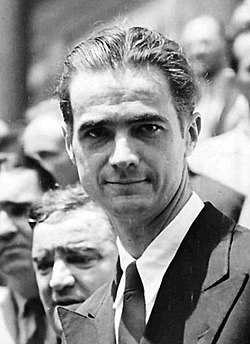
Billionaire Howard Hughes moved into the Desert Inn's penthouse and began buying up Las Vegas casinos and media outlets, spending hundreds of millions of dollars. His corporate investments helped legitimize the industry and reduced mob influence over the city's casinos.
Image source: Howard Hughes
Jul 31, 1969
% complete
Elvis Presley launched his legendary residency at the International Hotel (later the Las Vegas Hilton), performing to record-breaking crowds. His shows revitalized his career and cemented Las Vegas as a premier destination for headline entertainment.
Image source: Elvis Presley
Dec 5, 1973
% complete
Kirk Kerkorian opened the original MGM Grand, then the largest hotel in the world with over 2,000 rooms. The resort marked the shift toward corporate ownership of Las Vegas casinos, moving the industry away from its mob-era roots toward publicly traded companies.
Image source: MGM Grand Las Vegas
Nov 22, 1989
% complete
Steve Wynn opened The Mirage, featuring a volcano show and a dolphin habitat, ushering in the era of the megaresort. Its massive cost and family-friendly attractions sparked a building boom that transformed the Strip in the 1990s.
Image source: The Mirage
1993
% complete
The new MGM Grand opened in December 1993 with over 5,000 rooms, becoming the largest hotel in the world, while Treasure Island debuted with pirate ship battles. These megaresorts signaled Las Vegas's evolution into a full-scale entertainment and vacation destination.
Oct 13, 1993
% complete
Circus Circus Enterprises opened Luxor, a striking black pyramid resort, followed by the medieval-themed Excalibur. These themed megaresorts exemplified the 1990s strategy of attracting families with spectacle and fantasy environments.
Image source: Luxor Las Vegas
Oct 15, 1998
% complete
Steve Wynn's Bellagio opened with its iconic dancing fountains, fine art gallery, and luxury amenities. The $1.6 billion resort elevated Las Vegas's reputation as a sophisticated destination for dining, art, and high-end entertainment.
Image source: Bellagio (resort)
May 3, 1999
% complete
Sheldon Adelson opened the Venetian, featuring canals with gondolas and replicas of Venice landmarks. The all-suite resort pioneered the convention-driven business model that made Las Vegas a top destination for trade shows and conferences.
Image source: The Venetian Las Vegas
Sep 1, 1999
% complete
Paris Las Vegas opened with a half-scale replica of the Eiffel Tower and an Arc de Triomphe façade. The resort continued the trend of immersive themed destinations and added to the Strip's growing skyline of international icons.
Image source: Paris Las Vegas
Apr 28, 2005
% complete
Steve Wynn returned with Wynn Las Vegas, a $2.7 billion copper-toned tower resort on the site of the old Desert Inn. It was the most expensive hotel ever built at the time and won numerous awards for luxury and service.
Image source: Wynn Las Vegas
2008 - 2010
% complete
The financial crisis devastated Las Vegas, which had among the highest foreclosure rates in the nation. Major projects like Fontainebleau and Echelon were abandoned mid-construction, and tourism revenue plummeted before a slow recovery began in the 2010s.
Image source: Las Vegas
Dec 15, 2010
% complete
The Cosmopolitan opened as a luxury resort targeting younger travelers, with terrace suites, chic restaurants, and nightlife venues like Marquee. It marked a shift in Las Vegas marketing toward millennials and experiential luxury.
Image source: Cosmopolitan of Las Vegas
Oct 1, 2017
% complete
A gunman opened fire from the Mandalay Bay hotel onto the Route 91 Harvest country music festival crowd, killing 60 people and injuring hundreds more. It remains the deadliest mass shooting by a single gunman in U.S. history and prompted changes to security at large events nationwide.
Image source: 2017 Las Vegas shooting
Jul 31, 2020
% complete
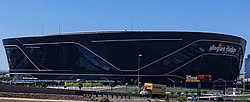
The NFL's Oakland Raiders relocated to Las Vegas and began playing at Allegiant Stadium, a $2 billion domed venue near the Strip. The move marked Las Vegas's arrival as a major professional sports market, following the NHL's Golden Knights expansion team in 2017.
Image source: Allegiant Stadium
Or browse the full history timeline directory, with more than 2,000 topics.
This History of Las Vegas timeline was generated with the help of AI, using information found on the internet.
We work hard to keep these timelines accurate, but mistakes do get through. If you spot one, email us at [email protected] and we'll fix it for future visitors.
Generate yours with AI or build it from scratch, for free.
Export your timeline, add your own events, edit or remove AI-generated events, and much more
No credit card required.
Cancel anytime.
Cancel anytime.
You can create an unlimited number of timelines with up to 10 events on each one, customize how they look, export them to PDF, PNG, PowerPoint, CSV, and Excel, and share them with a link. Paid plans raise the event limit and add features like spreadsheet imports and collaborators.
Yes. You can cancel your subscription from your account page at any time, and you will not be charged again. Your subscription stays active for the rest of the period you already paid for.
Yes. We will email you a reminder before the annual renewal, and we will also email you a receipt.
Yes. You can email us within 15 days of any payment, and we will issue you a full refund.
Check out our pricing docs or send us an email anytime: [email protected].